
“ Elizabeth Fry is, of course, one of the great personalities of this century, at any rate in the particular sphere to which she devoted herself, and ranks with the many uncanonised saints whom the world has loved, and whose memory is sweet. ”
Elizabeth Fry
Definition and stakes
Elizabeth Fry (1780–1845), an English Quaker philanthropist and prison reformer, is celebrated as the "Angel of Prisons" for her advocacy of humane treatment for inmates, particularly women. Her 1823 Gaols Act reforms, emphasizing sex-segregated prisons and female wardens, stemmed from her visceral response to the horrors of Newgate Prison, which she documented in diaries.
Authors like Oscar Wilde hailed her as a "great personality" whose selflessness transcended creeds, while Emma Pitman emphasized her "unswerving loyalty to duty" and the "ingratitude" she endured. Dame Millicent Garrett Fawcett noted Fry’s early resolve to combat injustice, foreshadowing her lifelong commitment. Her legacy, etched on the Bank of England £5 note, endures as a testament to her transformative vision of rehabilitation over punishment.
Quotes about “Elizabeth Fry”
Emma Raymond Pitman, Elizabeth Fry (1884)
“ As a consequence, Elizabeth Fry’s name is surrounded with an aureola of fame, and her self-abnegation affords a sublime spectacle to thoughtful minds of all creeds and classes; for, simply doing good is seen to be the highest glory. ”
Emma Raymond Pitman, Elizabeth Fry (1884)
“ A few hours of spasmodic suffering followed, very trying to those who watched by; but suddenly, about four on the morning of October 13th, 1845, the silver cord was loosed, the pitcher broken at the fountain, and the spirit returned to God who gave it. In a quiet grave at Barking, by the side of the little child whom she had loved and lost, years before, rest Elizabeth Fry’s mortal remains. "God buries his workers, but carries on His work." The peculiar work which made her name and life so famous, has grown and ripened right up to the present hour. ”
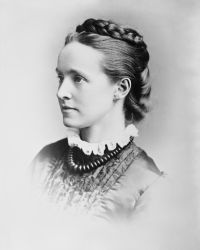 Dame Millicent Garrett Fawcett,
Some Eminent Women of Our Times…
Dame Millicent Garrett Fawcett,
Some Eminent Women of Our Times…
“ The authoress of the biography of Elizabeth Fry in the Eminent Women series, says: “Her faculty for independent investigation, her unswerving loyalty to duty, and her fearless perseverance in works of benevolence, were all foreshadowed” in her childhood. She had as a young girl what appears to us now a very extraordinary dread of enthusiasm in religion. One would think that if ever a woman needed enthusiasm for her life’s work, Elizabeth Fry was that woman. ”
Emma Raymond Pitman, Elizabeth Fry
“ So it was with Elizabeth Fry. The constitutional timidity of her nature vanished before the overpowering sense of duty; and literally she looked not at the seen, but at the unseen, in her calculations of Christian service. Yet another part of her discipline was the ingratitude with which many of her efforts were met. This experience is common to all who labor for the public weal; and from an entry in her journal we can but conclude that this "serpent's tooth" pierced her very sorely at times. "A constant lesson to myself is the ingratitude and discontent which I see in many." ”
Emma Raymond Pitman, Elizabeth Fry (1884)
“ Of the horrors of that dark, terrible time within those prison-walls, few records appear; few cared to probe the evil, or to propose a remedy. The archives of Eternity alone contain the captive’s cries, and the lamentations of tortured lunatics. Only one Eye penetrated the dungeons; one Ear heard. Was not Elizabeth Fry and her coadjutors doing a god-like work? And when she raised the clarion cry that Reformation, not Revenge, was the object of punishment, she shook these old castles of Giant Despair to their foundations. ”
Emma Raymond Pitman, Elizabeth Fry
“ Contrary to the general practice of mankind in matters of pure benevolence, Mrs. Fry looked around for new worlds to conquer, in the shape of yet unfathomed prison miseries. Many, if not most people, would have rested upon the laurels already won, and have been contented with the measures of good already achieved. Not so with the philanthropist whose work we sketch. Like an ever-widening stream, her life rolled on, full of acts of mercy, growing wider and broader in its channel of operations and its schemes of mercy. ”
 Sarah Knowles Bolton,
Lives of Girls Who Became Famous
Sarah Knowles Bolton,
Lives of Girls Who Became Famous
“ When a woman of beauty, great wealth, and the highest social position, devotes her life to the lifting of the lowly and the criminal, and preaches the Gospel from the north of Scotland to the south of France, it is not strange that the world admires, and that books are written in praise of her. Unselfishness makes a rare and radiant life, and this was the crowning beauty of the life of Elizabeth Fry.Born in Norwich, England, May 21, 1780, Elizabeth was the third daughter of Mr. John Gurney, a wealthy London merchant. ”
 John Greenleaf Whittier,
The Two Elizabeths
John Greenleaf Whittier,
The Two Elizabeths
“ Read at the unveiling of the bust of Elizabeth Fry at the Friends' School, Providence, R. I. A. D. 1209.Amidst Thuringia's wooded hills she dwelt, A high-born princess, servant of the poor, Sweetening with gracious words the food she dealt To starving throngs at Wartburg's blazoned door. ”
Emma Raymond Pitman, Elizabeth Fry (1884)
“ Fry beyond her most sanguine expectations; indeed, it would be nearer the truth to say that in her lowly estimate of herself, she almost dreaded to approach royal or noble personages, and that therefore she craved for no honour, but only tolerance and favour. She never sought an interview with any of these personages, but to benefit those who could not plead for themselves. Her letters home exhibit no pride, boastfulness, or triumph; all is pure thankfulness that one so unworthy as she deemed herself to be should accomplish so much. ”
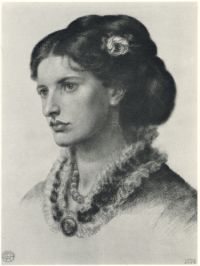 Lucy Madox Brown Rossetti,
Mrs. Shelley
(1890)
Lucy Madox Brown Rossetti,
Mrs. Shelley
(1890)
“ Elizabeth Fry. By Mrs. E. E. Pitman. "Of all English philanthropists, none exhibits a nobler nature or is worthier of a permanent record than Mrs. Fry. For this reason we welcome the sketch of her by Mrs. Pitman, published in the Eminent Women Series."—Times. "An excellent idea of Mrs. Fry's noble life and work can be got from Mrs. Pitman's simple but impressive work."—Contemporary Review. "This is a good book, worthy of a place in the interesting Eminent Women Series."—Spectator. ”
Emma Raymond Pitman, Elizabeth Fry (1884)
“ Fry was too wise and too womanly not to warn others from the pit-falls over which she had stumbled, or to permit anyone to fall into her early mistakes:— “Much depends on the spirit in which the worker enters upon her work. It must be the spirit not of judgment but of mercy. She must not say in her heart, ‘I am holier than thou’; but must rather keep in perpetual remembrance that ‘all have sinned,’ and that, therefore, great pity is due from us even to the greatest transgressors among our fellow-creatures, and that in meekness and love we ought to labour for their restoration. ”
Emma Raymond Pitman, Elizabeth Fry
“ Beside that notable visit to the Mansion House to be presented to Queen Charlotte, in 1818, Mrs. Fry had many interviews with royalty—these royal and noble personages conferring honor upon themselves more than upon her by their kindly interest in her work.In 1822 the Prince and Princess Royal of Denmark visited England, and spent considerable time in inspecting public institutions, schools, and charities tending to advance the general well-being of the people. Of course Mrs. Fry's name was spoken of prominently, seeing that she was then in the full tide of her Newgate labors. ”
Emma Raymond Pitman, Elizabeth Fry (1884)
“ Certainly no one ever became a preacher among the Friends "for a piece of bread." If fanatics sometimes "prophesied" out of the fulness of excited brains, or fervid souls, no place-hunter adopted the pulpit as a profession. Only, sometimes, it needs the presence of an overwhelming trial to bring out the latent strength in a person's nature; and this trial was furnished to Elizabeth Fry in the shape of her father's death. The thanksgiving uttered by her at his death was also publicly repeated at the funeral, probably with additional words, and from that time she was known as a "minister." ”
Emma Raymond Pitman, Elizabeth Fry (1884)
“ She expressed the deepest thankfulness, alluding to her sister-in-law, Elizabeth Fry, for mercies voushsafed to one who, having laboured amongst them, had been called from time to eternity. She quoted that text, "Blessed are the dead who die in the Lord, for they cease from their labours, and their works do follow them." ”
Anne E. Keeling, Great Britain and Her Queen
“ Men's minds were turning more and more to the healing of the world's wounds. Already one great humane enterprise had been carried through in the emancipation of the slaves in British Colonies; already the vast work of prison reform had been well begun, through the saintly Elizabeth Fry, whose life of faithful service ended ere the Queen had reigned eight years. The very year of Her Majesty's accession was signalised by two noteworthy endeavours to put away wrong. ”
“ She attended the first meeting of the Norwich Bible Society, and ever after took a deep interest in that noble institution. Elizabeth Fry evidently entered upon the scene of her future labours among the poor female felons in Newgate, without any idea of the importance of its ultimate results. That career, while presenting an almost inexhaustible fund of instructive thought, is yet, necessarily, somewhat repetitive. It is the glory of benevolence to be uniform. ”
Emma Raymond Pitman, Elizabeth Fry (1884)
“ But the genuine gold of a noble disposition comes out brighter and purer because of untoward events; unsuspected resources are developed, and the higher nobility becomes discernible. So it was with Elizabeth Fry. ”
 Charles Kingsley,
Alton Locke, Tailor and Poet: An Autobiography
Charles Kingsley,
Alton Locke, Tailor and Poet: An Autobiography
“ One real lady, who should dare to stoop, what might she not do with us—with our sisters? If—There are hundreds, answers the reader, who do stoop. Elizabeth Fry was a lady, well-born, rich, educated, and she has many scholars.True, my dear readers, true—and may God bless her and her scholars. Do you think the working men forget them? But look at St. Giles's, or Spitalfields, or Shadwell, and say, is not the harvest plentiful, and the labourers, alas! few? No one asserts that nothing is done; the question is, is enough done? Does the supply of mercy meet the demand of misery? ”
Emma Raymond Pitman, Elizabeth Fry (1884)
“ Doing good became a passion; want, misery, sin, and sorrow furnished claims upon her which she would neither ignore nor deny. John Howard had grappled with the hydra before her, and finally succumbed to his exertions. As the period of his labours lay principally between the years 1774 and 1790, when the evils against which Mrs. Fry had to contend were intensified and a hundred times blacker, it cannot do harm to recall the condition of prisons in England during the last quarter of the eighteenth century; that is, during the girlhood of Elizabeth Fry. ”
Various, The Rural Magazine, and Literary Evening Fire-Side…
“ Most of our readers will probably recollect the amiable and enterprising Elizabeth Fry, who has been for some time past, like the celebrated Howard, engaged in visiting the prisons of England. The peculiarity of the undertaking, for a female, and her unexpected success in drawing the attention of the wretched objects of her care, to something like their native dignity, have excited much interest in the public mind. ”
M. B. Synge, Great Englishwomen: An Historical Reading Book for Schools
“ Elizabeth Fry was one of those rare women whose “life was work.” Once having recognized the path of duty, she never left it; through illness and suffering, trouble and sorrow, she held fast to it, and the result was grand. For she was our first great prison reformer, the first to open the eyes of the nation to the alarming state of the prisons, the first to take active steps for their improvement.She was born in Norwich on May 21, 1780. Her father, John Gurney, belonged to the Society of Friends; he was a popular, warm-hearted man, fond of his children, devoted to his wife. ”
Elizabeth Lee, Wives of the prime ministers, 1844-1906
“ Yet women had managed to effect important social reforms. Elizabeth Fry as early as 1813 brought the conditions of prison life into notice, and reforms were instituted. Elizabeth Barrett Browning helped to better the conditions of the children who worked in mines and factories,76 and Helen Taylor through her public spirit brought about drastic reforms in the industrial schools of London, to mention only a few instances that, were this a suitable place, might easily be multiplied. Mrs. Gladstone did her share of canvassing, and especially helped her husband in the Oxford election of 1847. ”
 Elizabeth Cady Stanton,
History of Woman Suffrage/Volume 1
(1887)
Elizabeth Cady Stanton,
History of Woman Suffrage/Volume 1
(1887)
“ Fry, that she might have more love and charity for those who honestly differed with her on unimportant points of theology. How hateful such bigotry looks to those capable of getting outside their own educational prejudices. How pitiable, that even good people should thus allow themselves to ostracise and persecute those who hold different opinions from their own. Elizabeth Fry was not afraid to mingle in Newgate prison with the scum of the earth, but she was afraid to touch the hem of Lucretia Mott's garment. ”
Emma Raymond Pitman, Elizabeth Fry (1884)
“ Solomon says: "Seest thou a man diligent in his business, he shall stand before kings; he shall not stand before mean men." Elizabeth Fry's life was a living proof of the honours that a persistent, steady, self-denying course of doing good invariably wins in the long run. ”
Emma Raymond Pitman, Elizabeth Fry
“ Opie and others known to literature, exercised an attraction and stimulus in their circles, consequent upon the possession of high intellectual powers and good social position. It was in the midst of such surroundings, and with a mind formed by such influences, that Elizabeth Fry, the prison philanthropist and Quaker, grew up to young womanhood. ”
Emma Raymond Pitman, Elizabeth Fry (1884)
“ It is an old adage that "nothing succeeds like success." Mrs. Fry and her prison-labours had become famous; not only famous, but the subjects of talk, both in society and out of it. Kings, Queens, statesmen, philanthropists, ladies of fashion, devotees of charity, authors and divines were all looking with more or less interest at the experiments made by the apostles of this new crusade against vice, misery, and crime. ”
Emma Raymond Pitman, Elizabeth Fry
“ By so much nearer as woman is to the angels, must be measured her descent into ruin when she is degraded. She falls deeper than a man; her degradation is more complete, her nature more demoralized. Whether Mrs. Fry felt unequal just then to the task, or whether family affliction pressed too sorely upon her, we do not know; her journal affords no solution of the problem, but certain it is that some three years passed by before any very active steps were taken by her to ameliorate to any decided extent the misery of the prisoners. ”
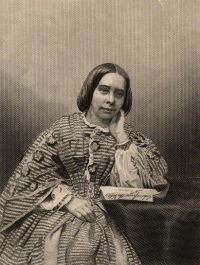 Marianne Farningham,
Grace Darling, Heroine of the Farne Islands
Marianne Farningham,
Grace Darling, Heroine of the Farne Islands
“ This good friend added to her other engagements that of the preacher; and never, perhaps, has a woman's voice spoken more effectively than did the voice of this worthy woman, who preached the gospel both by lips and life, not only in her own, but also in Continental cities. It was, indeed, a great loss to this world, where noble men and women are so much wanted, when Elizabeth Fry died. But He who watches all life and action, has said, "He that is faithful in that which is least, is faithful also in much," and He calls the steadfast servant to higher service. ”
Emma Raymond Pitman, Elizabeth Fry (1884)
“ Given an unusual method of doing good, noticed by the high in place or power, together with praise or criticism by the papers, and, like Lord Byron, the worker wakes some morning to find himself or herself famous. But growing fame did pot agree with Elizabeth Fry's moral or spiritual nature. ”
Emma Raymond Pitman, Elizabeth Fry
“ But no such hesitating, half-hearted, fearful charity was theirs. They had come to see for themselves the misery which prevailed, and to dare all risks; and we do not find that either Mrs. Fry or her companion lost anything in their progress through the women's wards; watches and all came away safely, a fresh proof of the power of kindness. The revelations of the terrible woes of felon-life which met Mrs. Fry stirred up her soul within her. ”
Emma Raymond Pitman, Elizabeth Fry
“ It is among the things that produce the harmony of society; for the truth must not be spoken out at all times, at least not the whole truth. Perhaps I am wrong—I do not know if I am—but it will not always do to tell our minds.... I am one of those who try to serve God and Mammon. Now, for instance, if I wish to say anything I think right to anyone, I seldom go straight to the point, but mostly by some softening, round-about way, which, I fear, is very much from wishing to please man more than his Maker!It is evident that Elizabeth Fry dared to be singular ”
Emma Raymond Pitman, Elizabeth Fry (1884)
“ The schools hitherto supported by the Frys were handed over to the care of the vicar of the parish; many old pensioners and servants had to be given over to the kindness of others, or in some cases, possibly, to the not very tender mercies of “the parish”: while she herself, who had always laid it down as an indispensable rule to be just before being generous, was compelled to conform her manner of life to somewhat narrow means. Shakespeare says: “Sorrow comes not in single spies but in battalions,” and experience proves the adage to be true. ”
