Ethiopic language

Definition and stakes

Richard Lepsius,  Discoveries in Egypt, Ethiopia and the peninsula of Sinai… (1853)

“ It has not the slightest connection in any part of its grammatical constitution, or in the roots, either with the Semetic languages, nor with the Egyptian, or with our own; and therefore, certainly belongs to the original African stock, unconnected with the Ethiopic-Egyptian family, though the nation may be comprehended by the ancients under the general name of Ethiopians, and though their physical race may stand in a nearer relation to them. They are not a commercial people, and therefore can only count up to twenty in their language ”

Source: Gutenberg

The treasury of languages (1873)

“ Ethiopic.
Semitic: An extinct dialect of Arabic, closely resembling Amharic, and written in large uncial characters resembling Himyaritic; it was spoken in Abyssinia, anciently called Ethiopia, and is known to the natives as “Lisana Gheëz.” See Ludolph; Schrader: “De Lingua Æthiopica,” Göttingen, 1860; Dillman: “Lexicon, Grammar, and Chrestomathy,” Leipsig, 1857-66.
Ethnology.
The study of mankind in tribes, races, and nations; treating of all that relates to their physical characteristics, their language, manners, customs, religion, &c.
”
Source: Gutenberg

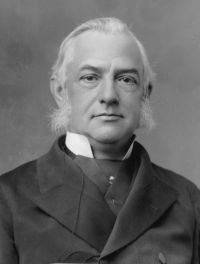
Portrait of James Bruce James Bruce,  Travels to Discover the Source of the Nile…

“ He was reputed a man of the best understanding, and the most liberal sentiments of any in Ethiopia; a great orator, excelling both in the gracefulness of manner and copiousness and purity of his language. He was among the first that embraced the Catholic religion, even before the king or Sela Christos, and was the principal promoter of the translations of the Portuguese books into Ethiopic, assisted by the Jesuit Antonio de Angelis. We have seen, in the year 1613, the great efforts he made in the embassy to India by the coast of Melinda. ”
Source: Gutenberg

Get perspective with Kwize: daily news enlightened by great literature