Eudoxus of Cnidus

Definition and stakes

Various Encyclopaedia Britannica, 11th Edition…

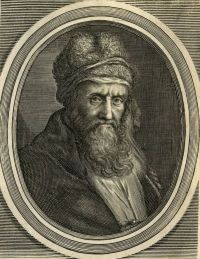
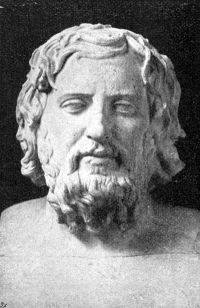
EUDOXUS, of Cnidus, Greek savant, flourished about the middle of the 4th century B.C. It is chiefly as an astronomer that his name has come down to us (see Astronomy and Zodiac) . From a life by Diogenes Laërtius, we learn that he studied at Athens under Plato, but, being dismissed, passed over into Egypt, where he remained for sixteen months with the priests of Heliopolis. He then taught physics in Cyzicus and the Propontis, and subsequently, accompanied by a number of pupils, went to Athens.
Source: Gutenberg

1911 Encyclopædia Britannica, Volume 6… (1911)

During the Byzantine period there must still have been a considerable population; for the ruins contain a large number of buildings belonging to the Byzantine style, and Christian sepulchres are common in the neighbourhood. Eudoxus, the astronomer, Ctesias, the writer on Persian history, and Sostratus, the builder of the celebrated Pharos at Alexandria, are the most remarkable of the Cnidians mentioned in history.
Source: Wikisource

James Wood The Nuttall Encyclopædia — E

Eudæmonism, the doctrine that the production of happiness is the aim and measure of virtue.
Eudocia, the ill-fated daughter of an Athenian Sophist, wife of Theodosius II., embraced Christianity, her name Athenais previously; was banished by her husband on an ill-founded charge of infidelity, and spent the closing years of her life in Jerusalem, where she became a convert to the views of Eutyches (q. v.) (394-400) .
Eudoxus of Cnidus, a Grecian astronomer, was a pupil of Plato, and afterwards studied in Egypt; said to have introduced a 3651⁄2 day year into Greece
Source: Wikisource

Get perspective with Kwize: daily news enlightened by great literature