“ There was no dirt in Exeter Cathedral to dim its complete and finished loveliness, and all its surroundings were in character and keeping with it, "composed" by time and circumstance to make the picture perfect—especially on a golden autumn day. What should be the cast of mind of a bishop privileged to live in such a house and grounds as lie, peaceful and stately and exquisite, under the shadow of the south tower? I like to remember that one bishop of Exeter had a son who was the father of my Eden Phillpotts, whose intellectual inheritance is the love of beauty, uncloistered, unsophisticated ”
Exeter Cathedral
Definition and stakes
Quotes about “Exeter Cathedral”
“ The nave and choir of Exeter Cathedral are especially typical of Decorated architecture at its best. They rise from the foundations of an earlier church, of which the Norman towers above the transepts are relics, and are absolutely unsurpassed in the simple dignity of the arcading spanning the clustered piers, the exquisite beauty of the groined roofing, the bosses of which are decorated with delicate carvings of a great variety of subjects, and the fine tracery of the windows. ”

Rosalind Northcote,
Devon, Its Moorlands, Streams and Coasts
“ These transeptal towers are peculiar to this church and the other on which he spent his enthusiasm, Exeter Cathedral. On one tower is a steeple—there was one on the Cathedral—the lead scored by cross-slanted lines. The church is of grey stone. The nave and towers are battlemented, and at intervals in the outer walls are niches, now bereft of the figures they held. Very graceful stone tracery is in many windows, pinnacles and crosses rise from the roof, and the whole effect is of an impressive building of rich and elaborate detail. ”
Percy Addleshaw, Bell's Cathedrals: The Cathedral Church of Exeter
“ The history of any ancient cathedral must always be interesting, and that of Exeter is no exception, though "it supplies less of architectural history than those churches whose whole character has been altered over and over again." A cathedral represents not only the spiritual, but the active, laborious, and artistic life of past generations. The bishop, too, was in many ways the head man of the province, and combined, not seldom, the varied qualities of priest, warrior, and statesman. ”
Percy Addleshaw, Bell's Cathedrals: The Cathedral Church of Exeter
“ The best views of the building are those to be got from a distance. In some ways this is not without compensation; for the cathedral church was, and is, not only splendid as a building, but the centre of the spiritual life of the diocese. It is, therefore, appropriate that it should seem most beautiful to the dwellers in the villages and hamlets beyond the city, giving them, as it were, a kind of property in the building, which they might not have felt had it been less visible. Nearing Exeter by train, from the Plymouth side, the noble roof and towers are seen above the red houses of the city. ”
Rosalind Northcote,
Devon, Its Moorlands, Streams and Coasts
“ It was longer than any other church that has since been built in Torquay, and wanted only seven feet to equal the length of Exeter Cathedral between the west end and the organ-screen. The refectory stretches towards the west; it has been converted into a chapel, and a stone cross rises from the roof. The embattled gateway and the whole of the building near it are of a soft rose colour; beyond stands a tower, duller in tint, and at right angles the old grange, known since Elizabethan days as the Spanish Barn. ”
Thos. D. Murphy, British Highways and Byways from a Motor Car
“ It is an important town of about fifty thousand inhabitants, with thriving trade and manufactures, and modern improvements are in evidence everywhere.The cathedral, though not one of the largest or most imposing, is remarkable for the elaborate carving of the exterior. The west front is literally covered with life-sized statues set in niches in the wall, but the figures are all sadly time-worn, many of themPg 92 having almost crumbled away. Evidently the Roundheads were considerate of Exeter Cathedral that such a host of effigies escaped destruction at their hands ”
“ The Cathedral itself was first constituted a parish by being placed under the charge of a single dignitary, the dean, by Bishop Briwere, in 1225.Four years after he ascended the throne in 1042, Edward the Confessor gave the united bishopric of Crediton and Cornwall to his chaplain, Leofric, who, observing that Crediton was an open town, difficult to fortify against the Danish raiders, obtained from Pope Leo IX permission to remove the episcopal see to Exeter, when the Benedictine minster of St. Mary and St. Peter became the cathedral church of the diocese. ”
Seeing Europe with Famous Authors…
“ Our guiding instinct divined these to be the cathedral close....To analyze the beauties of Exeter is only to add another note to one's joy in them, their quality and rarity being of such an order as to warrant one's cooler admiration. The front is as unique in design as it is architecturally beautiful. There is that rarest of features in English cathedrals—an elaborately sculptured screen, thoroughly honest in construction. In originality of conception this front is perhaps unrivalled, at least on English soil ”
Various, The Catholic World, Vol. 15, Nos…
“ The ‘angel choir’ at Lincoln is rudely executed compared with many a modern bas-relief, but the features of the winged minstrels are radiant with celestial happiness. There are figures of kings crumbling into dust in the niches of Exeter Cathedral which retain even now a dignity of attitude and lordly grace which no ‘restoration’ is likely to revive. Our nineteenth century angels look like demure Bible-readers, somewhat too conscious of their piety to be interesting. Our nineteenth century monarchs seem (in stone, at least) very well-to-do pleasant gentlemen, but are scarcely of a heroic type. ”
Henry James, English Hours (1905)
“ The cathedral stands supreme, but the close makes, always, the scene. Exeter is not one of the grandest, but, in common with great and small, it has certain points in favour of which local learning discriminates. Exeter indeed does itself injustice by a low, dark front, which not only diminishes the apparent altitude of the nave, but conceals, as you look eastward, two noble Norman towers. ”
Sabine Baring-Gould,
A Book of the West
(1899)
“ A more remarkable church than the Cathedral of Exeter is that of Ottery S. Mary, also built by Grandisson. It is, of course, not by any means so large. It gave, perhaps, the original type to Exeter, for there also the towers have been employed as transepts, and was begun in the Early English style. But there a stateliness and an originality of effect are reached that Exeter cannot approach. There the side aisles have but lancet windows, and a flood of light pours down through the very original clerestory lights. There is no east window. ”
Esther Singleton, How to Visit the English Cathedrals
“ Exeter Cathedral is a superb example of this style. The nave of York Minster and the lantern of Ely are also noteworthy illustrations.“The general appearance of Decorated buildings is at once simple and magnificent; simple from the small number of parts, and magnificent from the size of the windows, and the easy flow of the lines of tracery. In the interior of large buildings we find great breadth, and an enlargement of the clerestory windows, with a corresponding diminution of the triforium, which is now rather a part of the clerestory opening than a distinct member of{xxiv} the division. ”
Rosalind Northcote,
Devon, Its Moorlands, Streams and Coasts
“ Henry II granted to the citizens of Exeter the first of their many [Pg 5] charters of privileges, and in the reigns of King John and Henry III the municipal system was very much developed, and the city first had a Mayor. Under Edward I a beginning was made towards the almost entire reconstruction of the Cathedral. Bishop Warelwast, the nephew of William I, had raised the transeptal towers—a feature that no other English cathedral possesses—and since his time the Lady Chapel had been added, but the design of the Cathedral as a whole was evolved by Bishop Quivil. ”
“ Although the Cathedral is the main attraction modern Exeter has to offer to the tourist, a walk through the historic old city will reveal the fact that, in addition to some highly interesting old churches, it possesses a not inconsiderable number of ancient buildings. ”
Gordon Home, What to See in England
“ Standing on the highest ground in Exeter, though not now conspicuous, are the ruined walls of the Norman castle, called Rougemont (Red Mount) , which obtained its name from the red clay found there. The High Street contains many old and picturesque buildings, the most important of which is the Guildhall, built in the fifteenth century, but altered during the late Renaissance period. Many of the parish churches of Exeter are worthy of note. [Illustration: Photochrom Co., Ltd.THE WEST FRONT OF EXETER CATHEDRAL. Exeter has no central tower, but is unique in having one over each transept.] ”
Percy Addleshaw, Bell's Cathedrals: The Cathedral Church of Exeter
“ Moreover, all lovers of the great in art, all who love what is beautiful, as all may with a little trouble, will not be sorry to have even a passing acquaintance with those who have wrought so nobly. And this short notice of the most famous of the bishops of Exeter proves that they were for the most part chosen, not for their lineage, however splendid, nor the favour they had gained as gracious courtiers, but for their excellent lives, their plain living and high thinking, their taste and learning, and for qualities which, if rarer now, were not common even hundreds of years ago. ”
Esther Singleton, How to Visit the English Cathedrals
“ It has been compared to the Cathedral of Bourges.In our walks through Exeter it may be well to remember that Quivil’s architect determined to see what he could do with lowness and breadth.“Everything should be broad and low, outside as well as inside. Look at the east end of the choir—its two arches broad and low; above it the great window—broad and low. Nowhere but at Exeter do you find these squat windows with their truncated jambs; here they are everywhere—in the aisles, in the clerestory, in choir, chapels, transepts and nave ”
James Savage, Memorabilia; Or Recollections, Historical… (1820)
“ It remains in the sepulchral chapel of that noble family at Arundel, and is finely sculptured in white marble. The dead figure, is indeed a masterly performance, and has every appearance of having been originally modelled from nature.In Exeter Cathedral there is an altar tomb, upon which lies the effigy of bishop Marshall, who died in 1203, dressed in his episcopal robes, with a mitre on his head, his right hand lying upon his breast, with the palm upwards, the fore finger, ring finger, and thumb extended, and the other fingers closed. ”
A. B. Clifton, Bell's Cathedrals: The Cathedral Church of Lichfield
“ In the south aisle, over the entrance to the sacristy, there is a very charmingly-proportioned gallery which is known as the "minstrel gallery." A gallery of this kind, though not unique, is very rare, but Exeter Cathedral has two—one in the north transept and another in the nave. In this case the arcading has been altered to accommodate this obviously later addition, made probably in the early part of the fifteenth century. Three shafts from the arcade have been left, which support a fan-shaped vaulting, upon which the gallery rests. ”
Arthur Dimock, Bell's Cathedrals: The Cathedral Church of Saint Paul
“ They strike the eye everywhere. Those who claim that in this respect Exeter is the most perfect cathedral, not only in England but throughout the world, must limit their comparison to the older buildings. Here, when we have described the details of the architecture of the nave, we have little or nothing that requires to be said of the architecture of the choir and transepts. The dome, of course, has features peculiar to itself. ”
Gleeson White,
Bell's Cathedrals: The Cathedral Church of Salisbury
“ Rich as it appears now that its long empty niches are again repeopled, it is of no remarkable [26] excellence either in mass or in detail. Its worst fault, however, is that unlike Exeter, it does not content itself by frankly assuming to be nothing more than a screen, but at first sight appears to be the legitimate finish of the nave and aisles. ”
George Clement Boase, Dictionary of National Biography… (1889)
“ He was presented by the dean and chapter of Exeter to the vicarage of Thorverton, Devonshire, in 1858, was appointed a prebendary of Exeter Cathedral in November 1861, one of the four residentiary canons in 1864, and acted for some time as examining chaplain to the bishop of the diocese. ”
1911 Encyclopædia Britannica, Volume 10… (1911)
“ Transeptal towers occur elsewhere in England only in the collegiate church of Ottery St Mary, in Devonshire, for which Exeter cathedral served as a model. The west front is of later date than the rest (probably 1369–1394) , and the porch is wholly covered with statues. Within, the most noteworthy features are the long unbroken roof, extending throughout nave and choir, with no central tower or lantern; the beautiful sculpture of bosses and corbels ”
Memorials of Old Devonshire (1904)
“ Augustine, was founded in 1121 by William Warelwast, Bishop of Exeter, the nephew and chaplain of William the Conqueror. He was one of the most gifted and energetic ecclesiastics of his day, and to him we are indebted for the earliest existing portions of Exeter Cathedral, including the two noble Norman towers. He seems to have set his heart on making Plympton priory the richest and most important in this part of the kingdom, and conveyed to it very large properties in Exeter. Many noblemen followed his example. ”
Various, Encyclopaedia Britannica, 11th Edition…
“ Exeter cathedral is of course an exception, the whole (except the Norman towers) being very beautiful Decorated work. The special features of Devonshire churches, however, are the richly carved pulpits and chancel screens of wood, in which this county exceeded every other in England, with the exception of Norfolk and Suffolk. The designs are rich and varied, and the skill displayed often very great. Granite crosses are frequent, the finest and earliest being that of Coplestone, near Crediton. Monastic remains are scanty; the principal are those at Tor, Buckfast, Tavistock and Buckland Abbeys. ”
Percy Addleshaw, Bell's Cathedrals: The Cathedral Church of Exeter
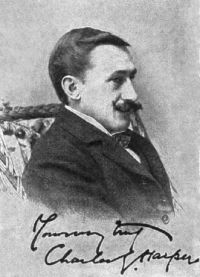
“ As men who had frequently travelled much and studied deeply, they summoned to their aid in the building and beautifying of their churches the most skilled artists end artificers of their time; so, with the story of the lives of the bishops of a diocese, the history of a cathedral's building is inextricably woven. To be elevated to a bishopric generally meant to be put into possession of great wealth—when Veysey became bishop the revenues of the see of Exeter have, by some authors, been computed at £100,000 ”
Charles G. Harper,
From Paddington to Penzance
“ Used to the more familiar type of cathedral city, dreamy old places where the atmosphere of the Minster is all-pervading, and where the Bishop, the Dean and Chapter, and their doings hold the foremost rank in men’s minds and talk, we were not prepared to come upon so busy a place as Exeter, where the ecclesiastical element is only one among many and is not pre-eminent. ”
Leslie Stephen,
Dictionary of National Biography…
(1899)
“ These included the rectories of Calstock in Cornwall (1724) and Shobrooke in Devonshire (1724) ; the treasurership, with a canonry, of Exeter Cathedral (1724) , and the archdeaconry of Exeter (26 Jan. 1731–2) . He lived mostly at Exeter, rarely coming to the meetings of parliament, and is said to have been too apt to treat his clergy as if they were boys under him at school. ”
Percy Addleshaw, Bell's Cathedrals: The Cathedral Church of Exeter
“ No cathedral, not even Lincoln, boasts a more lovely and appropriate position. "In the minds of all early Christians," says Mr. Ruskin, "the church itself was most frequently symbolized under the image of a ship," There is no country so saturated with traditions of the sea as Cornwall and Devon. "Exe terra"—out of the earth—is sometimes declared to be the derivation of the name Exeter. ”
Esther Singleton, How to Visit the English Cathedrals
“ The human heads are full of expression; and the monkeys and other animals sporting among the branches have all the same exquisite finish. The mode in which the cusps of the circles in the canopies are terminated, is worthy of attention; and in short, at this period of the revival of wood-carving, no better examples could be found for study and imitation. The misereres below are of early character and interesting. Their date is rather later than those (Early English) in Exeter Cathedral—the most ancient in the Kingdom. ”