Ferdinand Cortés

Definition and stakes

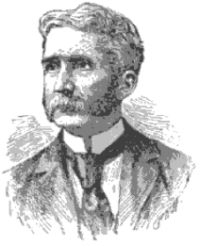
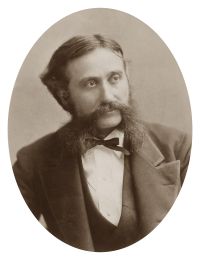
Portrait of Hubert Howe Bancroft Hubert Howe Bancroft,  History of Mexico (1882)

“ With his fine soldierly qualities were financial and executive ability, and fair common sense, a rare combination in a Spanish cavalier. While loving adventure he did not altogether hate ideas. His world now spread itself before him, as divided into two unequal classes, those that use others, and those that are used by others, and he resolved himself forever into the former category. Like Diogenes, though enslaved at Crete, Cortés felt that if he could do one thing better than another it was to command men. ”
Source: Wikisource

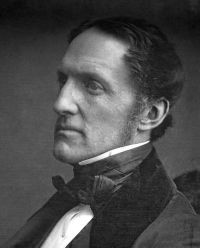
Portrait of Hubert Howe Bancroft Hubert Howe Bancroft,  History of Mexico, Volume 1, 1516-1521 (1883)

“ His situation was desperate: he must conquer or be conquered. Cortés was no abstract theorist: he dealt mainly in concrete facts; not necessarily demonstrated facts, but facts reached often by intuition alone. With facts, intuitively or practically arrived at, he kept himself well stored. He possessed many noble qualities, but on the whole, as we have seen, his character was not cast in an immaculate mould. He was exceedingly religious; and while, as I have said, he would not let religion stand in the way of his ambition, yet he was more bigoted than any of his followers. ”
Source: Gutenberg

The True Story Book

“ This young prince had married one of Montezuma's daughters. He was handsome and valiant, and so terrible that his followers trembled in his presence. He had a sort of religious hatred of the Spaniards, and prepared manfully to meet the perils which he saw threatening his country, for by means of spies he had kept a watch upon the movements of the Spaniards, and had discovered their intention of besieging the capital. Cortés, upon reviewing his army, found that his whole force fell little short of six hundred men, of whom forty were cavalry, and eighty arquebusiers and cross-bowmen. ”
Source: Gutenberg

Get perspective with Kwize: daily news enlightened by great literature