“ These soors of Feringhi, whom you call your masters, beat you, and they use your brothers to be their sticks. But for your brothers, who wear the uniform of the Feringhi, and carry their guns, these worthless masters would be trodden into the dust beneath your feet. The men who hedge them in with steel must turn that steel against them. ”
Feringhi
Definition and stakes
The theme of “Feringhi” has been addressed by authors such as Various, Jean Finot, Herbert Strang and James Talboys Wheeler. It is often associated with terms like Feringhis, Cawnpore, Feringhee, king and Ferrante.
Quotes about “Feringhi”
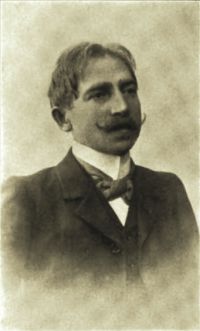 Jean Finot,
Modern Saints and Seers
Jean Finot,
Modern Saints and Seers
“ Feringhi, one of the most famous of Indian stranglers, who also held a responsible official position, was once asked if he was not ashamed to kill his neighbour."No," he replied, "because one cannot be ashamed to fulfil the divine will. In doing so one finds happiness. No man who has once understood and practised the religion of Thuggee will ever cease to conform to it to the end of his days. ”
Herbert Strang, Barclay of the Guides
“ Their eyes do not shut when one offers to put rupees in their palms; nay, I heard of a young Feringhi at Lahore, who, when Kunwar Khan spoke of giving him a great sum if he would buy Kunwar's mildewed grain for the soldiers—this young Feringhi doubled his fist and smote Kunwar in the face, and he fell backward, showing the soles of his feet. Truly the Feringhis are a strange folk.""Well then, Ahsan, there is but one thing to do. I shall be chief now, and I will get more and more men about me until we are strong enough to make an attack on the prison and bring my father out. ”
James Talboys Wheeler, India Under British Rule from the Foundation of the East India Company
“ The Residency at Lucknow was still a place of refuge, although it might possibly be soon overwhelmed by numbers. No effort was spared by the disaffected to stir up the city population against the British authorities. Proclamations were posted from day to day on Hindu temples, and Mohammedan mosques and palaces, calling upon the people to wage a holy war against the Feringhi. Horrible effigies, dressed as British officers and children, but without heads, were carried through the streets by the rabble. ”
 Isabella L. Bird,
Journeys in Persia and Kurdistan…
Isabella L. Bird,
Journeys in Persia and Kurdistan…
“ We have women who take out bullets, but in all our nation there is no Hakīm who knows the wisdom of the Feringhis. Your medicines are good, and have healed many of our people, and though a Kafir we like you well and will do your bidding. The Agha speaks of sending a Hakīm among us next year, but you are here, and though you are old you can ride, and eat our food, and you love our people. You have your tent, Isfandyar Khan will give you a horse of pure pedigree, dwell among us till you are very old, and be our Hakīm, and teach us the wisdom of the Feringhis. ”
Herbert Strang, Barclay of the Guides
“ Did he not command two days ago that twelve rupees' worth of sweetmeats should be bestowed upon those seventy sowars who came in from Alipur, with a tale—lies, by my beard!—that they had slain a hundred Feringhis and pursued a host for three full koss? And yesterday did he not give large gifts to the Gujars who stole forty camels from the Feringhis' camp? He is lavish to them, and yet will not part with a rupee to one who has journeyed in the heat of the day and faced death a hundred times in conveying the Maulavi's chapatis to the faithful! ”
Herbert Strang, Barclay of the Guides
“ Jan Larrens is a stern man, they say, and swift to punish. The Feringhis have many ways of punishing. Sometimes they slay with a rope; sometimes they make a man pay much money; sometimes they hold him prisoner. Who can tell what they will do with the master!""And we cannot help him, can we, Ahsan?""Ahuh! 'tis impossible. Peshawar is a strong city: once and twice I have been there in my youth—before the Feringhis came. Jan Larrens is the governor now; he has many soldiers, both Feringhis and true believers who take their pay, like Sherdil, son of Assad. ”
Herbert Strang, Barclay of the Guides
“ I shall by and by be rich as a shroff, that is sure. I got much plunder when we entered Cawnpore after the Feringhis were slain; and in very truth—but tell no man of this, banijara—it would not surprise me if I were at this moment richer than my exalted master himself. There is great honour in serving the King of Delhi, but hitherto little profit. That is only until the Feringhis are utterly destroyed. Then all faithful servants of the king will become great subahdars, and Minghal Khan is very high in his favour. ”
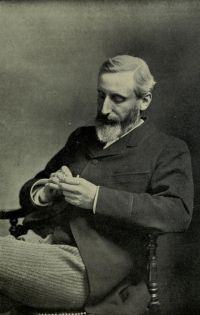
“ A few days before all this, I was standing about in the bazaar, when I met a jemadar. He said to me, 'So the Feringhees are marching from Allahabad!'"'The Feringhees!' I said: 'why, no, we have killed them all off out of India, thanks be to the gods. At Delhi they are all killed, and at Meerut, and at Cawnpore here, and I believe everywhere but at Allahabad and at Calcutta.'"'Ram Das,' he answered, 'you are a child; you know nothing. Do you [Pg 350] think the Feringhees are so few? They are swarming across the water like locusts across the Ganges. ”
“ As soon as I had got to Cawnpore, I went straight to the jemadar's house, to see if he would recognize me; but he did not: for even my voice was hoarser and harsher than of old, through fever and exposure. So I went and told my story to the Feringhee doctor, how I had been wounded in keeping the tuhseelie for his people; and he tended my arm, and made it well again. For though the Feringhees are savage like tigers to their enemies, if you befriend them, they will treat you well. In that they are better than the Musalmans. ”
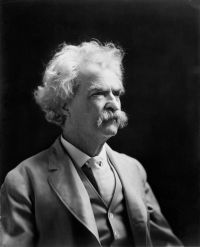 Mark Twain,
Following the Equator: A Journey Around the World…
Mark Twain,
Following the Equator: A Journey Around the World…
“ One would be apt to imagine that the Thugs were utterly callous, utterly destitute of human feelings, heartless toward their own families as well as toward other people's; but this was not so. Like all other Indians, they had a passionate love for their kin. A shrewd British officer who knew the Indian character, took that characteristic into account in laying his plans for the capture of Eugene Sue's famous Feringhea. He found out Feringhea's hiding-place, and sent a guard by night to seize him, but the squad was awkward and he got away. ”
“ For we Hindoos respect our fakeers, and even the Musalmans respect their pirs; but the Feringhees think as little of the missionaries as we do ourselves, and care more for dances than for their churches. That is why they have not compelled us to become Christians."All the time the Feringhees were in Cawnpore, I lay hid in the jemadar's house. ”
“ There they were well treated; and though they had not punkahs, and tattis, and cow's flesh, as formerly, yet they got better rations than any of the Nana's own soldiers: for the Feringhees, like all you Europeans, Sahib, are very luxurious, and will not live off rice or dal and a little ghee like other people. You have conquered every place in the world, from Ceylon to Cashmere, and so you have got luxurious, and live off wheaten bread, and cow's flesh, and wine, and many such ungodly things. But the rest of the world think it a great thing if they have ghee to their rice. ”
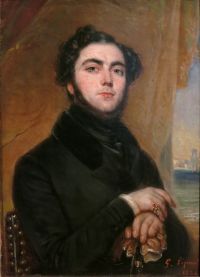 Eugène Sue,
The Pilgrim's Shell; Or, Fergan the Quarryman…
Eugène Sue,
The Pilgrim's Shell; Or, Fergan the Quarryman…
“ Again Fergan was carried by the torrent of the crowd and arrived upon a spacious square littered with Saracen corpses, seeing that, after the assault had succeeded, the Saracens had retreated, fighting from street to street, and drawn themselves up before the mosque, where a last battle was delivered. At that place, these heroes were all killed defending the temple, the refuge of the women, the children and the old men, too feeble to fight, and who relied upon the pity and mercy of the vanquishers. Easier far had it been to excite the pity of a hungry tiger than that of the Crusaders. ”
Eugène Sue,
The Pilgrim's Shell; Or, Fergan the Quarryman…
“ Our conquerors are thousands, while we, the conquered, number millions, and yet we patiently bear the yoke. Indeed, never did more docile cattle march under the whip of a master, or stretch the neck to the butcher's knife!" After a moment's silence, Fergan resumed: "Listen, Neroweg! You are in my power, disarmed and fettered. I am about to fulfil a great act of justice by braining you with my cudgel like a wolf caught in a trap. It is the death that you deserve. Had I a sword, I would not use it on you. ”
“ And the Feringhees have sent up men from Calcutta who have reached Allahabad, and are now on the march for Cawnpore. When they come, they will take us all, and kill the Nana, and there will be an end of the Hindoos for ever. They are going to make us all into Christians by force, baptising us with unclean water, and making Brahmans and Pariahs eat together of cow's flesh, and destroying all caste, and modesty, and religion altogether.'"'They will do all these things, doubtless,' I replied, 'if they can succeed in catching us: but it is impossible. ”
Eugène Sue,
The Pilgrim's Shell; Or, Fergan the Quarryman…
“ The good baker was smiling at the heroic enthusiasm of his pretty wife when the peal of a large bell was heard from a distance. Fergan, his family and neighbors, listened to the sonorous and prolonged sound with a tremor of joy."Oh, my friends!" said Fergan with emotion, "do you hear it sound for the first time from the belfry of our Commune? Do you hear it? To-day it summons us to a feast; to-morrow it will call us to the meeting of the council where we attend to the business of the city; some day it will give us the signal for battle. A belfry of the people! ”
Eugène Sue,
The Pilgrim's Shell; Or, Fergan the Quarryman…
“ I could not survive you. Who, then, would protect Colombaik? You can still walk and carry him on your shoulders. As to me, I am beyond proceeding. My bleeding feet refuse to carry me. Let me sacrifice myself for our child. You will then dig me a grave in the sand, that I be not eaten up by the vultures or the wild beasts."Instead of answering his wife, Fergan said to her sharply: "Joan, spread yourself on the ground; do not budge; pretend to be dead, as I shall. We are saved!" ”
 Rafael Sabatini,
The Justice of the Duke (collection…
(1915)
Rafael Sabatini,
The Justice of the Duke (collection…
(1915)
“ III FERRANTE'S JEST The career of Ferrante da Isola—or, to be particular, the sudden cessation of all record of it—is a matter that must have intrigued many a student of history. In a blaze of military glory he comes into its pages; flashes across them like a meteor, leaving a trail of fiery deeds in his wake; and is gone into an extinction as utter as it is abrupt. ”
Edward Sylvester Ellis, The Star of India (1888)
“ This remark of the guide, I need hardly say, was intended to increase the eagerness of the Ghoojurs to reach the city. "Where are the Feringhees?" "They are all killed; the Mogul Empire is restored; the Emperor has issued his proclamation giving all good wages, and not one Feringhee shall be left in Hindostan." ”
William Edward Frye, After Waterloo: Reminiscences of European Travel 1815-1819
“ I walked out one morning to Ferney in order to visit the chateau of Voltaire and to do hommage to the memory of that great man, the benefactor of the human race. It was he who gave the mortal blow to superstition and to the power of the clergy. It is the fashion for priests, Ultras and Tories to rail against him, but I judge him by his works and the effect of his works. His memory is held in reverence by the inhabitants of Ferney as their father and benefactor. He spent his whole fortune in acts of the most disinterested charity ”
Various, The Fate of Fenella (1892)
“ Then he stooped, kissed Fenella's burning brow, and went forth to seek his son—the little, innocent boy, with the curly head and clear eyes, the very thought of whom made his heart grow big. There are seasons in the lives of all of us when the best of which we are capable rises to the surface—when the resolutions which we make for the future are not based on an insecure and worthless foundation, but on a fixed and permanent one. Such a time had come to Lord Francis. He left Guernsey a chastened, but a better man, determined henceforth to lead a new and purer life. ”
Marguerite Agnes Power, Once a Week (1861)
“ And while he wrote poems, tragedies, histories, epigrams and court entertainments, his hard shrewd head was busily and most successfully employed in making his fortune. He speculated in the funds, traded with America, and for years was a victualling contractor for armies. At Ferney, “l’auberge de l’Europe,” as he was pleased to call it, he received men and women of every sort of celebrity; he corresponded with kings, queens, princes, philosophers, with the Empress Catherine of Russia, and the Pope Benedict. An active life, truly, and one strangely occupied and organised. ”
Rafael Sabatini,
The Justice of the Duke (collection…
(1915)
“ It was not much; but men of a high order of intelligence, as was Ferrante, are of a singularly swift receptivity to impressions. The Cardinal-Count, he had observed, was watching him furtively from under lowered brows, a something cruel and cunning in his glance. Then it was that, as in a flash of recollection, he remembered his subconscious observation that the wine for his followers and himself had not been poured from the same jug as that which had supplied the gentlemen of Reggio. ”

“ You know that the Gothic king is conquering all before him, coming from the north?' Veranilda looked into her lover's face with a tender anxiety. 'And you fear him, O Basil? It is he that is our enemy?' 'Not so, sweetest. No foe of mine is he who wears the crown of Theodoric. They whom I fear and abhor are the slaves of Justinian, the robber captains who rule at Ravenna and in Rome.' As she heard him, Veranilda trembled with joy. She caught his hand, and bent over it, and kissed it. ”
Eugène Sue,
The Pilgrim's Shell; Or, Fergan the Quarryman…
“ The threat rekindled the fury of the Crusaders. Already, braving the rapid swing of Fergan's cudgel, several seigneurs were rushing forward to seize the serf, when suddenly the braying of clarions was heard from afar, together with loud and nearing cries of: "To arms! The Saracens are upon us! To arms! To the ramparts!" Several men-at-arms of the Duke of Aquitaine rushed into the hall, sword in hand, and calling out: "The Saracens have profited by the night to surprise the city. They have entered near the gate of Agra by the breech that we made. They are fighting on the ramparts. ”
Rafael Sabatini,
The Justice of the Duke (collection…
(1915)
“ Ferrante's brows went up; his officers muttered their astonishment. He crossed to the table, and peered into the goblet. It was more than half full. He smiled thoughtfully. It was not the end he had expected, but it was very curious; it was most quaintly humorous in its way. The man had been fulminated by his terror; destroyed by his imagination. As he stood there, considering the dead prelate, Ferrante gave utterance to his thoughts. “Most strange,” said he, “how deadly a man's terrors may become. ”
Eugène Sue,
The Pilgrim's Shell; Or, Fergan the Quarryman…
“ They have not chosen to wait here." Fearing some trap, the King's messenger hesitated to follow Fergan, who, surmising his thoughts, added: "Fear nothing; your person will be respected; I answer for you with my head."The sincerity that breathed through the words of Fergan reassured the envoy, who, from greater prudence, ordered the knight, by whom he was escorted, to accompany him no further, lest the sight of an armed man should irritate the crowd. The royal messenger then followed the quarryman. ”
Rafael Sabatini,
The Justice of the Duke (collection…
(1915)
“ He tore aside the door-curtain with an angry hand, and in an angry voice he shouted for the men of Taddeo's foot. The entire company had risen now, the Cardinal-Count among the rest, dismay and vexation overspreading his white face. “What would you do, my lord?” he asked. “This man has done no more than——” “I have no concern with him,” Ferrante broke in rudely, facing the table again, and towering there, the very incarnation of wrath. “But if I am to sup with your Magnificence I'll not be served by swineherds and bathed in fish-stews. ”
Rafael Sabatini,
The Justice of the Duke (collection…
(1915)
“ They were the outward manifestation of the delight that Ferrante took in this game of strategy he had set himself to play; this pitting of quick wits against the clumsy murderous plan of the Cardinal-Count. In anticipation, he was already relishing the deadly jest he had prepared. “My message to you,” he began—and carelessly, abstractedly, as he spoke, he passed the goblet into his left hand, “is a message of good will. Had bloodshed been necessary ere Reggio di Monte had raised her gates to us——” He broke off abruptly, staring at the Cardinal-Count. ”
