“ Members of the Folk-lore Society will probably be surprised at finding me still alive—as a folk-lorist. The last number of Folk-Lore which appeared while I had the honour of editing it, contained two assaults upon me by such eminent authorities as Mr. Andrew Lang and Mr. Alfred Nutt; while, unless I am much mistaken, there was a somewhat petulant passage in the President’s annual speech relating to fairy tales that was directed to my address. ”
Folk-Lore Society
Definition and stakes
The theme of “Folk-Lore Society” has been addressed by authors such as W. H. Thomas, William E. A. Axon, T. F. Thiselton-Dyer, Friedrich Engels and William Graham Sumner. It is often associated with terms like folklore, custom, social, culture and village.
Quotes about “Folk-Lore Society”
Portal:The Folk-Lore Society, Folk-Lore (1910)
“ The change being so great,—the phenomenon of savage survivals in culture established, the position of the history and development of culture as an integral part of anthropology vindicated, and the claims of anthropology as a subject of study recognized by the Universities,—the question has naturally been more than once asked,—Is there any further need for the Folk-Lore Society? ”
Portal:The Folk-Lore Society, The Folk-Lore Journal (1884)
“ But whilst the Folk-Lore Society must be primarily a publishing society, it does not exceed its province in now and then pausing in front of the mass of material already gathered and asking what it all means. ”
Portal:The Folk-Lore Society, Folk-Lore (1909)
“ I do not invite you, as on the last occasion, on a visit to Fairyland, but ask you to descend with me from the heights of classical literature and of refined society to the depths of popular literature and to that layer of society of which the education has apparently been neglected, and of the inner life of which only a glimpse is allowed to reach the sympathetic eye from time to time. We will descend to the masses, and turn to the unwritten lore of the people. ”
“ THE Society, no less than Miss Cox, may be proud indeed of the noble volume in which are retold the varied chances and adventures that befell the despised stay-at-home sister, to whom in the end came riches, and power, and princely rank. Have we not here a symbol of our study's fate? Long relegated to the cinder-heap and the goose-green, is not Folk-lore now essaying her hidden robes of golden cloth and starry sheen? ”
Laura Fry Kready, A Study of Fairy Tales (1916)
“ In modern times the Folk-Lore Society of England and America has been established. Now almost every nation has its folk-lore society and folk-tales are being collected all over the world. Altogether probably Russia has collected fifteen hundred such tales, Germany twelve hundred, Italy and France each one thousand, and India seven hundred. ”
Portal:The Folk-Lore Society, Folk-Lore (1909)
“ It is not a barren hobby, for our labours have already borne wonderful fruit in every direction. The Folk-Lore Society is the concentration of many forces that have been working long before in a scattered manner, independently of one another ”
“ These numerous letters convinced me that there was even then, before the foundation of the national Society, a somewhat general interest in folk-lore,—not a scientific interest, but a fondness for the subject-matter itself. Many who do not care for folk-lore as a subject of research are pleased to have recalled to them the fancies, beliefs, and customs of childhood and early youth. ”
Portal:The Folk-Lore Society, The Folk-Lore Journal (1885)
“ Folk-lore, from the second point of view, the study of popular habits and customs, has close relations with sociology, since the data which it offers to this science, also in its infancy, are of incalculable value. The people stores up in its songs and proverbs—in the first from a sentimental stand-point, in the second from an empirical and inductive point of view—the beliefs and ideas which it has concerning those social relations, which, gathered into gradually more complex groups, constitute the whole of society. ”
Portal:The Folk-Lore Society, Folk-Lore (1909)
“ That is what our Folk-Lore Society is anxious to do, and it looks for the ready assistance and the sympathetic support of all those who feel like us, and appreciate our endeavours to recover the fast-fading past, to set it on a historical plane and upon a scientific basis. In each ballad, in each tale, in each song, in each superstition, and in each charm we find now that, however small and insignificant it maybe, it does not stand by itself, it is part of a whole, and as such it contains all the elements of the greater, the higher, and the more perfect. ”
Alfred M. Williams, Studies in Folk-Song and Popular Poetry
“ For within the last few years folk-lore has been promoted to the rank of a serious study and the Folk-Lore Society of London, aided by its numerous and lusty offshoots, both American and Continental, is busily applying the scientific method to fireside tale, custom, song, and ballad seeking what old philosophies lie at the heart of these, and what they have to tell about intercourse between peoples in the past. ”
“ These questions, it will be seen, indicate a proposition which I feel sure this Society will think necessary to put forward, namely, that investigators into savage custom and belief, when they are discussing origins and development, should take into consideration the problems suggested by the science of folk-lore. Another fruitful source of error in those anthropologists who do not take count of the detailed methods and ascertained results of folk-lore is the idea that the hunting and pastoral stage of life is necessarily earlier in development than and generally precedes the agricultural. ”
Portal:The Folk-Lore Society, Folk-Lore (1910)
“ It is that which is handed on by tradition and forms the mould into which each new mind is cast as it grows up. Thus, while for society it is custom, for the individual it has something of the force of habit and more than habit." [2] I seek to show that in this small area, where with all its diversity of custom there is substantial homogeneity of culture, the end which these rites serve is often consciously realised as a social end, beneficial to them as organised communities. ”
Various, Popular Science Monthly (1893)
“ When, fourteen years ago, the speaker took part in founding the Folk-lore Society, for the preservation and publication of popular traditions, legendary ballads, local proverbial sayings, superstitions, and old customs, and all subjects relating to them, he as little as others anticipated how many volumes of such matter it would produce, or of how great value they would be, as to the main purpose of tracing the development and diffusion of popular tradition and fancy, and as to the incidental knowledge of man which is preserved in them. ”
Portal:The Folk-Lore Society, The Folk-Lore Journal (1885)
“ The institutions of primitive man, from which sociology starts, are as much within the domain of folk-lore as his myths. Indeed the myths and legends of a people are frequently inexplicable apart from its laws and ceremonies. But sociology has mainly to do with history; it may be said to be a forward-looking, while folk-lore is a backward-looking, science. Sociology deals with the social environment and organisation of men, tracing these from their early forms along the lines of their development, and striving from every indication to divine the future of our species. ”
“ Negotiations are on hand between the Folk-lore Society and the Anthropological Institute with the idea of amalgamating forces that are so near allied. An opportunity will be afforded the members of the Folk-lore Society to express their views on any scheme which may be arrived at by the joint Councils of the two bodies. ”
The International Folk-Lore Congress of the World's Columbian Exposition… (1898)
“ No department of the study of Folk-Lore is left untouched. It is a matter of congratulation that we have upon our programme a representative from every Folk-Lore society, and that officers and members of these societies are with us. ”
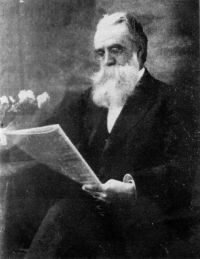 William E. A. Axon,
Echoes of Old Lancashire
“ The literature of folk-lore has grown with great rapidity, and the foundation of the Folk-Lore Society greatly stimulated the study in this country. Mr. G. L. Gomme has defined folk-lore to be the science which treats of the survivals of archaic belief and custom in modern ages. His suggested classification shows the wide scope of the new science. The first branch, Traditional Narratives, includes folk-tales, hero-tales, ballads and songs, and place-legends. ”
T. F. Thiselton-Dyer, Domestic folk-lore
“ This, therefore, whilst enhancing the value of Folk-lore as a study, in the same degree increases its interest, since with a perfect impartiality it lays bare superstition as it exists [v] among all classes of society. Whilst condemning, it may be, the uneducated peasant who places credence in the village fortune-teller or "cunning man," we are apt to forget how oftentimes persons belonging to the higher classes are found consulting with equal faith some clairvoyant or spirit-medium. ”
Portal:The Folk-Lore Society, The Folk-Lore Journal (1885)
“ Folk-lore has, in my opinion, most certainly a sociological aspect; it falls, within certain limits, within the sphere of sociology, as will be readily understood if we consider that the term folk signifies people — the human race: that is, man in the aggregate—the collective man, but not man as an individual. ”
Portal:The Folk-Lore Society, The Folk-Lore Journal (1885)
“ Local custom is apt to shade off into local law, and as soon as we find this to be the case folk-lore loses its claim. But it is instructive to find examples of a local custom which in some places owes its observance to the popular will, and, in other places, to the local law. We here get hold of a transitional form of folk-lore which helps us to grasp the true value of much that folk-lore has to teach us; because we may assume that the custom is older than the law, and that hence folk-lore has contributed to the laws of the land. ”
contessa Evelyn Lilian Hazeldine Carrington Martinengo-Cesaresco, Essays in the Study of Folk-Songs…
“ Research into popular traditions has now reached a stage at which the English Folk-Lore Society have found it desirable to attempt a classification of its different branches, and in future, students will perhaps devote their labours to one or another of these branches rather than to the subject as a whole. ”
Portal:The Folk-Lore Society, The Folk-Lore Journal (1884)
“ In this view we do well, I think, on occasions when the members assemble, to take stock, as it were, and inquire to what larger result the labours of the student of folk-lore tend—what generalisations may be deduced from the evidence which he has collected. An attitude like this is possible only when we regard our mission as a serious one; when we recognise that there is some larger meaning than lies on the surface of the material, some deeper thought at the heart of it. So long as the folk-tale was looked upon as the vagrant of fancy, sober treatment of it was not possible. ”
Portal:The Folk-Lore Society, Folk-Lore (1919 (vol. 30), 1920 (vol. 31))
“ In short, the folk-lorist must seek to do equal justice to passing and to permanent conditions. “A surface-view of history as a welter of chance clashings and collocations shows change and decay everywhere. Seeking deeper, however, we come upon tendencies and motives that are, humanly speaking, everlasting.” ”
Portal:The Folk-Lore Society, Folk-Lore (1900)
“ The term folklore, in fact, was confined to scraps of tradition; and anything like the conception of it we now hold was unknown. The Handbook of Folklore, issued by the Society in 1890, marks a long step in advance; and nine or ten years' subsequent experience has taken us beyond even that. Some people are said to prefer being in a minority. If there are such people, I am not one of them. ”
Portal:The Folk-Lore Society, The Folk-Lore Journal (1889)
“ The value of the materials with which our Society deals is becoming more and more obvious. That there is nothing "common or unclean," that the folktale crystallizes some thought or speculation of a remote past, and the folkwont some obscure custom, is our main task to show. Whether the story embodies man's serious reflections, or is the outcome of his idle, playful mood, it is this trivial or earnest purpose which we seek to reach. ”
“ All that is folk-lore should come to us—we are the rightful owners of it; and if individuals occasionally go to the "wrong shop", societies properly organised and careful of their own work and position should direct them to the right one. But I suppose it is hopeless in England to get people to be systematic in their labours and in the proper placing of their labours. And I fear that our own organisation as a a society is not so perfect that we can too quickly call out against our neighbours. ”
Portal:The Folk-Lore Society, The Folk-Lore Journal (1883)
“ And yet, if we think of it, nothing is more certain than that every folk-story was once alive in the sense that for the people who told it it had a real present meaning, and was told among them, not because it referred to the heavenly bodies, or had been handed down from ancient times, but because it reflected the daily life of the villagers, their ideas of right and wrong, their hopes and fears, the means to ward off harm from their cattle, and to make the crops bear rich fruit. ”
Portal:The Folk-Lore Society, Folk-Lore (1909)
“ It is not merely a society for collecting customs and relics which our so-called modern education is fast obliterating by driving away the poetry from school and from home, but it has made the science of Folklore possible by a sustained comparison between the legends and tales, customs, and superstitions prevailing in one country with those prevailing in other countries. ”
Portal:The Folk-Lore Society, The Folk-Lore Journal (1885)
“ In the classes shut out from all communication with the exterior there is, by their very constitution, a multitude of the elements of folk-lore, that is, of rituals and ceremonies, which, though they have lost the raison d'etre of their existence, and the cause which gave them life, are yet true relics of degrees of culture, superior perchance to the popular culture of their own time, but inferior to the popular culture of the present time. ”
Portal:The Folk-Lore Society, Folk-Lore (1919 (vol. 30), 1920 (vol. 31))
“ He shows how natural it was, in view of the fact that the folk itself is as it were in a state of survival throughout Europe, to regard the science of folk-lore as simply the study of survivals, a palaeontology of human culture. But he strongly deprecates as one-sided and inadequate the view that folk-lore is but a heap of fossils. He would “treat folk-lore not as so much dead matter, but rather as the outcome of an organic process, namely: of an existing or recently existing folk-life,” wherein change and movement are in evidence everywhere. ”
Portal:The Folk-Lore Society, Folk-Lore (1899)
“ The English student of folk-institutions has, without travelling outside the limits of the empire, as wide and varied a field of inquiry as the student of folk-fancy; it is his to see that the customs in which so many different races have expressed their social ideal are made available for utilisation in modern life as well as for purely scientific inquiry. ”
Portal:The Folk-Lore Society, The Folk-Lore Journal (1885)
“ The parallels between the folk-lore of Europe and savage custom establish two very important facts—first, the primitive origin of European folk-lore; and, secondly, the identity between the early stages of modern civilisation and the present stage of modern barbarism; thus proving the state of arrested progress which modern savage life presents, and leading up to one of the most important problems of anthropology, namely, the value of the evidence of savage society for the early history of man. ”
Portal:The Folk-Lore Society, Folk-Lore (1910)
“ Sociology is the coming study of the immediate future, but sociologists seem not yet to realize that European folklore is the missing link, the bridge over the gulf, between savagery on one side and culture on the other. ”
Portal:The Folk-Lore Society, The Folk-Lore Journal (1885)
“ And any one who chooses may imagine the "folk," when engaged in their festival customs, as playing traditional games, bandying proverbs, riddles, and old stories; and so may lead round again to the beginning, and to the folk-tales and ballads which would most surely be heard at any "folk-mote" wheresoever assembled. The study of folk-lore is not an "exact science," and cannot be divided and kept apart by hard and fast lines. Every subject with which it deals grows out of some other subject, and runs into something else. ”
Portal:The Folk-Lore Society, The Folk-Lore Journal (1884)
“ Nutt must stand over for want of space, I would just observe that I cannot agree with him that folk-lore should be defined as dealing with primitive man without some explanation as to how it so deals. Surely folk-lore deals primarily with the survival of primitive customs and beliefs among civilized races, and is comparable with, not identical with, the living primitive customs and beliefs of savage races. ”
Related terms
Authors who wrote about “Folk-Lore Society”
W. H. ThomasWilliam E. A. AxonT. F. Thiselton-Dyer Friedrich Engels
 William Graham Sumner
 John Stuart MillLaura Fry Kready
 Joseph JacobsAlfred M. Williamscontessa Evelyn Lilian Hazeldine Carrington Martinengo-CesarescoPortal:The Folk-Lore SocietyVarious
 Thomas Paine
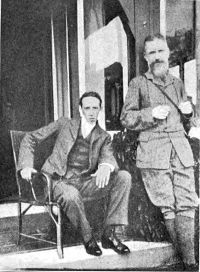 Archibald Henderson
 H. G. Wells
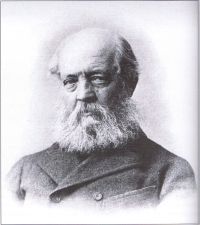 Frederick Law Olmsted
 William Kingdon CliffordHenry K. Rowe
 Emily Post
 Henry David Thoreau
William E. A. AxonT. F. Thiselton-DyerFriedrich EngelsWilliam Graham SumnerJohn Stuart MillLaura Fry KreadyJoseph JacobsAlfred M. Williamscontessa Evelyn Lilian Hazeldine Carrington Martinengo-CesarescoPortal:The Folk-Lore SocietyVariousThomas PaineArchibald HendersonH. G. WellsFrederick Law OlmstedWilliam Kingdon CliffordHenry K. RoweEmily PostHenry David Thoreau