German South West Africa

Definition and stakes

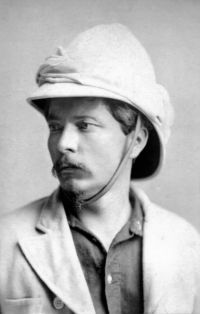
John H. Harris Dawn in darkest Africa (1912)

In the matter of official recruitment of labour, the Germans are by far the most vigorous of any of the West African Powers. In this official recruitment the individual labourer concerned has very little say indeed; that he should desire to enjoy his freedom is apparently no concern of anyone, all he knows is that he has to work for the white man for a given period, and in German South West Africa the “contract” must be made “as long as possible.”
Source: Gutenberg

Edward Parrott The Childrens' Story of the War…

German South-West Africa is not an inviting land. Much of it is waterless desert, but there are large areas of splendid grass land very suitable for grazing, and upon them the Herero raise huge herds of cattle. Sheep thrive well, and so do goats. Many Boers from Cape Colony have settled in the country, and their flocks and herds have prospered greatly. It was these Boers from Cape Colony who "made" German South-West Africa.
The Germans have done much to foster agriculture, and have opened up the country by good roads, and by railways which in 1913 had a total length of 1,304 miles.
Source: Gutenberg

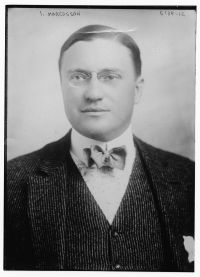
Portrait of Isaac Frederick Marcosson Isaac Frederick Marcosson An African Adventure

South Africa has not only expanded in output but her area is also enlarged. The Peace Conference gave her the mandate for German South-West Africa, which was the first section of the vanished Teutonic Empire in Africa. It occupies more than a quarter of the whole area of the continent south of the Zambesi River. While the word "mandate" as construed by the peace sharks at Paris is supposed to mean the amiable stewardship of a country, it really amounts to nothing more or less than an actual and benevolent assimilation.
Source: Gutenberg

Get perspective with Kwize: daily news enlightened by great literature