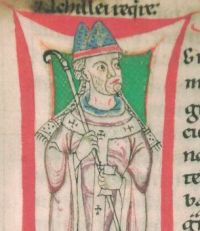
Gregory VII

Definition and stakes

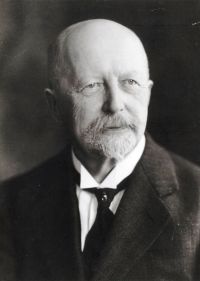
Portrait of Carl Theodor Mirbt Carl Theodor Mirbt,  1911 Encyclopædia Britannica (1911)

“ In the time of Gregory the conflict was still swaying to and fro, and he himself in 1078 declared consecration by a simoniac null and void.
The pontificate of Gregory VII. came to a melancholy close, for he died an exile in Salerno; the Romans and a number of his most trusted coadjutors had renounced him, and the faithful band in Germany had shrunk to scant proportions. Too much the politician, too rough in his methods, too exclusively the representative of the Roman see and its interests, he had gained more enemies than friends.
”
Source: Wikisource

J. H. Kurtz,  Church History (Volumes 1-3)

“ Gregory had withdrawn to the Castle of St. Angelo. Henry, however, was compelled by the appearance of a new rival for the crown, Henry, Count of Luxemburg, to return to Germany, and Robert Guiscard, the Norman duke, hastened from the south to deliver the pope, which he accomplished only after Rome had been fearfully devastated. Gregory died in the following year, A.D. 1085, at Salerno. Gregory VII. also took the field against the dissolute and prodigal king of France, Philip I., and threatened him, because of simony, with interdict and deposition. ”
Source: Gutenberg

John Lord,  Beacon Lights of History, Volume 3 part 1…

“ But of all these three hundred or four hundred men who have swayed the destinies of Europe,—an uninterrupted line of pontiffs for fifteen hundred years or more, no one is so famous as Gregory VII. for the grandeur of his character, the heroism of his struggles, and the posthumous influence of his deeds. He was too great a man to be called by his papal title. He is best known by his baptismal name, Hildebrand, the greatest hero of the Roman Church. There are some men whose titles add nothing to their august names,—David, Julius, Constantine, Augustine. ”
Source: Gutenberg

Get perspective with Kwize: daily news enlightened by great literature