Gregory of Nyssa

Definition and stakes

1911 Encyclopædia Britannica, Volume 12… (1911)

Gregory of Nyssa was not so firm and able an administrator as his brother Basil, nor so magnificent an orator as Gregory of Nazianzus, but he excelled them both, alike as a speculative and constructive theologian, and in the wide extent of his acquirements. His teaching, though strictly trinitarian, shows considerable freedom and originality of thought; in many points his mental and spiritual affinities with Origen show themselves with advantage, as in his doctrine of ἀποκατάστασις or final restoration. There are marked pantheistic tendencies, e.g.
Source: Wikisource

1911 Encyclopædia Britannica, Volume 12… (1911)

At a comparatively early age he entered the church, and held for some time the office of anagnost or reader; subsequently he manifested a desire to devote himself to the secular life as a rhetorician, an impulse which was checked by the earnest remonstrances of Gregory of Nazianzus. Finally, in 371 or 372 he was ordained by his brother Basil to the bishopric of Nyssa, a small town in Cappadocia.
Source: Wikisource

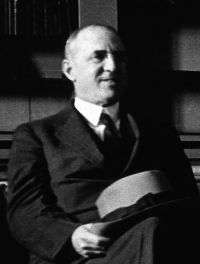
Portrait of Lynn Thorndike Lynn Thorndike A History of Magic and Experimental Science… (1923)

Gregory of Nyssa Against Fate.
Gregory of Nyssa also composed a treatise, entitled Against Fate, [2040] in the form of a disputation between a pagan philosopher and himself at Constantinople in 382 A. D. His opponent holds that the life of man is determined by the constellations at his nativity, upon whose decree even conversion to Christianity would thus be made dependent.
Source: Gutenberg

Get perspective with Kwize: daily news enlightened by great literature