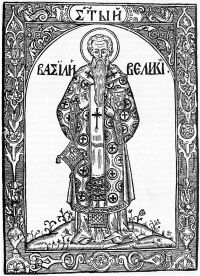
Basil of Caesarea

Definition and stakes

Edmund Venables,  Dictionary of Christian Biography and Literature (1911)

“ Basilius, bp. of Caesarea in Cappadocia, commonly called Basil the Great, the strenuous champion of orthodoxy in the East, the restorer of union to the divided Oriental church, and the promoter of unity between the East and the West, was born at Caesarea (originally called Mazaca) , the capital of Cappadocia, towards the end of 329. His parents were members of noble and wealthy families, and Christians by descent. His grandparents on both sides had suffered during the Maximinian persecution, his maternal grandfather losing both property and life. ”
Source: Wikisource

1911 Encyclopædia Britannica (1910)

“ In 370 Eusebius, bishop of Caesarea, died, and Basil was chosen to succeed him. It was then that his great powers were called into action. Caesarea was an important diocese, and its bishop was, ex officio, exarch of the great diocese of Pontus. Hot-blooded and somewhat imperious, Basil was also generous and sympathetic. “His zeal for orthodoxy did not blind him to what was good in an opponent ”
Source: Wikisource

James Craigie Robertson,  Sketches of Church History, from A.D. 33 to the Reformation

“ So they were both ordained to be clergymen, and their friendship continued as warm as ever. Gregory did many kind offices to Basil, and at length, when the archbishopric of Cæsarea, the chief city of Cappadocia, fell vacant, Gregory had a great share in getting his friend chosen to it. Basil was now in a very high office, with many bishops under him; and he had become noted as one of the chief defenders of the Catholic faith. And when the emperor Valens set up Arianism in all other parts of his dominions, Basil remained at his post, and kept the Church of Cæsarea free from the heresy. ”
Source: Gutenberg

Get perspective with Kwize: daily news enlightened by great literature