“ In summing up this review it may be said there is little reason to doubt that the 'Britannia' was the best all round vessel of the fleet; the 'Valkyrie' was a trifle the quicker in stays and in light breezes, the better vessel to windward, or even on a long close reach, and also in a dead run. In hard winds and plain sailing the 'Satanita's' 10 ft. greater length on the load-line gave her the mastery over the Prince of Wales's cutter, but on any point and in any weather 'Britannia' was equal to lowering the 'Calluna's' colours. ”
HMS Britannia
Definition and stakes
Quotes about “HMS Britannia”
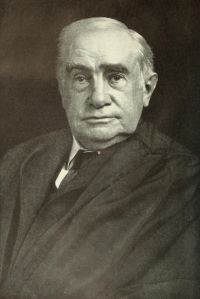
Henry Billings Brown,
The Britannia — Dissent
“ The only excuse for holding the Beaconfield in fault is that her pilot was bound to know the existence of the eddy which gave the Britannia's bow a swing to port before she answered her wheel to swing to starboard. Considering, however, the proximity of the two vessels at this time, and the failure of the Britannia to promptly respond to the Beaconsfield's whistle, I do not think the pilot of the latter was bound to know the precise moment when the Britannia would begin to answer her helm, and swing her bow to starboard. ”
William Henry Giles Kingston,
How Britannia Came to Rule the Waves
“ The French and Turks, who formed one line, naturally led; the Britannia followed, close to the Charlemagne, the rearmost of the French line. An inshore squadron had been formed, consisting of the Agamemnon, Sanspareil, and London, which was afterwards joined by the Albion and other ships. The Britannia, the most southern of the British ships, took up her position opposite Fort Constantine; next to her in succession were the Trafalgar, Vengeance, Rodney, and Queen. ”
Lord Frederic Hamilton, Here, There and Everywhere
“ No one ever thought of grumbling; on the contrary, we all experienced that stupid sense of reflected pride which passengers in a crack liner feel, for the Britannia then enjoyed a tremendous reputation in the Pacific. Certainly, seen from the shore, the old Britannia was a singularly pleasing object to the eye, with her clipper bows, the graceful curve of her sheer, and the beautiful lines of her low hull unbroken by any deck-houses or top-hamper.The traveller of to-day is more fortunate; he expects and finds in a modern liner all the comforts he would enjoy in a first-class hotel ashore ”
Henry Billings Brown,
The Britannia — Dissent
“ A careful watch was kept on the movements of the Britannia, and it was observed not only that she did not swing to starboard, but also that she was showing a little more of her starboard side to the Beaconsfield; thereupon those upon the Beaconsfield, while still about four lengths from the Britannia, blew another single whistle, and, hearing no answer, put their wheel hard a-port, and stopped, and reversed full speed. Her engines were kept reversed until her headway was stopped. ”
Edward Fraser, Champions of the fleet
“ I am very happy to say that the Britannia was certainly a very fortunate Ship during the whole time, as we had not above 10 killed and 41 wounded although we were the fourth Ship in Action and the last out of it, and I doubt not that it will be found that she does honour to all who belong to her, as our fire was not directed to One particular Ship, but as soon as one had struck to us we immediately made to others and at one time had five ships blazing away upon us, but we soon tired them out. ”
Edward Phillips Statham, The Story of the "Britannia"
“ It is now time to take leave of the Britannia. Her story has been followed pretty closely for 46 years, from the day on which Captain Harris received his first batch of cadets on board the Illustrious; and it is hoped that the life on board and the various vicissitudes of the ship under successive administrations have been described with sufficient accuracy to give a true picture of this institution—an institution which has had a bearing and influence upon the efficiency of the [Pg 241] Navy during all these years, the importance of which can scarcely be overrated. ”
Edward Fraser, Champions of the fleet
“ Wales, 25; the Isle of Man, 6; the Channel Islands, 5; and the Scilly Isles, Shetland, and Skye, 1 each. The full total of all ranks and ratings on board the Britannia at Trafalgar, as mustered on the 20th of October, numbered 31 officers, 599 seamen ratings (petty officers, able seamen, ordinary seamen, and landmen) , 28 boys, 126 marines, 5 supernumeraries, and 8 “widows’ men,” making 797 in all. The ship’s official complement as a first rate was 837, so that the Britannia was really 40 men short in the action. ”
Edward Phillips Statham, The Story of the "Britannia"
“ The Isis, however, did not provide sufficient accommodation for the cadets who were ripe for sea training, so another vessel was attached to the Britannia—the Aurora, an older vessel, and, though of the same tonnage and lower speed, rated as a first-class cruiser; she has a considerable amount of protective armour. ”
George Shiras, Jr.,
The Britannia — Opinion of the Court
“ As both the district court and the circuit court, though for somewhat different reasons, found the Britannia to be in fault, and as we agree with them in that conclusion, it is not necessary for us to go at length into that part of the controversy. It is sufficient to say that it appears that the Britannia came so close to Governor's island that she grazed the bottom, and rendered it necessary for her pilot to direct her engines to be put at full speed till she cleared the ground. After that the speed of the vessel was slowed, and her wheel was put hard a-port to round into East river. ”
William Henry Giles Kingston,
How Britannia Came to Rule the Waves
“ English men-of-war were ere long, however, to teach them to sing a different note. A fleet of ninety-nine sail, including the Dutch ships, was got ready by May, 1692. The English fleet was divided into two squadrons, the Red and the Blue. Among the ships we find the names of many which have become famous in naval history. There were six ships of 100 guns each. In the Red Squadron there was the Britannia, carrying the flag of Admiral Russell; the Royal Sovereign, that of Vice-Admiral Sir Ralph Delaval; the London, that of the rear-admiral, Sir Cloudesly Shovel ”
Edward Phillips Statham, The Story of the "Britannia"
“ On March 17th, 1897, while both the captain and the wardroom officers were entertaining guests at dinner, a sensational incident occurred. The Britannia, it will be recollected, has a solitary mast; not a large one for a vessel of her size, but sufficiently lofty to be a target for lightning, and provided with the usual copper strip for conductor. While dinner was in progress there was a shock, plainly felt throughout the ship, and a blinding glare, while a tremendous peal of thunder simultaneously resounded overhead ”
Edward Phillips Statham, The Story of the "Britannia"
“ If the initials of the writer are genuine, his time in the training-ship goes back a long way, somewhere in the ’sixties. He appears to hold a poor opinion of the cadets of those days, and says the captains were as bad as the rest.On October 14th Admiral Sir Nowell Salmon and [Pg 146] “Through the Mill” come to the rescue, and stoutly defend the Britannia, pointing out that, judging from the officers eventually turned out, the ship cannot be a sink of iniquity such as is represented, and that bullying will always go on to a certain extent among a number of boys. ”
Edward Phillips Statham, The Story of the "Britannia"
“ After many representations from Captain Powell, the Admiralty in 1864 decided to supplement the Britannia with another ship, and the Hindostan, an old two-decker, was selected for the purpose, and sent round from Devonport. She was one of several vessels built of Indian teak, a wood which far surpasses British oak in durability and freedom from rot; it is, in fact, practically everlasting. ”
“ The mishap was alike annoying to crew and spectators as the vessel would, without doubt, have established a record over the Torbay course. The 'Britannia' and 'Calluna' then had a match, and, curious to state, 'Calluna' in the hard wind which prevailed during the first, second, and third rounds, fairly beat 'Britannia' on each turn while sailing with a free sheet, the advantage gained by the latter being on the beat between the sea mark and Brixham. On the last round the wind took off a little and 'Britannia' made an all-round gain, eventually beating her antagonist by 4 mins. 17 secs. ”
Edward Phillips Statham, The Story of the "Britannia"
“ The cadets began to come up in twos and threes, their hands stuffed well into the pockets of their monkey jackets; soon, however, they were summoned to “bring ship to an anchor,” as the Britannia, with the Trafalgar still in close attendance, rounded the breakwater and approached her moorings, already laid down. Not even Captain Harris, however, would venture on the experiment of picking up moorings of this class under sail, in a three-decker, jury rigged, with her topsails on the cap ”
William Henry Giles Kingston,
How Britannia Came to Rule the Waves
“ We are apt to forget when we see an elaborate machine, the immense quantity of mental and physical exertion it represents, the efforts of the united minds perhaps of many successive generations, and the labour of thousands of workmen. I propose briefly to trace the progress which the British Navy has made from age to age, as well as its customs, and the habits of its seamen, with their more notable exploits since the days when this tight little island of ours first became known to the rest of the world. ”
Edward Phillips Statham, The Story of the "Britannia"
“ Being, of course, [Pg 225] strong partisans of Britannia, we rejoice with him, and hope his side will be in form with the bat.The “gallery” is mustering rapidly. Nearly all the officers of the ship are on the ground; the captain strolls up, with two or three children and a happy dog; officers’ wives, and outside friends, make a goodly show on the seats along the terrace, half-way down the bank.Time for Britannia to go in, and Engineer Lieutenants Benn and Smith are deputed to open the ball. Athletics, as is well known, are by no means neglected at the Engineers’ Training College ”
Henry Billings Brown,
The Britannia — Dissent
“ In this condition of things we are confronted by the twenty-fifth and twenty-sixth findings,-that, at the time the Beaconsfield stopped and reversed, the vessels were approaching so as to involve risk of collision; that a prudent navigator, viewing the situation from the deck of the Beaconsfield, would have reached the conclusion that, if the course of the Britannia were not altered nor her headway checked, a collision was imminent and inevitable, unless avoided by some change on the part of the Beaconsfield ”
George Shiras, Jr.,
The Britannia — Opinion of the Court
“ They both, in compliance with the rule of navigation applicable to such a case, endeavored to pass under the stern of the other vessel by porting the helm, and they both, when it was seen that the vessel was not swinging as rapidly to the starboard as was expected, stopped and reversed engines. The reason why, if the Rhondda was justly exonerated, the Britannia is not entitled to a like judgment, is found in the different circumstances in which the vessels were placed. ”
Various, Little Folks (September 1884)
“ The Britannia is the training-school for naval officers. All boys who are to be fighting officers in the British Navy go to the Britannia. They enter when they are about thirteen, and stay there two years, and from this ship they go as midshipmen to our ships in all parts of the world. We are going to pay a visit to the Britannia, and see how these young naval cadets spend their day.If we want to see the whole day through, we must start early. So we will take a boat and go off from the shore at five o'clock in the morning of a fine summer day. ”
George Shiras, Jr.,
The Britannia — Opinion of the Court
“ The disregard by the Beaconsfield of the Britannia's signal, her failure to obey the rule and keep her course, and her supine negligence in remaining motionless for so long a period, while she saw the Britannia approaching her, clearly put her in fault.It is argued that the words 'shall keep her course' do not mean that she shall maintain her speed, and English cases are cited to the effect that the rule does not imply that the vessel shall maintain the same speed. ”
Edward Phillips Statham, The Story of the "Britannia"
“ Moreover, the art of seamanship—i.e. of handling a ship on all occasions to the best advantage—can never become obsolete so long as there are ships afloat; it may change its nature, and the consequent requirements of a good seaman, who is still, however, par excellence, the man who can efficiently manage the ship or boat committed to his charge.There are some who should know better than “Veritas”—as, for instance, Captain (now Admiral) Fitzgerald—who at this very time complained that seamanship was too much sacrificed in the Britannia to a multiplicity of other subjects. ”
Edward Fraser, Champions of the fleet
“ We have in addition the text of a prologue to one of the midshipmen’s plays, presented before Lord Northesk and the officers. It gives one the best possible idea of the magnificent self-confidence with [288] which the British Fleet anticipated the issue of Trafalgar.Address. [Spoken on board his Majesty’s ship “Britannia,” off Cadiz.] My Lord and Gentlemen,—Alas! off Cadiz,How hard it is we can’t address the ladies,For “if the brave alone deserve the fair,”Britannia’s sons should surely have their share! ”
Edward Phillips Statham, The Story of the "Britannia"
“ In February, 1868, the Bristol, a fine steam frigate, recently paid off as commodore’s ship on the coast of Africa, [Pg 79] was recommissioned as a sea-going training-ship for cadets, in which they were to spend one year after leaving the Britannia, the period of training in the latter being at this time one year, making the maximum time of probation two years.On August 3rd, 1869, however, a new circular was issued by the Admiralty, in which the whole system was reorganised, [6] the most important change being, as has been stated, the adoption of competition in the entry examination. ”
William Henry Giles Kingston,
How Britannia Came to Rule the Waves
“ While one British fleet was attacking the Russians on the southern shores of their empire, another of still greater power was sent up the Baltic to prove to them that no part of their coasts was safe. Great results were naturally expected from it, and, indeed, England had never before sent so really powerful a fleet to sea—not on account of the number of the ships, but from their means of inflicting injury, most of them possessing steam power, while their guns were more effective than any which had before been used. ”
Edward Phillips Statham, The Story of the "Britannia"
“ These lads, after two years in the training ships, provided they fulfil certain conditions as to age, etc., are admitted for examination with the cadets in the Britannia.Some details as to the cost of the Britannia will be found in the Appendix; the figures are high, and do not include the cost of the sea-going training ships now in commission, which is not small. MR. J. H. SPANTON.If the gross amount named in the estimates be taken, without deducting the parents’ contributions, the rate per head per annum in 1882-3 would be £258, and in 1901-2 £187. ”
Edward Phillips Statham, The Story of the "Britannia"
“ The visit must not be delayed too long, however; the last days of the Britannia are approaching, and in a year or two the familiar twin hulls, with the connecting bridge, and the flotilla of steam and sailing boats clustered about them, will have disappeared. The last batch of cadets under the old regulations will be entered in November, 1905; and it is probable that, if space permit, they will be housed in the College now rising on the hill, while the ship may be kept on for a time as an overflow, or as a store for marine appliances, etc.The old gives place to the new ”
William Henry Giles Kingston,
How Britannia Came to Rule the Waves
“ From the early part of the century, British men-of-war have been employed on the African coast blockade, but for a long time, as only a few 10-gun brigs, and they inefficient vessels, were sent out, and as there were scarcely ever more than six cruisers at a time on the coast, during twenty years, from 1819 to 1839, only 333 slave-vessels were captured; whereas after that period a superior class of 16 and 18-gun brigs and sloops of war, and latterly fast screw-steamers, fitted for sailing as well as for steaming, were employed ”