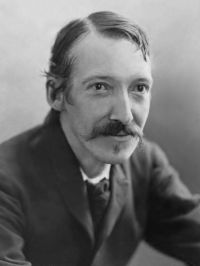
Henry Rawlinson

Definition and stakes

1911 Encyclopædia Britannica, Volume 22… (1911)

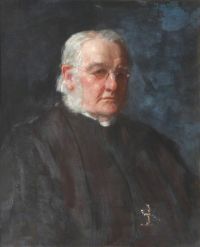
RAWLINSON, GEORGE (1812–1902) , English scholar and historian, was born at Chadlington, Oxfordshire, on the 23rd November 1812, being the younger brother of Sir Henry Rawlinson (q.v.) . Having taken his degree at Oxford (from Trinity College) in 1838, he was elected to a fellowship at Exeter College in 1840, of which from 1842 to 1846 he was fellow and tutor. He was ordained in 1841; was Bampton lecturer in 1859, and Camden professor of ancient history from 1861 to 1889. In 1872 he was appointed canon of Canterbury, and after 1888 he was rector of All Hallows, Lombard Street.
Source: Wikisource

Percy S. P. Handcock Mesopotamian Archaeology

This little clay relief was discovered by Sir Henry Rawlinson at Birs-Nimrûd. A clean-shaven and semi-nude attendant is in charge of a large hound which he is leading by means of a strap. The attendant, who is armed with a stick, is more life-like than the attendants on the bas-reliefs of Ashur-bani-pal, but the dog, though spirited, cannot compare with those sculptured in hard stone on the palace walls of that same king.
Source: Gutenberg

Various Popular Science Monthly (1895)

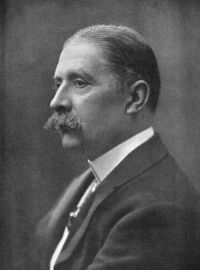
Sir Henry Rawlinson, of much fame as a British general and statesman and of greater fame as the first decipherer of the cuneiform inscriptions, died in London, March 5th. He was born in 1810; went to Bombay as a military cadet of the East India Company in 1827; studied Oriental languages, and served as an interpreter. In 1833 he was transferred to Persia, whence he was recalled to India on the breaking out of the Afghan difficulty in 1838-'39, and there won distinction in military service. He began copying the cuneiform inscriptions on the rock tablets at Behistun as far back as 1835.
Source: Wikisource

Get perspective with Kwize: daily news enlightened by great literature