Indian corn

Definition and stakes

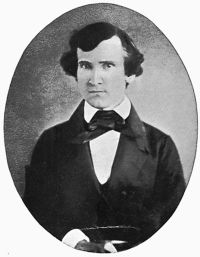
Portrait of Alice Morse Earle Alice Morse Earle,  Home Life in Colonial Days

“ A great field of tall Indian corn waving its stately and luxuriant green blades, its graceful spindles, and glossy silk under the hot August sun, should be not only a beautiful sight to every American, but a suggestive one; one to set us thinking of all that Indian corn means to us in our history. It was a native of American soil at the settlement of this country, and under full and thoroughly intelligent cultivation by the Indians, who were also native sons of the New World. ”

Source: Gutenberg

Catharine Parr Strickland Traill,  The Backwoods of Canada

“ The further we advance up the country the more fertile it appears. The harvest is ripening under a more genial climate than that below Quebec. We see fields of Indian corn in full flower: it is a stately-looking crop, with its beautiful feathery top tinted with a rich purple hue, below which tufts of pale green silk are waving in the breeze. When fully ripe they tell me it is beautiful to see the golden grain bursting from its silvery sheath; but that it is a crop liable to injury from frost, and has many enemies, such as bears, racoons, squirrels, mice, fowls, &c. ”
Source: Gutenberg

Joseph Harris,  Talks on Manures

“ We know less about the manurial requirements of Indian corn, than of almost any other crop we cultivate. We know that wheat, barley, oats, and grasses, require for their maximum growth a liberal supply of available nitrogen in the soil. And such facts and experiments as we have, seem to indicate that the same is also true of Indian corn. It is, at any rate, reasonable to suppose that, as Indian corn belongs to the same botanical order as wheat, barley, oats, rye, timothy, and other grasses, the general manurial requirements would be the same. ”
Source: Gutenberg

Get perspective with Kwize: daily news enlightened by great literature