Inuit languages

Definition and stakes

John Murdoch,  Ethnological results of the Point Barrow expedition

“ They call themselves as a race “In ́uĭn,” a term corresponding to the 43 “Inuit” of other dialects, and meaning “people”, or “human beings”. Under this name they include white men and Indians as well as Eskimo, as is the case in Greenland and the Mackenzie River district, and probably also everywhere else, though many writers have supposed it to be applied by them only to their own race. ”
Source: Gutenberg

The treasury of languages (1873)

“ American.—The primary division is that between North and South. (1) In North America the connection with Asia is decided. Through the Aleutian dialect of the Eskimo and the Kamtschatkan it is direct; through the Yukahiri and other tongues it is indirect. The Eskimo is a definite class; the Athabascan is also a definite class when compared with the Algonkin. The Chemmesyan, Hailtsa, Wakash, and Chinook are connected. The Jakon and Kallapuiah lead to the languages of the Sahaptin and Shoshoni class, among the congeners of which the sound of “tl” appears. In the Mexican it becomes prominent. ”
Source: Gutenberg

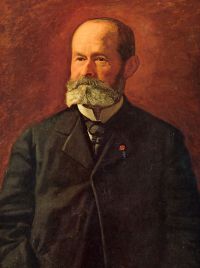
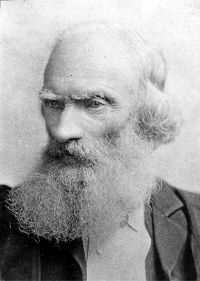
Portrait of Sir Daniel Wilson Sir Daniel Wilson,  The lost Atlantis, and other ethnographic studies

“ But, while Professor Flower unhesitatingly characterises the Eskimo as belonging to the typical North Asiatic Mongols; he, at the same time, speaks of them as almost as perfectly isolated in their Arctic home “as an island population.” Nevertheless, the same structure is common to their language and to those of the great North American families already named. All alike present, in an exaggerated form, the characteristic structure of the Ural-Altaic or Turanian group of Asiatic languages.
Race-type corresponds in the Old and New World.
”
Source: Gutenberg

Get perspective with Kwize: daily news enlightened by great literature