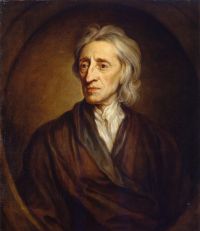
“ The lesson we have to learn from pan-Islamic activities of the last decade or two is that countries which are mainly Moslem should have Moslem rulers, and that Christian rule, however enlightened and benevolent, is only permissible where Islam [98] is outnumbered by other creeds. At the same time, in countries where Christian methods of civilisation and European capital have been invited we have a right to control and advise the Moslem ruler sufficiently to ensure the fair treatment of our nationals and their interests. ”
Islamic rule
Definition and stakes
The theme of “Islamic rule” has been addressed by authors such as Provisional Government of Iran, Craig Considine, Sir Thomas Walker Arnold, G. Wyman Bury and Wilfrid Scawen Blunt. It is often associated with terms like Islam, Christianity, Muhammad, religion and Arabia.
Quotes about “Islamic rule”
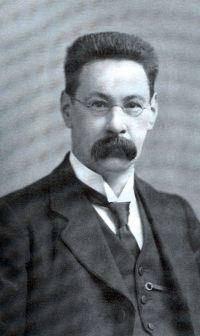 Sir Thomas Walker Arnold,
The Preaching of Islam: A History of the Propagation of the Muslim Faith
“ He too observed the law of Muḥammad (peace be upon him!) in all the countries under his rule, and throughout his reign the followers of the faith of Islam enjoyed complete prosperity. Now that by the goodness and favour of God this Kingdom of K͟hurāsān, ʻIrāq, Mā-warāʼ-al-nahr, etc., has passed into my hands, the administration is carried on throughout the whole kingdom in accordance with the pure law of the Prophet; righteousness is enjoined and wrong forbidden, and the Yarg͟hū and the institutes of Chingīz K͟hān have been abolished. ”
Napier Malcolm, Five Years in a Persian Town
“ We frequently find such foreign ideas which have been imported into Islam, occasionally by Mohammed but more frequently by his followers, simply to answer some specific objection, or to maintain the superiority of the system over all others. Such importations can as a rule be easily separated from the essential doctrines of Islam, and in most cases they have not affected the general character of the religion. ”
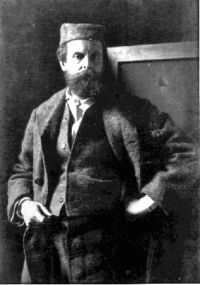 Wilfrid Scawen Blunt,
The Future of Islam
“ All parties see that the day of outside conquest is at an end, and that the utmost that Islam can look forward to politically is the maintenance of its present positions, and as an extreme possibility the emancipation of its lost provinces in India and North Africa from Christian rule. ”
Craig Considine, Religious Pluralism and Civic Rights in a “Muslim Nation”… (2016)
“ This verse stresses the necessity of fighting against the People of the Scripture, but under what conditions?...The Islamic State is not permitted to attack non-Muslims who are not hostile to Islam, who do not oppress Muslims, or try to convert Muslims by force from their religion, or expel them from their lands, or wage war against them, or prepare for attacks against them. If any of these offenses occur, however, Muslims are permitted to defend themselves and protect their religion. ”
Ely Banister Soane, To Mesopotamia and Kurdistan in disguise (1914)
“ Moreover, it may be said, though it be a platitude, that the decadence and backward condition of the Islamic states generally is due to this omission in the religious code, for every public improvement is fundamentally due to the recognition of the existence of others. ”
Theodore R. W. Lunt, The story of Islam (1909)
“ If we could close our eyes, our memories, our knowledge, and open them on the Mediterranean sea-board in those days—no more history written, no more history {114} made—looking out upon the elaborate administration of the empire and upon its splendid pomp, what a future we should have predicted! Islam had a fair field before it, if ever religion had. How in the slow march of the centuries strongly and progressively it could work out its faith! To what sublime heights could it not lead a civilized world in six centuries of time! ”
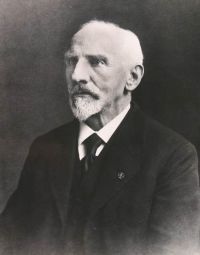 C. Snouck Hurgronje,
Mohammedanism
“ The political decay of Islâm, the increasing number of Mohammedans under foreign rule, appears to them, therefore, doubly dangerous, as they have little faith in the proof of Islam's spiritual goods against life in a freedom which to them means license. ”
Sir Thomas Walker Arnold,
The Preaching of Islam: A History of the Propagation of the Muslim Faith
“ In the face of such facts, it is surely impossible to attribute the decay of Zoroastrianism entirely to violent conversions made by the Muslim conquerors. The number of Persians who embraced Islam in the early days of the Arab rule was probably very large from the various reasons given above, but the late survival of their ancient faith and the occasional record of conversions in the course of successive centuries, render it probable that the acceptance of Islam was both peaceful and voluntary. ”
Theodore R. W. Lunt, The story of Islam (1909)
“ Mohammed himself was far more than a warrior, or even than a ruler—first and foremost, he had stood forth as the Prophet. And we shall never understand Islam if we regard it only as a battle-cry. The task which Islam set itself was more than the conquest of the nations. That might have left them Zoroastrian or Pagan, Jew or Christian still. Its task was not merely to defeat armies, but to proclaim a creed and win adherents to it. Therefore, as the Caliph's armies marched, conquering province after province, the inhabitants were summoned to declare their faith in Islam and to repeat the creed. ”
Hadith — Volume 004, Book 058: Merits of the Helpers in Madinah…
“ By Allah except Whom none has the right to be worshipped, you people know for certain, that I am Apostle of Allah and that I have come to you with the Truth, so embrace Islam." The Jews replied, "We do not know this." So they said this to the Prophet and he repeated it thrice. Then he said, "What sort of a man is 'Abdullah bin Salam amongst you?" They said, "He is our chief and the son of our chief and the most learned man, and the son of the most learned amongst us." He said, "What would you think if he should embrace Islam?" They said, "Allah forbid! He can not embrace Islam." ”
Theodore R. W. Lunt, The story of Islam (1909)
“ The religion of Islam has more adherents than it had; its dominion is marked by three Moslem empires: Turkey, Persia, and Morocco; it is the religion of Arabia still; its followers predominate in Egypt, in Asia Minor, in Afghanistan, in the East Indies. It numbers many millions throughout Africa, India, China, Russia, and the Philippines; but nowhere, unless it be possibly in some of the most degraded districts of pagan Africa, do Moslems stand above their fellows in enlightenment, in morality, in progress. {115} Has Islam, then, failed to meet men? ”
Ely Banister Soane, To Mesopotamia and Kurdistan in disguise (1914)
“ Islam is material, her ideals are powerful and simple, there is through all that unification of leader and led that all can appreciate. One God, one Prophet, one Book, each in its own rational relation to the other, a simple doctrine, powerful in its direct appeal to the unity, a leader, a prophet who lays down with the despotism understood of the ancient Semitic spirit, law and letter for all things; that is a creed that the Arab mind sees as tangible, if such an expression be permissible ”
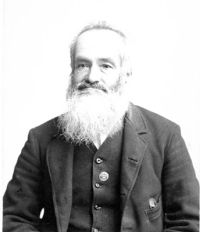 Sir William Muir,
Annals of the Early Caliphate
(1883)
“ Islam may prosper apart from political ascendency.The political ascendency of Islam is doomed. Every year witnesses a sensible degree of subsidence. In the close connection of the Moslem faith with the civil power, this cannot but in some measure affect the prestige of Islam itself. Nevertheless, the religion may long retain its hold upon the people, unimpaired by the decline of its sway in the State. ”
Duncan Black MacDonald, Development of Muslim Theology…
“ But in Muslim countries, Church and State are one indissolubly, and until the very essence of Islam passes away, that unity cannot be relaxed. The law of the land, too, is, in theory, the law of the Church. In the earlier days at least, canon and civil law were one. Thus we can never say in Islam, “he is a great lawyer; he, a great theologian; he, a great statesman.” One man may be all three, almost he must be all three, if he is to be any one. The statesman may not practice theology or law, but his training, in great part, will be that of a theologian and a legist. ”
Duncan Black MacDonald, Development of Muslim Theology…
“ The greatest of the Sultans of Islam is undoubtedly the Emperor of India. Under his rule are far more Muslims than fall to any other. But the theory of the Muslim State never contemplated the possibility of Muslims living under the rule of an unbeliever. ”
C. Snouck Hurgronje,
The revolt in Arabia
(1917)
“ Our independence is complete, absolute, not to be laid hands on by any foreign influence or aggression, and [Pg 50] our aim is the preservation of Islam and the uplifting of its standard in the world. We fortify ourselves on the noble religion which is our only guide and advocate in the principles of administration and justice. We are ready to accept all things in harmony with the Faith and all that leads to the Mountain of Islam, and in particular to uplift the mind and the spirit of all classes of the people in so far as we have strength and ability. ”
Albert Ten Eyck Olmstead, The New Arab Kingdom and the Fate of the Muslim World (1918)
“ What has happened is no less than the rebirth of Islam. We all know from our school books that Islam began with Mohammed in Mecca, that under his immediate successors it conquered the greater part of the civilized world, and that there was developed within the century a civilization without a contemporary rival. We may further remember that the original Arab rulers were supplanted by Persians, Moors, and Turks, and that the civilization was transformed and then began to decline. ”
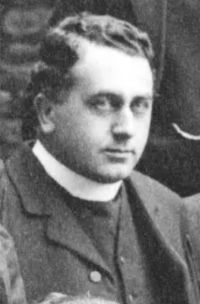 De Lacy O'Leary,
Arabic Thought and Its Place in History…
(1922)
“ Islam became a militant religion because it spread amongst the Arabs at a time when they were beginning to enter upon a career of expansion and conquest, and this career had already commenced before Muhammad had got beyond the first—the purely spiritual—stage of his work. ”
Frank Richardson Cana, 1922 Encyclopædia Britannica (1922)
“ He sent a circular to all military stations asking for a report on what could be done by means of Government servants and Government teachers to counteract effectively the spread of Islamic propaganda. “Do you consider it possible,” the circular added, “to make a regulation prohibiting Islam altogether?. ”
 H. G. Wells,
The Outline of History: Being a Plain History of Life and Mankind
“ Islam had made millions of converts, and had digested those millions very imperfectly. Cities, nations, whole sects and races, Arab pagans, Jews, Christians, Manichæans, Zoroastrians, Turanian pagans, had been swallowed up into this new vast empire of Muhammad’s successors. It has hitherto been the common characteristic of all the great unifying religious initiators of the world, the common oversight, that they have accepted the moral and theological ideals to which the first appeal was made, as though they were universal ideals. ”
Arthur Glyn Leonard, Islam, Her Moral And Spiritual Value…
“ So, too, to denounce Islam, as Christian missionaries do in no unmeasured terms, in books, on platforms and in the pulpit, is surely unpardonable—surely a reflection on civilization. Christianity will never convert or supplant Islam. As long as the one lasts the other will endure. From the most catholic of standpoints, from a religious, a social, a political, and an economic sense, it would be sounder and more politic to leave Islam alone. ”
Wilfrid Scawen Blunt,
The Future of Islam
“ When, however, Islam emerged from Arabia in the first decade of her existence, and embracing a foreign civilization found herself face to face with new conditions of life, mere custom ceased to be a sufficient guide ”
Theodore R. W. Lunt, The story of Islam (1909)
“ Every sin, every falsehood, every injustice, every cruelty, every wrong, may challenge but they do not deny that Kingdom—Islam does. Bringing its ideals down to the level of our nature, it denies the best in man, and denies the Christ of God—the One who alone has triumphed and in whose triumph lies man's only hope. Give the world to Islam, and man's highest vision is gone for ever. ”
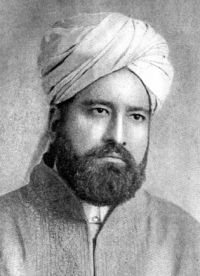 Khwaja Kamal-ud-Din,
Ethics of War
(1901)
“ It is to be noted that Muslims are ordered to sacrifice their lives not only to save their own mosques but the religious houses of other peoples as well. The civilized world, with Christian notions of intolerance lurking in its breast, is still far from holding the noble principle thus enunciated in the Holy Qur-án. And there is yet another lesson in Islam to be learned by Christian rulers of other nations. A Muslim king is enjoined by his religion to help in the maintenance of others temples and shrines. ”
The Book of the Thousand Nights and a Night…
“ I have elsewhere noted its strict conservatism which, however, it shares with all Eastern faiths in the East. But progress, not quietism, is the principle which governs humanity and it is favoured by events of most different nature. In Egypt the rule of Mohammed Ali the Great and in Syria the Massacre of Damascus (1860) have greatly modified the constitution of Al- Islam throughout the nearer East. [FN#333] Chapt. viii. "Narrative of a Year's Journey through Central and Eastern Arabia;" ”
Muhammad Iqbal, Islam as an Ethical and Political Ideal
“ The history of Islam tells us that its expansion as a religion is in no way related to the political power of its followers. The greatest spiritual conquests of Islam were during the days of our political decrepitude. When the rude barbarians of Mongolia drowned in blood the civilisation of Baghdad in 1258, and when the Muslim power fell in Spain, and the followers of Islam were mercilessly killed and driven out of Cordova by Ferdinand in 1236, Islam had just secured a footing in Sumatra and was about to work the peaceful conversion of the Malay Archipelago. ”
Theodore R. W. Lunt, The story of Islam (1909)
“ Among all these insistent problems, the problem of Islam is this: That in this modern world of renaissance, reform, movement, and progress, one-seventh of mankind turns to one physical and spiritual centre, a black stone in the Kaaba at Mecca, a city of the past. In that holy city, alas! notorious the world over for its sin and wickedness, [2] pilgrims meet from half the {155} races of the earth—Tartars and Malays, Russians and Negroes, Indians and Chinese, Arabs, Afghans, Persians, Egyptians, and many more. All this crowd of races, peoples, nationalities, and tongues own one Faith. ”
 Gustave Le Bon,
The Psychology of Revolution
“ What in truth could they have done to change a people whose traditions have been fixed so long, whose religious passions are so intense, and whose Mohammedans, although in the minority, legitimately claim to govern the sacred city of their faith according to their code? How prevent Islam from remaining the State religion in a country where civil law and religious law are not yet plainly separated, and where faith in the Koran is the only tie by which the idea of nationality can be maintained? ”
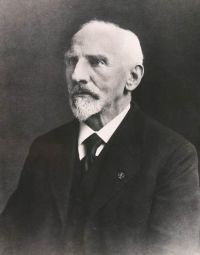 Christiaan Snouck Hurgronje,
The Achehnese
(1906)
“ Nor does this rule apply with less force to Islam than to other religions. For the first thirty years or so, while Arabia was still the centre of Moslim power, life and doctrine developed hand in hand. Thenceforward the paths diverged more and more as time advanced: the schools of doctrinal learning have troubled themselves little about the practical requirements of daily life, while on the other hand all classes of the Moslim community have exhibited in practice an indifference to the sacred law in all its fulness, quite equal to the reverence with which they regard it in theory. ”
 William Muir,
The Caliphate: Its Rise, Decline and Fall…
“ Christian, formed an integral of the Arab race and as such fell within the immediate scope of the new Dispensation. When, however, these came into collision with the Muslim columns on the frontier, they were supported by their respective sovereigns,—the western by the Kaiser, and the eastern by the Chosroes. Thus the struggle widened, and Islam was brought presently face to face in mortal conflict with the two great Powers of the East and of the West. ”
Sir William Muir,
Annals of the Early Caliphate
(1883)
“ One after another the Arabian spokesmen told him of the Prophet who had wrought a mighty change in their land, and they explained to him the nature of Islam, its blessings and its obligations. ‘Embrace the Faith,’ they said, ‘and thou shalt be even as one of us; or, if thou wilt, pay tribute, and come under our protection; which things if thou shalt refuse, the days of thy kingdom are numbered.’ The king replied contemptuously: ‘Ye are naught, ye are naught! hungry adventurers from a naked land ”
B. Granville Baker, The Passing of the Turkish Empire in Europe
“ Islam acted as an intellectual stimulus on its first adherents, the poetic-minded Arabs, though possibly it did not assume its present rigidity when they were a ruling power in Asia, Africa, and Southern Europe. ”
Edward Sell, The Faith of Islam
“ The power of Islám, its proclamation of the Unity, is here seen in the closest contact with what is to Muslim theologians the equally fundamental truth—the apostleship of Muhammad, a dogma which retards the healthy development, explains the narrowness, and causes the prostration of Islám, as the world around grows luminant with the light of science and truth, of faith and reason. ”