“ The father had not profited sufficiently by his studies either in law or philosophy to recognise the folly of a man in disgrace [Pg 96] venturing to measure swords with one of fortune's favourites. And Sir James at the time of his quarrel with Claverhouse was in disgrace. At the close of 1681 he had been dismissed from the office of President of the Court of Session for refusing the Test Act; and for some while previously he had been coldly regarded for his advocacy of gentler measures than suited Lauderdale and his creatures. The Dalrymples were strict Presbyterians ”
James Claverhouse
Definition and stakes
The theme of “James Claverhouse” has been addressed by authors such as Mowbray Morris, Louis A. Barbé, Ian Maclaren, Thomas Finlayson Henderson and Thomas Babington Macaulay. It is often associated with terms like John, earl, Erskine, Calverley and England.
Quotes about “James Claverhouse”
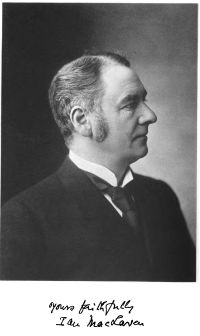 Ian Maclaren,
Graham of Claverhouse
“ It is his name rather than that of Dalzell or Lauderdale which has been passed with execration from mouth to mouth and from generation to generation in Scotland. The tyrant James had fled, like the coward he was, and God’s deliverer had come––a man of their own faith––in William of Orange. The iron doors had been burst and the fetters had been broken, there was liberty to hear the word of the Lord again, and the Kirk of Scotland was once more free. Justice was being done, but it would not be perfect till Claverhouse suffered the penalty of his crimes. ”
James Grant, The Scottish Cavalier: An Historical Romance…
“ Heaven be my witness, noble sirs, I could not help it!" "By all the devils! Help what, thou fause loon!" "Permitting the escape of Lady Bruntisfield and her kinswoman, the young lady." "Aha! the young lady!" laughed Claverhouse and Balcarris. ”
“ But the name of Queensberry was not now the power it had been at Whitehall. It is difficult to believe that he was much more concerned with religion than Lauderdale; but he was, at any rate [Pg 142] by profession, a staunch Protestant, and there were those among his colleagues ready to take every advantage of this passport to James's disfavour. It was determined to hear what Claverhouse had to say for himself. He was summoned to London, graciously received by the King, and pleaded his cause so effectually that the Treasurer was ordered to refund the money. ”
Ian Maclaren,
Graham of Claverhouse
“ If anyone desired a master under whom he would be led to victory, and by whom he would never be put to shame, a master who might not praise him effusively but would never betray him, then let him, as he valued his life and his career, refuse James and cleave to William. But it is not given to a man to choose his creed, far less his destiny, 91 and Claverhouse was never to have fortune on his side. ”
J. C. McFeeters, Sketches of the Covenanters
“ Then taking her babe in her bosom, and Janet by the hand, she went out to meet the soldiers, praying as she went. Claverhouse was in command. She pleaded that her husband's life might be spared; but not words nor tears could move the hardened man. "Will you pray for King James and his supremacy?" said Claverhouse to his prisoner. "Jesus Christ is the Supreme Head of His Church," was the fearless reply. ”
“ Some of his old troopers, however, still kept by the captain whom they had known as Claverhouse.Hamilton and his party pressed William to exempt from the general amnesty certain members of the [Pg 151] Scottish Council whom they named as particular and unscrupulous instruments of James's tyranny, and unsafe to be let go at large. But the Prince with his usual good sense refused to drive any man into opposition: the past even of the most guilty should, he said, be forgotten till he was forced to remember it. Against Dundee and Balcarres he had been especially warned. ”
James Grant, The Scottish Cavalier: An Historical Romance…
“ Rosehaugh had been saved from a terrible immolation; but the services of the night were not yet over. Claverhouse, with his cavaliers, retired to a quiet part of the city, under protection of the castle batteries, where a brave garrison of Catholic soldiers, led by the Duke of Gordon, remained yet staunch to James. "My lord Earl," said Dundee to Dunbarton, "we must be somewhat economical of our persons and horses, when encountering these mad burghers and drunken saints, and not forget that we are the last hope of the King in this hotbed of Presbytery and rebellion." ”
Thomas Finlayson Henderson, Dictionary of National Biography… (1890)
“ Isolated rebels who had escaped either of these fates were occasionally discovered in hiding-places and summarily dealt with. Possibly the last official act of Claverhouse against conventicles was the examination of James Renwick before the privy council. Renwick, the last of the martyrs, suffered on 17 Feb. 1688. It was no doubt with a view to strengthen his hands in the north-east of Scotland that James, in March 1688, appointed Claverhouse by royal warrant provost of Dundee, which with the constable's jurisdiction would ‘make him absolute there’ (ib. p. 860) . ”
Louis A. Barbé, Viscount Dundee
“ But the same authority states the ‘pretence’ to have been ‘that having married into the Lord Dundonald’s fanatic family, it was not safe to commit the King’s secrets to him.’While thus indicating his dissatisfaction with Claverhouse, James felt that the whole quarrel was too petty to justify him in punishing with lasting disgrace a faithful servant whose valuable help he had repeatedly acknowledged. He was at special pains to let him understand that if he tendered an apology to Queensberry he should be restored to place and favour. ”
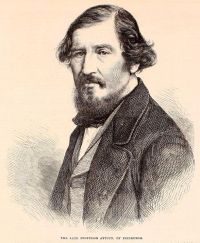 William Edmondstoune Aytoun,
Lays of the Scottish Cavaliers and Other Poems
“ Three years after the accession of James VII. Claverhouse was raised to the peerage, by the title of Lord Viscount Dundee. He was major-general, and second in command of the royal forces, when the Prince of Orange landed, and earnestly entreated King James to be allowed to march against him, offering to stake his head on the successful result of the enterprize. There is little doubt, from the great popularity of Lord Dundee with the army, that, had such consent been given, William would have found more than a match in his old officer ”
J. N. Larned, History for ready reference, Volumes 1 to 5 (1895)
“ In 1689, when Claverhouse was raising the Highland clans in favor of James II., "William Cleland, who had fought with distinguished bravery at Bothwell, and was one of the few men whom Claverhouse feared, made an offer to the [Scottish] Estates to raise a regiment among the Cameronians, under the colonelcy of the Earl of Angus, and the offer was accepted. Such was the origin of the Cameronian regiment. Its first lieutenant-colonel was Cleland; its first chaplain was Shields. Its courage was first tried at Dunkeld, where these 800 Covenanted warriors rolled back the tide of Celtic invasion ”
James Grant, The Scottish Cavalier: An Historical Romance…
“ James VII. had become passionately fond of the chase since the loss of his kingdom; for his brave and restless spirit always sought excitement when not absorbed in the austere duties of religion, in the course of which he often subjected himself to the most severe penances. Kind, affable, and easy to all around him, religion improved the virtues of his heart, subdued the fire of his spirit, and by imparting a monk-like gentleness to his demeanour, endeared him to his enthusiastic followers. The butcheries of Kirke and Claverhouse, and the tyrannies of Jefferies and Rosehaugh, were forgotten. ”
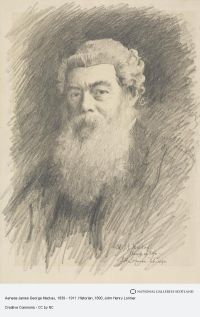 Aeneas James George Mackay,
Dictionary of National Biography…
(1888)
“ Stair was not allowed to enjoy his retirement unmolested. Claverhouse went to Galloway armed with a military commission. Proceedings were taken against Lady Stair for attending conventicles, his factor and tenants were severely fined, and Stair himself cited before the council and threatened with being seized as a criminal. A fierce dispute arose between Claverhouse and the Master of Stair as to the conduct of his subordinates in the regality of Glenluce, of which he was hereditary baillie. ”
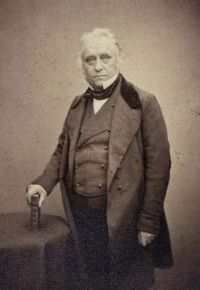 Thomas Babington Macaulay,
The History of England from the Accession of James II…
“ Let nobody go out but those lords and gentlemen whom we shall appoint to call the citizens to arms. There are some good men from the West in Edinburgh, men for whom I can answer." The assembly raised a general cry of assent. Several members of the majority boasted that they too had brought with them trusty retainers who would turn out at a moment's notice against Claverhouse and his dragoons. All that Hamilton proposed was instantly done. The Jacobites, silent and unresisting, became prisoners. Leven went forth and ordered the drums to beat. ”
Louis A. Barbé, Viscount Dundee
“ Fully a month had elapsed since the departure of Douglas and Claverhouse from Scotland before they reached London. After a few days’ halt they started for Salisbury, where James had assembled an army of twenty-four thousand men, to oppose the Prince of Orange, who had landed at Torbay, on the 5th of November, and was advancing towards the capital. It was whilst on his march to join his sovereign that Claverhouse received a further and final token of royal favour by being created Viscount Dundee. ”
“ That Hamilton meditated declaring for William is certain, and that he would have taken all his colleagues with him, except Dundee and Balcarres, is probable; but the King's sudden return to Whitehall postponed matters for a time.James reached London from Rochester on the afternoon of Sunday, December 16th. William was then at Windsor, and James expressed a wish to meet him in London, offering St. James's Palace for his quarters. William sent an answer that he could not come to London while there were any troops there not under his command. ”
“ The chiefs of the great clans were ordered to hold their claymores ready: the castles of Edinburgh and Stirling were munitioned for war: the militia was called out in every county, and volunteers enrolled in every town. In the midst of the bustle arrived a second despatch from James, ordering the regular troops to march at once for England to join the army under Feversham. ”
“ Athole had more than once coquetted with the Whigs, and his present Jacobitism was shrewdly suspected to be due to the coolness with which his advances had been received: his son Lord Murray, who had married a daughter of Hamilton, had declared for William. These great noblemen had indeed the satisfaction of feeling that, however the die might fall, their titles and estates were at least secured. But the wisdom of their family arrangements did not increase their reputation with their parties. The Duke of Gordon held the castle of Edinburgh for James ”
“ The letter was read to the Convention on the following day, and on Saturday, March 30th, John Graham, [Pg 165] Viscount of Dundee, was proclaimed traitor with all the usual ceremonies. Thrice was his name called within the Parliament House, and thrice outside its doors, and thrice with sound of trumpet at the market-cross of the good town of Edinburgh.About the same time happened a still more untoward thing. James was now in Ireland. He had learned how matters had gone in Scotland, and conceived that the moment for action had come. ”
“ According to Balcarres, Dundee made at once for London on the news of the King's flight, and was still there on his return. But the fact is that few of these contemporary writers descend to dates, and it is almost impossible therefore to track any one man's movements through those troubled days. It is, however, certain that a meeting of the Scottish Council was summoned in London by Hamilton at some period between James's first flight and his return, and that Dundee attended it. ”
“ And not less curious is the contrast between the reality of his personal appearance and the counterfeit presentment likely to be fostered by a too liberal adherence to that impression. It would be difficult to imagine a more complete surprise than awaits those who turn for the first time from the stern, brutal, and profane soldier of the historian's page to the high-bred and graceful gentleman of the painter's canvas.Claverhouse seems to have received his commission in the autumn of 1678. ”
“ It is unfortunate that the tale of these early years should assume so controversial a tone. But where all, or almost all, is sheer conjecture, it is inevitable that the narrative must rest rather on argument than fact. The precise moment when Claverhouse transferred his services from the French to the Dutch flag [Pg 15] is, in truth, no more certain than the date of his birth is certain, or his conduct at Saint Andrews, or, indeed, than it is certain that he ever at any time served under Lewis. ”
“ Sharpe, in his notes to Kirkton, says, on the authority of Wodrow, that Cornet Graham was shot by one John Alstoun, a miller's son, and tenant of Weir of Blackwood. This is not correct. There was a Cornet Graham so killed, but not till three years after Drumclog. [27] "With a pitchfork they made such an openeing in my rone horse's belly." Sir Walter, following tradition, has mounted Claverhouse on a coal-black charger without a single white hair in its body, a present, according to the legends of the time, from the Devil to his favourite servant. ”
Ian Maclaren,
Graham of Claverhouse
“ Being a lad of parts with competent scholarship, and having given every pledge of sincerity, he was studying theology in Holland, 97 while Claverhouse was fighting in the army of the Prince, and he was there ordained to the ministry of the kirk. When one has passed through so thorough a change, and sacrificed everything which is most dear for his convictions, he is certain to be a root and branch man, and to fling himself without reserve, perhaps also, alas, without moderation, into the service of his new cause. ”
“ But Queensberry and his crew had to nurse their grudge in secret. Much as the knowledge may have chafed them, they knew well that Claverhouse was the [Pg 139] one man on whom they could depend for wise counsel and prompt action in emergency. A few weeks before this matter of the tenants he had received an urgent despatch from Edinburgh, signed by "his affectionate friends and servants" of the Council, authorising him to take what steps he thought best for disposing the troops. Argyle was on the sea, and the Campbells were mustering fast to their chief's call. ”
John Monsey Collyer, Dictionary of National Biography… (1893)
“ He was present at Killiecrankie, and celebrated the triumph of the highlanders. In his poem of ‘Rinrory,’ as the battle was called in the north, he gives an account of the death of Claverhouse, which differs from the ordinary version. ”
English and Scottish Ballads, Volume VII
“ Claver [Pg 145] house was in garrison at Glasgow, and immediately marched against the insurgents, with about a hundred and fifty cavalry. Hamilton, the commander of the Whigs, had skilfully posted his men in a boggy strait with a broad ditch in front, and the dragoons in attempting to charge were thrown into utter disorder. At this critical moment they were vigorously attacked by the rebels and easily routed. Claverhouse barely escaped being taken prisoner, and lost some twenty of his troopers, among them his cornet, Robert Graham, whose fate is alluded to in the ballad. ”
Ian Maclaren,
Graham of Claverhouse
“ On arriving at the farm-house where the Prince had gone after the French had retired, Graham was immediately shown into his room. The Prince, rising and returning Claverhouse’s respectful salutation, gave him one long, searching glance, and then said: “You did me a great service to-day, and saved my person from capture, perhaps my life from death. I do not forget any man who has done me good, and who is loyal to me. ”
“ As he spoke, a crashing of the boughs behind them caused them to start and look back, when to their unutterable horror they beheld their terrible enemy dashing through amidst the trees. William Crosbie stood transfixed at the sight. He had neither power to move nor speak, while Claverhouse, with dishevelled locks and flashing eyes, rode towards him, with his sword uplifted in the air as if to hew him down."Have you a mind to be killed that you stand there while the arch-fiend himself is within a few paces of you?" ”
