John Barry Chase Decatur

Definition and stakes

1911 Encyclopædia Britannica, Volume 7… (1911)

“ In 1803 he was in command of the “Enterprise,” which formed part of Commodore Preble’s squadron in the Mediterranean, and in February 1804 led a daring expedition into the harbour of Tripoli for the purpose of burning the U.S. frigate “Philadelphia” which had fallen into Tripolitan hands. He succeeded in his purpose and made his escape under the fire of the batteries with a loss of only one man wounded. This brilliant exploit earned him his captain’s commission and a sword of honour from Congress. Decatur was subsequently engaged in all the attacks on Tripoli between 1804 and 1805. ”
Source: Wikisource

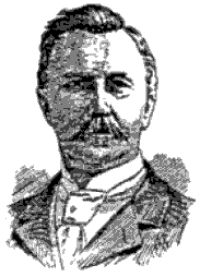
Portrait of John Randolph Spears John Randolph Spears,  The history of our Navy from its origin to the present day… (1897)

“ There is no doubt that Decatur deliberately inflicted a wound that would not prove mortal. Decatur had a fight with the mate of a merchant ship in 1799, in which he wounded the mate precisely as he wounded Barron. He was a dead shot when he chose to be.
Decatur died in the arms of his wife at the mansion on an estate known as Kalorama, a mile from Georgetown, on the night of the duel. He was but forty years old. His body was deposited in a vault at Kalorama on the 24th in the presence of a tremendous concourse of people, including nearly all the officials, American and foreign, of the capital.
”
Source: Gutenberg

Portrait of Albert Bushnell Hart Albert Bushnell Hart,  The Mentor: The War of 1812

“ The blockading British squadron pursued the ship, and after a desperate running fight forced Decatur to surrender.
Soon afterward Decatur returned to the United States, peace between England and America was declared. But the Barbary pirates were once more giving trouble. Decatur took a command in the Mediterranean.
He arrived before Algiers on June 22, 1815, and immediately demanded a treaty from the Dey. His terms were very brief: no more annual tribute or ransom for prisoners; all enslaved Americans to be released; and no American ever again to be held as a slave.
”
Source: Gutenberg

Get perspective with Kwize: daily news enlightened by great literature