John Leland

Definition and stakes

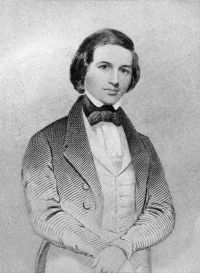
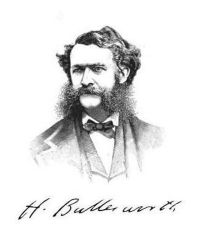
Portrait of Hezekiah Butterworth Hezekiah Butterworth,  Zigzag Journeys in the White City…

“ The name of John Leland was at that time a household word. It lives now chiefly in connection with the almost Ambrosian hymn, “The day is past and gone,” and the story of the great Cheshire Cheese. He was a friend of Madison and Jefferson; at one time a member of the Massachusetts General Court,—a truly wonderful man in all relations of life. He used to travel any weather, praying along the roads, mounting the pulpit singing; always democratic, and a friend to all men.
It was an Indian summer day, calm and clear. The sun grew warm
”
Source: Gutenberg

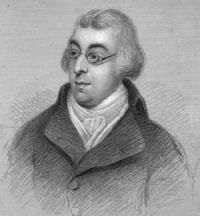
Portrait of Leslie Stephen Leslie Stephen,  Dictionary of National Biography… (1900)

“ During the Manx famine and pestilence (1739–42) he petitioned the king for a grant of breadcorn for the island. In 1743 and 1750 he visited his father in the Isle of Man. With John Leland (1691–1766) [q. v.] he corresponded from 1742, inviting his criticisms on his father's manuals of religion. He suggested to Leland that he should answer Dodwell (as he did in 1744) , and Bolingbroke (1753) ; and Leland's chief work, ‘A View of the principal Deistical Writers’ (1754–6) , was written as letters to Wilson, and published at his expense. ”
Source: Wikisource

Sidney Lee,  Dictionary of National Biography… (1893)

“ It is owing to Hearne's industry that the chief part of Leland's writings was first sent to the press. In 1710 the ‘Itinerary of John Leland the Antiquary’ was published at Oxford in nine volumes. A revised edition, with additions, appeared in 1745, and a third in 1770. Miss Toulmin Smith re-edited the ‘Itinerary’ (12 pts. in 5 vols.) , 1906–8. Leland's notes on West Somerset were edited by W. George in 1879; those on Hampshire in 1868, and those on Wiltshire (by Canon Jackson) 1875. Hearne's edition of the ‘Collectanea’ was published at Oxford in six volumes in 1715. ”
Source: Wikisource

Get perspective with Kwize: daily news enlightened by great literature