Joseph von Eichendorff

Definition and stakes

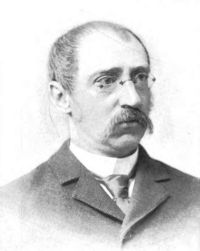
Portrait of Henry A. Beers Henry A. Beers,  A History of English Romanticism in the Nineteenth Century

“ There was Joseph von Eichendorff, e.g., who had a strong admiration for the Middle Ages, wrote sacred poetry, and published in 1815 a novel entitled "Ahnung und Gegenwart," the hero of which ends by retiring to a monastery. And Joseph Görres, who published a work on German Volksbücher [12] (1807) ; a follower of Schelling and editor of Der Rheinische Merkur, a violent anti-Gallican journal during the war of liberation. Görres, according to Heine, "threw himself into the arms of the Jesuits," and became the "chief support of the Catholic propaganda at Munich" ”
Source: Gutenberg

Gräfin von Valeska Bethusy-Huc,  The Eichhofs: A Romance

“ I confess it vexes me when one of our good old names is allied to such a family."
"Make your mind easy on my account," rejoined Herr von Hohenstein. "I do not undervalue wealth, but I prize blood rather more."
Lothar Eichhof meanwhile was scanning the house, while his elder brother, Bernhard, had withdrawn into the shadow, and was steadily scrutinizing through his glass the foreign ambassadors' box.
”
Source: Gutenberg

N. Scheid,  Catholic Encyclopedia (1913)

“ When Eichendorff, who was a stanch Catholic, was asked to defend the measures of the Government in public, he asked for his dismissal, which, however, was not granted till 1844. The succeeding years were passed mostly in Berlin, where the poet was occupied more with literary and historical than with poetical work; after the death of his wife (1855) he lived with his family at Neisse. Two years later, having finished his swan-song, the epic "Lucius", he died. ”
Source: Wikisource

Get perspective with Kwize: daily news enlightened by great literature