Katsushika Hokusai

Definition and stakes

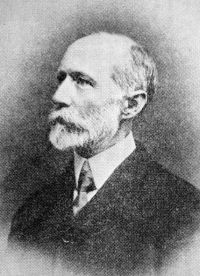
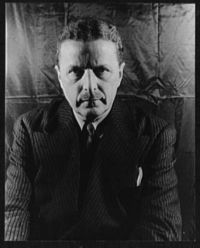
Portrait of Arthur Davison Ficke Arthur Davison Ficke,  Chats on Japanese Prints

“ Yanagawa Shigenobu, the son-in-law of Hokusai, copied his master closely; some of his work has great charm. According to some authorities he is the same person to whom Hokusai gave his discarded name, Katsushika Taito. Certain prints signed Taito are still somewhat in doubt, notably the well-known leaping fish and the moon-and-bridge scene, both from the "Harimaze Han"; Mr. Happer has brought forward evidence that these are by Taito, but many authorities still hold to the idea that they are the work of Hokusai under his early name{375}. ”
Source: Gutenberg

Portrait of Arthur Davison Ficke Arthur Davison Ficke,  Chats on Japanese Prints

“ Almost every student of Hokusai passes through three stages. At first, he is overwhelmed by Hokusai's technical skill and imaginative brilliance, and regards him as unrivalled. Deeper experience brings him the conviction that much of this magical dexterity is somewhat in the nature of a juggler's antics in a vaudeville, and that his first burst of enthusiasm was not wholly warranted. Then, finally, he comes to perceive that there are qualities in Hokusai's work which, in spite of so much that is vulgar, justly entitle this artist to his high fame. ”
Source: Gutenberg

Edward Fairbrother Strange,  1911 Encyclopædia Britannica, Volume 13… (1911)

“ As a painter and draughtsman Hokusai is not held by Japanese critics to be of the first rank, but this verdict has never been accepted by Europeans, who place him among the greatest artists of the world. He possessed great powers of observation and characterization, a singular technical skill, an unfailing gift of good humour, and untiring industry. He was an eager student to the end of his long life, and on his death-bed said, “If Heaven had lent me but five years more, I should have become a great painter.” ”
Source: Wikisource

Get perspective with Kwize: daily news enlightened by great literature