King Edward VI
Definition and stakes
Quotes about “King Edward VI”

Great Men and Famous Women. Vol…
“ He was not the man to sit quietly under insult, and when it came from King Edward, who owed all that he was to him, it was more than he could endure. Yet it was only when he found his every project thwarted, and especially those that were dearest to his heart, that he was driven into open warfare with the king. His treason is capable of much justification: he cannot be accused of forsaking his master. He had in him the making of a great king, and how great and useful might have been his career had fortune placed him over the councils of a Charles VII. or a Henry VI.! ”
 Marie Belloc Lowndes,
His Most Gracious Majesty King Edward VII
“ Queen Victoria passed peacefully away, at half-past six in the evening of 22nd January, surrounded by her children and grandchildren.Then every one turned in their grief to His Majesty King Edward VII. Hardly for a moment could he be simply the devoted son weeping by the death-bed of his beloved and venerated mother. He was now the ruler of a great Empire, and bravely did His Majesty meet what must have seemed the almost impertinent intrusion of State business and State ceremonial. ”
James Gairdner, Dictionary of National Biography… (1885)
“ In 1540 he signed, as a member of convocation, the casuistical opinion as to the invalidity of the king's marriage with Anne of Cleves (State Papers, Henry VIII, i. 633) . When Edward VI came to the throne, though he was placed on the commission to examine and revise the offices of the church, he joined with a small minority in the Lords in protesting against the introduction of the new liturgy, and against several other changes. He seems to have had some difficulty in those days in maintaining the rights of his see ”
Edward VII of the United Kingdom, The Golden Book of King Edward VII (1910)
“ No red-stained laurels rest upon his head, But olive-boughs of peace around him wake Sweet memories, and crown him,—living or dead— With praise, and love, and tears,—for England's sake. May Byron The Golden Book ofKing Edward VII. IT will always be my most ardent and sincere wish to walk in the footsteps of good men who have preceded me, and with God's help to fulfil the duties which I have been called upon to occupy to-day. ”
Various, The New Gresham Encyclopedia. Ebert to Estremadura
“ Edward VI, King of England, son of Henry VIII by Jane Seymour, was born in 1537, died in July, 1553. At his father's death he was only nine years of age. His education was entrusted to men of the first character for learning, under whose training he made great progress, and grew up with a rooted zeal for the doctrines of the Reformation. His reign was, on the whole, tumultuous and unsettled. In Oct., 1551, the Protector Somerset, who had hitherto governed the kingdom with energy and ability, was deposed by the intrigues of Dudley, Duke of Northumberland, who became all-powerful. ”
J. Castell Hopkins, The Life of King Edward VII
“ During forty years of his career as Prince of Wales, King Edward VII. was probably the most talked-of man in the United Kingdom. Good-natured stories, ill-natured anecdotes, criticisms grading down from the malicious to the very mild, praise ranging from the fulsome to the feeble point, falsehoods great and falsehoods small, have found currency not confined to the English language and ranging through "yarns" of gutter journals in London, Paris, Berlin, New York or Calcutta, in varied languages, and in many degrees of fabrication. ”
Marie Belloc Lowndes,
His Most Gracious Majesty King Edward VII
“ On these principles, therefore, King Edward VII. was educated, namely, that the best way to build up a noble and princely character was to bring it into intelligent sympathy with the best movements of the age.After some further discussion Prince Albert opened negotiations with Mr. Henry Birch, afterwards rector of Prestwich, near Manchester, the gentleman who was ultimately entrusted with the responsible position of tutor to the future ruler of the British Empire. This young man had been educated at Eton, where he had been captain of the school and obtained the Newcastle medal. ”
J. Castell Hopkins, The Life of King Edward VII
“ The first year's reign of a Sovereign must always be important, and when that Sovereign rules over a third of the earth's surface and a quarter of its population, it is more than usually so. King Edward VII., when he came to the Throne, found himself the first of Mohammedan rulers, with more Moslem subjects than the Sultan of Turkey; the first of Brahmin and Parsee Sovereigns; the head of various Confucian colonies and the possessor of the most sacred of Buddhist shrines; the ruler of Christian sects and idolatries of every conceivable kind and variety. ”
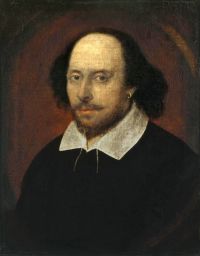 William Shakespeare,
Henry VI, Part 3
(1595)
“ KING EDWARD IV What fates impose, that men must needs abide; It boots not to resist both wind and tide. ”
Marie Belloc Lowndes,
His Most Gracious Majesty King Edward VII
“ The Hallelujah Chorus ended the ceremony accordingly. [9] The Christening of King Edward VII.From the Painting by Sir George Hayter“It is impossible,” wrote Queen Victoria in her Journal, “to describe how beautiful and imposing the effect of the whole scene was in the fine old chapel, with the banners, the music, and the light shining on the altar.” It was significant of the [10] young Queen’s native simplicity that the Prince was only christened Albert, after his father, and Edward, after his grandfather, the Duke of Kent. ”
C. S. Dawe, King Edward's realm: Story of the making of the Empire (1902)
“ Nothing is more gratifying to our national pride than the reliance thus placed on the pledged word of our Government. "It is certain," says a great Polish writer, in reference to the Boer war, "that if King Edward VII. guaranteed to the Boers, with his royal word, the enjoyment of their liberty and laws, not an Englishman would be found throughout the gigantic British Empire, who would not burn with shame if the royal promise were broken." ”
Marie Belloc Lowndes,
His Most Gracious Majesty King Edward VII
“ Certainly we have become more cosmopolitan since those days; we have come to see that the manners and customs of foreign nations are not perhaps always so absurd as our forefathers, at any rate, supposed, and may even in some few respects be worthy of adoption and imitation.In this salutary process of national illumination King Edward VII. undoubtedly played a considerable part. From the beginning of his public career he endeared himself to his future subjects by his natural bonhomie, his tact, and a certain indefinable touch of human sympathy which characterised all his actions and speeches. ”
William Shakespeare,
Henry VI, Part 3
(1595)
“ KING EDWARD IV Away with her, and waft her hence to France. And now what rests but that we spend the time With stately triumphs, mirthful comic shows, Such as befits the pleasure of the court? Sound drums and trumpets! farewell sour annoy! For here, I hope, begins our lasting joy. ”
Marie Belloc Lowndes,
His Most Gracious Majesty King Edward VII
“ Queen Victoria and King Edward VII.After the Painting by ThorburnWhen the King was fourteen he started on an incognito walking tour in the West of England with Mr. Gibbs and Colonel Cavendish. His father wrote to Baron Stockmar: [33] “Bertie’s tour has hitherto gone off well and seems to interest him greatly.” ”
Frederick Edward Hulme, The Flags of the World — Chapter 2 (1896)
“ In the year 1291 Edward I., being victorious in the north, declared the two countries united, but this did not last long. In 1363 Edward III. opened negotiations for a union of the two crowns if King David of Scotland died without issue. In the reign of Edward VI. the matter was again to the fore, but it was left to Queen Elizabeth to take the decisive step.↑ April 12th, 1605.↑ Thus in the Royal Standard of Spain, Fig. ”
Henry Meredith Vibart, Dictionary of National Biography… (1912)
“ An excellent soldier who was popular with all ranks, he cherished the cultured traditions of his family. He exercised a wide hospitality at his London house, and his guests included representatives of literature, art, and science, as well as soldiers and men in public life. He was always on cordial terms with King Edward VII. He died at 16 Portland Place on 16 Nov. 1902, and was buried in Chichester Cathedral with military honours. A portrait of Prince Edward by F. Marks is in the possession of the duke of Richmond and Gordon at Goodwood. ”
J. Castell Hopkins, The Life of King Edward VII
“ Probably no wiser monarch ever reigned over a nation." To the New Brunswick press the local Premier, Hon. Douglas Hazen, said: "King Edward's reign was a comparatively short one, but the verdict of history will undoubtedly be that he was one of the wisest and greatest rulers that ever sat upon a throne. He took a most keen and active interest in all his country's institutions, endeavouring at all times to promote the well-being of his subjects and to show his appreciation of the British Dominions beyond the Seas." ”
J. Castell Hopkins, The Life of King Edward VII
“ If Queen Victoria, remaining very largely at home, could wield an immense and undoubted personal influence in Europe, partly because of an ability which made the late Lord Tennyson describe her as "the greatest statesman in Europe" and the Earl of Rosebery say that in matters of foreign policy she advised her Minister of Foreign Affairs more then he advised her, [7] how much more was King Edward entitled to personal prestige in Europe and fitted for diplomatic work amongst its rulers. His Royal Mother had known many Sovereigns and seen many Kings and statesmen come and go ”
Edward VII of the United Kingdom, The Golden Book of King Edward VII (1910)
“ He gave his best, his last—for England's sake. The regal purple and the ring of gold As fraught with new significance, he wore: The sceptre handed from his sires of old Had meanings it had never known before: To heal the sick, the sorrowful to cheer, The poor and desolate his friends to make, He held as sovereignty: and, void of fear, Counted no cost too great—for England's sake. King among Kings, man among simple men, With all humanity for kith and kin, What better guerdon can we wish him, then, Than Peace—that peace where he has entered in? ”
J. Castell Hopkins, The Life of King Edward VII
“ After the homage of the Heir Apparent each Peer of the realm should have followed the traditionary form in the order of his rank and touched the Crown and kissed the King's cheek. This was modified, however, so as to enable each grade of the nobility to perform the function through its representative of oldest patent—the Duke of Norfolk, the Marquess of Winchester, the Earl of Shrewsbury, the Viscount Hereford and the Baron de Ros. After this had been done the trumpets once more sounded their acclaims and the audience joined in shouting "God save King Edward." ”
Marie Belloc Lowndes,
His Most Gracious Majesty King Edward VII
“ King Edward’s fourth child, the Princess Victoria, was born on 6th July, and after a quiet summer spent at Sandringham the King and Queen, attended by a small suite, left Marlborough House in November for a long Continental tour, which extended over some months and enabled them to renew [101] old ties and make new friendships. They spent a few days in Paris, and paid a visit to the Emperor and Empress of the French at Compiègne, where, during a stag hunt organised in honour of King Edward, an accident happened which might easily have cost him his life. ”
J. Castell Hopkins, The Life of King Edward VII
“ It may be added that the surviving children of King Edward and Queen Alexandra at the time of the King's death were his successor—George Frederick Ernest Albert, Prince of Wales; Princess Louise, Duchess of Fife, who was born in 1867 and married in 1889; Princess Victoria, who was born in 1868 and was unmarried; Princess Maud, Queen of Norway, who was born in 1869 and married in 1896 to Charles, then Crown Prince of Denmark. King Edward's only surviving brother was H. R. H., the Duke of Connaught, who was born in 1850. ”
T. F. Tout, The history of England, from the accession of Henry III. to the death of Edward III.…
“ His realm was in such profound peace that he could safely leave it. Accordingly in May, 1286, he took ship for France. With him went his wife Eleanor of Castile, his chancellor Bishop Burnell, and a large number of his nobles. He entrusted the regency to his cousin, Edmund, Earl of Cornwall, the son and successor of Earl Richard; and England saw him no more until August, 1289. Edward first made his way to Amiens, where he met the new King of France, Philip the Fair. The two kings went together to Paris, where Edward spent two months. ”
J. Castell Hopkins, The Life of King Edward VII
“ He is a man of great compass of mind. Let us welcome him with our warmest appreciation." From across the Atlantic came the voice of the Prime Minister of Canada, Sir Wilfrid Laurier, in his eloquent speech in Parliament on February 8th: "We have believed from the first that he who was a wise Prince will be a wise King, and that the policy which has made the British Empire so great under his predecessor will also be his policy." ”
Marie Belloc Lowndes,
His Most Gracious Majesty King Edward VII
“ The accession of a Prince so universally beloved to the throne of his ancestors amid the deeply-felt joy of a great and free people is an inspiring spectacle. Perhaps, however, it is not fully realised how much King Edward, in the years of his public life as Prince of Wales, shared in the duties of the British Crown. ”
J. Castell Hopkins, The Life of King Edward VII
“ King Edward's life as a devotee of duty, as a sportsman in the best sense of the word, as an ardent and discriminating patron of the arts, as a good business man at the head of a great business community, possessed of intuitive shrewdness in the management of men and difficult situations, as a keen social reformer with "no self apart from his people," was then dwelt upon. It would be impossible in any limited space to analyze the views of the British press. The Times declared that "his people loved him for his honesty and kindly courtesy. ”
T. F. Tout, The history of England, from the accession of Henry III. to the death of Edward III.…
“ His position was strengthened by his personal qualities which made him the hero of the younger generation; and his influence began to modify the policy of Edward the king's son, who, since the flight of his Poitevin kinsmen, was gradually arriving at broader views of national policy. Even before his father's journey to France, Edward took up a line of his own. In the October parliament of 1259, he listened to a petition presented to the 108council by the younger nobles [1] who complained that, though the king had performed all his promises, the barons had not fulfilled any of theirs. ”
J. Castell Hopkins, The Life of King Edward VII
“ Addressing a British Parliamentary Delegation to Paris on November 26th, the Premier, M. Combes, eulogized King Edward and toasted him as the sovereign to whom they owed the treaty. At the annual banquet of the British Chamber of Commerce in Paris on December 3d, its president, Mr. O. E. Bodington, made a similar reference to the King. To the Montreal Witness on December 7th, Senator Dandurand, who had just returned from England, paid the following French-Canadian tribute to His Majesty: "The King is the most popular crowned head in Europe to-day. ”
J. Castell Hopkins, The Life of King Edward VII
“ In all these multiform manifestations of national and Imperial life, the history of the world will assign a part of singular dignity to the great ruler Great Britain has lost. In external affairs King Edward's powerful influence was directed not only to the avoidance of war, but to the causes of and pretexts of war, and he well earned the title by which he will always be remembered, the Peace-maker of the World. ”
Marie Belloc Lowndes,
His Most Gracious Majesty King Edward VII
“ The autumn of 1899 was signalised by the visit which was paid to this country by the German Emperor and Empress, who were accompanied by two of their sons, Prince Augustus William and Prince Oscar. Their Imperial Majesties were royally entertained at Windsor by Queen Victoria, to whom they had come to pay their respects, a great State banquet being the chief among the festivities. King Edward naturally took a prominent part in the reception of the German Emperor, who particularly enjoyed some capital shooting on his uncle’s estate at Sandringham. ”
J. Castell Hopkins, The Life of King Edward VII
“ King Edward the Seventh, in a sixty years' tenure of the difficult position of Heir to the British Throne, built into the history of his country and Empire a record of which he and his people had every reason to be proud. He had for many years the responsibilities of a Royal position without the actual power; the public functions of a great ruler without the resources usually available; the knowledge, experience and statecraft of a wise Sovereign without Regal environment. ”
Related terms
Authors who wrote about “King Edward VI”
 Alexandre Dumas
 Jacob AbbottThomas Frederick Tout Agnes Strickland
 Louise CreightonJohn D. CarrickThomas Malory
 Gilbert Abbott À BeckettHilda T. SkaeCharles Oman, Albert Pollard, Samuel Gardiner…Mary RobertsJ. Castell HopkinsMarie Belloc LowndesWilliam ShakespeareVariousBaron Edward Bulwer Lytton LyttonEdward Parrott
