Laws of Manu

Definition and stakes

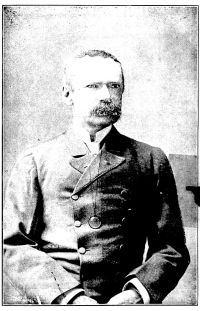
Frank F. Ellinwood,  Oriental Religions and Christianity

“ The one phrase which expresses the whole spirit of the laws of Manu is intense conservatism. They stand for the definite authority of dogma; they re-assert in strong terms the authority of the Vedas; they establish and fortify by all possible influences, the institution of caste. They enclose as in an iron framework, all domestic, social, civil, and religious institutions. They embrace not only the destiny of men upon the earth, but also the rewards and punishments of the future life. ”
Source: Gutenberg

Castes In India

“ I first propose to handle the law-giver of India. Every country has its lawgiver, who arises as an incarnation (avatar) in times of emergency to set right a sinning humanity and give it the laws of justice and morality. Manu, the law-giver of India, if he did exist, was certainly an audacious person. If the story that he gave the law of caste be credited, then Manu must have been a dare-devil fellow and the humanity that accepted his dispensation must be a humanity quite different from the one we are acquainted with. It is unimaginable that the law of caste was given. ”
Source: Gutenberg

Portrait of Bhimrao Ramji Ambedkar Bhimrao Ramji Ambedkar,  ANNIHILATION OF CASTE (1936)

“ There is no code of laws more infamous regarding social rights than the Laws of Manu. Any instance from anywhere of social injustice must pale before it. Why have the mass of people tolerated the social evils to which they have been subjected? There have been social revolutions in other countries of the world. Why have there not been social revolutions in India is a question which has incessantly troubled me. There is only one answer, which I can give and it is that the lower classes of Hindus have been completely disabled for direct action on account of this wretched system of Chaturvarnya. ”
Source: Wikisource

Get perspective with Kwize: daily news enlightened by great literature