“ Betty asked.“One of the chief reasons. England has already beaten the Spanish Armada and become ‘Mistress of the Seas,’ and the ships you see here, go to and from this port of London increasing its trade and its riches every day. Now you understand why that Exchange built by Sir Thomas Gresham was so much needed as a meeting-place for merchants to arrange the enormous amount of business the sailors have won for them. London is becoming more and more a city of merchants, living in beautiful houses. ”
London Exchange
Definition and stakes
The theme of “London Exchange” has been addressed by authors such as Franklin Escher, Ernest Maes Harvey, Walter Besant, Osbert John Radcliffe Howarth, Thomas Allan Ingram, and Henry Benjamin Wheatley and Netta Syrett. It is often associated with terms like trade, merchant, company, foreign and market.
Quotes about “London Exchange”
“ As Betty followed her, she looked back at Sir Thomas Gresham’s quaint building with its sloping roof, its high middle tower, and the gilded grasshoppers on its pinnacles. It was a very different place indeed from the one she had visited this very morning with all the roar and bustle of modern London round about it, but its purpose was the same. For now, as then, the Royal Exchange is the centre of London’s enormous trade. ”
Franklin Escher, Elements of Foreign Exchange: A Foreign Exchange Primer
“ In New York, Paris, Berlin and other centers it is realized that London is bidding better rates for money than are obtainable locally, and bankers forthwith make preparations to increase the sterling balances they are employing in London. Exchange on that particular point being in such demand, rates begin to rise, and continue to rise, according to the urgency of the demand. ”
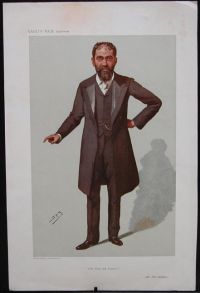 Felix Schuster,
Foreign Trade and the Money Market
(1906)
“ As I have already said, the fact of our being the recognised financial centre is beyond doubt. That this is so is a matter of the very greatest moment, for it will be admitted that the prosperity of the whole of the United Kingdom must, in a great measure, depend on our being able to maintain that position. A bill of exchange on London is the recognised medium of settling international transactions, which is made use of in all parts of the world. ”
Franklin Escher, Elements of Foreign Exchange: A Foreign Exchange Primer
“ There are times, as has been said, when individuals and banking houses abroad speculate heavily and continuously in this market, at which times the exchange market is strongly affected by the buying and selling of exchange which necessarily takes place. Such periods may last for weeks or even months, and during all of the time, London's immediate attitude toward the market is apt to be the controlling influence on the movement of exchange rates. ”
Franklin Escher, Elements of Foreign Exchange: A Foreign Exchange Primer
“ Obligations continually arising in the course of trade and finance between firms in New York and firms in London, it follows that every day in New York there will be merchants with sterling drafts on London which they are anxious to sell for dollars, and vice versa. The supply of exchange, therefore, varies with the obligations of one country to another. If merchants in New York, for instance, have sold goods in quantity in London, a great many drafts on London will be drawn and offered for sale in the New York exchange market. ”
Osbert John Radcliffe Howarth, Thomas Allan Ingram, and Henry Benjamin Wheatley, 1911 Encyclopædia Britannica, Volume 16… (1911)
“ Business.—The City has been indicated as the business centre of the metropolis. Besides the Royal Exchange, in the building of which are numerous offices, including “Lloyd’s,” the centre of the shipping business and marine insurance, there are many exchanges for special articles. Among these are the Corn Exchange in Mark Lane, where the privilege of a fair was originally granted by Edward I.; the Wool Exchange, Coleman Street; the Coal Exchange, Lower Thames Street ”
Charles Duguid, The Stock Exchange
“ THE MARKET-PLACE The market-place, where the dealing in this mass of securities is carried on, is by no means of imposing appearance from the exterior point of view. Of all the Stock Exchanges, Bourses, and Bolsas throughout the country and the world, the London Stock Exchange makes, perhaps, the least exterior show. The tourist often seeks it in vain, and thousands of Londoners pass it every day without knowing that behind the suites of offices, with their Portland-stone walls relieved by granite, is hidden the mighty market-place. ”
S. A. Reilly, Our Legal Heritage: King AEthelbert - King George III, 600 A.D. - 1776
“ The guilds insured quality by inspecting goods for a fee.About 1571, mercer and Merchant Adventurer Thomas Gresham established the Royal Exchange as a place for merchants and brokers to meet for business purposes. It became the center of London's business life. Its great bell rang at midday and at 6 p.m. Its courtyard was lined with shops that rented at 50s. yearly and became a popular social and recreational area. ”
 Arthur Latham Perry,
Principles of Political Economy
“ This counterworking principle, already illustrated as to inland exchange in the case of New York, is best seen internationally in connection with London, which is the settling-place of the world's commerce. When the Romans dredged the Thames and made "the pool" just below London Bridge, they took the first steps towards making that town a commercial centre; since a market for products is products in market, the busy exchange of commodities there has quickened in every age the accumulation of capital and the increase of population ”
Franklin Escher, Elements of Foreign Exchange: A Foreign Exchange Primer
“ And when money is decidedly higher in New York than in London an immense volume of foreign exchange does originate from this source. A number of firms and banks, with either their own branches in London or with correspondents there to whom they stand very close, are in a position where they can draw very large amounts of finance bills whenever they deem it profitable and expedient to do so. ”
Don Manoel Gonzales, London in 1731
“ Exchange Alley, so denominated from its being situated on the south side of this street, over against the Royal Exchange, has long been famous for the great concourse of merchants and commanders of ships, and the bargains and contracts made there and in the two celebrated coffee-houses in it, which go under the respective names of “Jonathan’s” and “Garraway’s,” where land, stocks, debentures, and merchandise, and everything that has an existence in Nature, is bought, sold, and transferred from one to another; and many things contracted for, that subsists only in the imagination of the parties. ”
Ernest Maes Harvey, 1911 Encyclopædia Britannica (1911)
“ Exchange then moves in favour of England, and the Bank of England can replenish its reserve. Over the greater part of the world the rate of exchange on London is an indication simply of the trade balance. The greater part of the world receives payment for food stuffs, and has to pay for European manufactures, shipping freights, banking services and professional commissions. ”
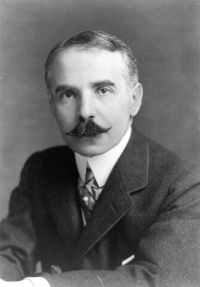 Otto H. Kahn,
The New York Stock Exchange and Public Opinion
“ One of the reasons for London's financial world position is that its American opportunity for foreign tradeStock Exchange affords a market for all kinds of securities of all kinds of countries. The English Stock Broker's outlook and general or detailed information range over the entire inhabited globe. It is largely through him that the investing or speculative public is kept advised as to opportunities for placing funds in foreign countries. He is an active and valuable force in gathering and spreading information and in enlisting British capital on its world-wide mission. ”
Ann Taylor, City Scenes; or, a peep into London
“ Here merchants meet from all parts of the world. The traffic on the seas being very great, to and from every nation, in time of peace, it must afford great convenience to the ship-owners, ship-captains, and traders, to have one spot where they can meet to transact their business. Sir Thomas Gresham, a merchant, laid the foundation in 1566, and Queen Elizabeth was so pleased with the building, that she dignified it with the title of Royal Exchange, by sound of trumpet. ”
 Walter Besant,
London in the Time of the Stuarts
“ The increase of trade, although petty trade, in the West was recognised in the foundation of the New Exchange, an institution which has been mostly overlooked by historians. “This building was erected by Robert, Earl of Salisbury, somewhat after the shape of the Royal Exchange, having cellars underneath and paved walks above with rows of shops. The first stone was laid on the 10th of June 1608. It was opened by King James I., April 10th, 1609, who came attended by the Queen, the Duke of York, the Lady Elizabeth, and many great lords and ladies, but it was not successful” (Stow) . ”
Franklin Escher, Elements of Foreign Exchange: A Foreign Exchange Primer
“ The chance to make even a slight profit by shifting balances is so quickly availed of that in the constant demand for exchange wherever any relative weakness is shown, there exists a force which keeps the whole structure at parity. The ability to buy drafts on Paris relatively much cheaper at London than at New York, for instance, would be so quickly taken advantage of by half a dozen watchful exchange men that the London rate on Paris would quickly enough be driven up to its right relative position. ”
Chester Arthur Phillips, Readings in Money and Banking
“ Arbitraging in exchange—the buying by a New York banker, for instance, through the medium of the London market, of exchange drawn on Paris—is another broad and profitable field for the operations of the expert foreign exchange manager. Take, for example, a time when exchange on Paris is more plentiful in London than in New York—a shrewd New York exchange manager needing a draft on Paris might well secure it in London rather than in his home city. ”
 Jack London,
War of the Classes
(1905)
“ In 1899 it had increased to 815,000,000 pounds,--an increase of 1200 per cent in the volume of trade.For nearly one hundred years England has been producing surplus value. She has been producing far more than she consumes, and this excess has swelled the volume of her capital. This capital has been invested in her enterprises at home and abroad, and in her shipping. In 1898 the Stock Exchange estimated British capital invested abroad at 1,900,000,000 pounds. But hand in hand with her foreign investments have grown her adverse balances of trade. ”
Walter Besant,
The History of London
“ Slaves, who were bred like cattle on the farms, formed a large part of the exports; hides, wool, iron, tin, the English merchant had these things, and nothing more, to offer the foreigner who brought in exchange wine, spices, silk, incense, vestments and pictures for the churches and monasteries, books, and other luxuries. The ships at first belonged to the foreign merchants: they traded not only at London, but also at Bristol, Canterbury, Dover, Arundel, and other towns. Before the Conquest, however, English-built ships and English-manned fleets had already entered upon the trade. ”
 Hilaire Belloc,
The River of London
(1912)
“ Once bridged the same spot would mark the terminal of sea-borne traffic and the place of exchange between foreign and domestic produce, while the roads radiating north and south from such a crossing would further establish its pre-eminence.But that pre-eminence was, from some very early period, commercial. The first mention of London in recorded history, the [Pg 72] phrase of Tacitus, speaks of the town particularly as a market. As a market London has grown, and as a market it is still chiefly eminent. But London is a market only because it is a port, and it is the port of the Thames. ”
Chester Arthur Phillips, Readings in Money and Banking
“ They naturally do not care to value their goods in local currency—that is, in the money of the country to which the goods are going—so their only alternative is to value them in francs or marks or sterling, preferably the latter, owing to the distribution and extent of British trade, creating throughout the world, as it does under the English banking system, a fairly constant supply of and demand for exchange on London. ”
Max Schlesinger, Saunterings in and about London
“ The reason is, that Englishmen are as much afraid of close rooms as of rheumatism and colds; and the Gresham Committee, which superintended the construction of the New Exchange, decided in favor of unlimited ventilation. Certain branches of business, which in many respects are much more extensive than the speculations in stocks and shares, have for a long time past been carried on in certain saloons. In the Exchange building itself there is a broad staircase, with crowds of busy people ascending and descending, and there is a door with large gold letters, “Lloyd’s Coffee House.” ”
Sir James Steuart, An Inquiry into the Principles of Political Oeconomy…
“ The principal operations of this bank are, to receive and pay away the greatest part of all the national revenue, expences, and debts; to discount bills of exchange payable at London, and to supply the country with coin.The demand of London for subsistence and manufactures from the country of England is so great, that the whole amount of what is sent up to that city, for taxes, and for land-rents there expended by the proprietors, does not compensate it. ”
Ernest Maes Harvey, 1911 Encyclopædia Britannica (1911)
“ Even when goods or produce are dealt in between foreign countries a credit is opened in London, so that the shipper of the produce can offer in the local market a bill of exchange which is readily saleable. With the highly developed banking system a large amount of deposits is collected in London, and the result is that bills of any usance up to six months can be immediately discounted, and the proceeds, if required, can be handed over in gold. ”
James Peller Malcolm, Anecdotes of the Manners and Customs of London during the Eighteenth Century…
“ Or, if you like rather the company of ladies, there are assemblies at most people of quality's houses. And in all the Coffee-houses you have not only the foreign prints, but several English ones with the Foreign Occurrences, besides papers of morality and party-disputes."My Bills of Exchange oblige me now and then to take a turn to the Royal-Exchange, in a hackney-coach, to meet my merchant. These coaches are very necessary conveniencies not to be met with any where abroad ”
Camden Pelham, The Chronicles of Crime or The New Newgate Calendar…
“ Merchants, manufacturers, farmers, graziers, tradesmen, and persons of respectability in England, Ireland, Scotland, and Wales, or in any foreign part, may have good London accepted bills of exchange procured for them, regularly drawn, accepted, and indorsed, and, if necessary, specially indorsed to them, at any dates and for any amount their circumstances may require ”
 E. Phillips Oppenheim,
Mr. Grex of Monte Carlo
“ Several thousands of our merchants are in business there, and prospering. Several hundreds of our shrewdest men of affairs are making fortunes upon the London Stock Exchange. Therefore, we do not wish to conquer England. Commercially, that conquest is already affected. I want you, Monsieur Douaille, to absolutely understand this, because it may affect your views. ”
English Economic History: Select Documents
“ The trade of the foreign wares for England will much decay because of the imposition and difficulty upon the exchange; for such our friends, that did send such commodities as alum, woad, canvas, silks, wines and other necessary things for the intent to reiterate shortly after the sending hither such commodities, so soon as they knew they were here arrived, did use to take up money by exchange for London ”
Franklin Escher, Elements of Foreign Exchange: A Foreign Exchange Primer
“ So much for the transaction from the importer's standpoint—what does the seller of the goods get out of it? Payment for his goods as soon as he is ready to ship them. No waiting for a remittance, no drawing of a dollar-draft on an obscure firm in Paterson, N.J., which no Canton bank will be willing to buy at any price. The credit constitutes authority for the shipper to draw in pounds sterling on London—the one kind of draft which he can always be sure of turning at once into local currency and at the most favorable rate of exchange. ”
Franklin Escher, Elements of Foreign Exchange: A Foreign Exchange Primer
“ A time comes when the New York banking house could advantageously use more money. Arrangements are therefore made with the London bank whereby the London bank agrees to "accept" a certain amount of the American banker's long bills, for a commission. In the course of his regular business, then, the American banker simply draws that many more pounds sterling in long bills, sells them, and for the time being has the use of the money. In the great majority of cases no extra collateral is put up, nor is the London bank especially secured in any way. ”
Related terms
Authors who wrote about “London Exchange”
Franklin EscherErnest Maes HarveyWalter BesantOsbert John Radcliffe Howarth, Thomas Allan Ingram… Netta SyrettMax SchlesingerAnn TaylorWilliam C. Van AntwerpJames Peller MalcolmChester Arthur PhillipsReginald R. SharpeS. A. ReillyE. Phillips OppenheimArthur Latham PerryFelix SchusterSir James SteuartJack London
 Adam SmithDon Manoel GonzalesOtto H. Kahn
Walter BesantOsbert John Radcliffe Howarth, Thomas Allan Ingram…Netta SyrettMax SchlesingerAnn TaylorWilliam C. Van AntwerpJames Peller MalcolmChester Arthur PhillipsReginald R. SharpeS. A. ReillyE. Phillips OppenheimArthur Latham PerryFelix SchusterSir James SteuartJack LondonAdam SmithDon Manoel GonzalesOtto H. Kahn