“ Lord Hailes—You had better go on, Mr. Clerk. Do go on.Mr. Clerk—This has been too often repeated. I have met with no politeness from the Court. You have interrupted me, you have snubbed me rather too often, my Lord, in the line of my defence. I maintain that the jury are judges of the law as well as of the facts; and I am positively resolved that I will proceed no further unless I am allowed to speak in my own way.The Lord Justice-Clerk—Then we must now call upon the Dean of Faculty to proceed with his address for the prisoner Brodie, which the Court will hear with the greatest attention. ”
Lord Justice Clerk
Definition and stakes
The theme of “Lord Justice Clerk” has been addressed by authors such as P. H. Ditchfield, Lysander Spooner, Portal:United States Congress, Ross De Witt Netherton and Mary L. Armitt. It is often associated with terms like court, judge, jury, law and states.
Quotes about “Lord Justice Clerk”
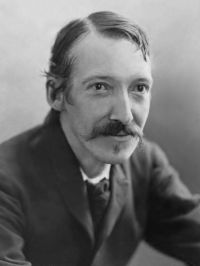 Robert Louis Stevenson,
Weir of Hermiston
(1896)
Robert Louis Stevenson,
Weir of Hermiston
(1896)
“ The Lord Justice-Clerk was a stranger in that part of the country; but his lady wife was known there from a child, as her race had been before her. ”
“ Mr. Clerk—It is easy to account from this cause, gentlemen, for what my Lord Advocate observed concerning the obscurity of my client’s history before the robbery of the Excise Office; and I imagine that no argument against him can be drawn from it. I know that I speak to a jury who will lay nothing into the scale against him that does not arise from the evidence which has been adduced. ”
Various, The Strand Magazine (1891)
“ In many country districts, where the justices are old and incompetent, they are absolutely in the hands of their clerk, who for all practical purposes becomes not only a magistrate, but the sole magistrate present. ”
Rodriguez v. United States — Opinion of the Court
“ If, therefore, the requirement that the grand jurors should be selected by the commissioner and the clerk was a fundamental requisite, that is, if the deputy clerk, in the absence of the clerk, had no authority, under any circumstances, to act, then the motion in arrest of judgment did not come too late. ”
Various, Encyclopaedia Britannica, 11th Edition…
“ The justices for every petty sessional division of a county or for a borough having a separate commission of the peace must appoint a fit person to be their salaried clerk. He must be either a barrister of not less than fourteen years’ standing, or a solicitor of the supreme court, or have served for not less than seven years as a clerk to a police or stipendiary magistrate or to a metropolitan police court. An alderman or councillor of a borough must not be appointed as clerk, nor can a clerk of the peace for the borough or for the county in which the borough is situated be appointed. ”
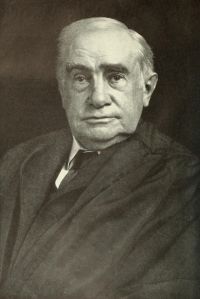 Henry Billings Brown,
United States v. Allred — Opinion of the Court
Henry Billings Brown,
United States v. Allred — Opinion of the Court
“ A distinction, however, is claimed between the case of a clerk, who is strictly a subordinate officer of the court, and a commissioner, who, it is said, is a separate judicial officer over whom the court has no control. ”
Henry Reeve, Memoirs of the Life and Correspondence of Henry Reeve…
“ It was settled that there should be but one clerk of the council. Lord Granville, I believe, wished to appoint me, but some obstacle stood in the way. I never exactly knew what; but if it was the Court, it is singular that I should have been so well received at Balmoral. What I desired was that the registrarship of the P. C. should become the second clerkship of the council, I offering to do my share of the general business; but this they declined. On June 9th Arthur Helps was appointed clerk of the council. ”
Peter Vivian Daniel, Cocke v. Halsey — Opinion of the Court
“ From this position, claimed by counsel as a legitimate deduction from the statute, it is argued, that the clerk, having been appointed by an exercise of power wholly illegal and void, nay, even without color of authority, his acts, too, must be merely void, and not entitled to the effects properly attributable to the acts of one who may be considered as an officer de facto, in contradistinction to him whose commission and qualification are in all respects regular, and who therefore may be called an officer de jure and de facto. ”
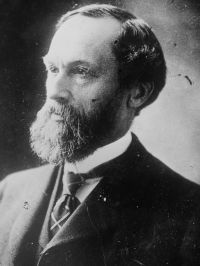 Simeon E. Baldwin,
The American Judiciary
Simeon E. Baldwin,
The American Judiciary
“ In the Supreme Court of the United States and in several of the appellate courts of the larger States each judge is provided with a clerk at public expense. While this is a means of relief from much which is in the nature of drudgery, it sometimes leads to a deterioration in the quality of the judicial opinions. A dictated opinion is apt to be unnecessarily long, and when a clerk is set to looking up authorities, although he can hardly be expected always to select the most apposite, it is easier to accept his work and use what he has gathered than to institute an independent search. ”
John Henderson, The West Indies
“ In front of the platform is a huge table, at which all the whites and yellow-whites of the district are foregathered{102} to witness the administration of justice. At the head of the table, and at the feet of the magistrate, is the clerk; an ancient man with the remains of a weak voice, and a habit of looking over his steel eye-glasses in the approved scholastic style. He is an important, if not a picturesque personage. The decorative touch is afforded to the court by the appearance of the inspector of police. ”
Various, Encyclopaedia Britannica, 11th Edition…
“ Especially the immunity of clerical offenders from the jurisdiction of lay courts had to be conceded; for the rest of the 483 middle ages the clerk guilty of theft or assault, riot or murder, could plead his orders, and escape from the harsh justice of the king’s officers to the milder penalties of the bishop’s tribunal. “Benefit of clergy” became an intolerable anomaly, all the more so because the privilege was extended in practice not only to all persons actually in minor orders, but to all who claimed them; any criminal who could read had a fair chance of being reckoned a clerk. ”
Henry Billings Brown,
United States v. King (147 U.S. 676…
“ As the clerk is not a jury commissioner eo nomine, it is difficult to see how he could be paid out of an appropriation for jury commissioners, or how these appropriation bills enlarge his rights, and, unless he is entitled to extra compensation as clerk for these duties, there would seem to be no appropriation from which he could be paid. While the duties of the clerk are similar to those of the commissioner, there is nothing in the language to indicate that the clerk did not act as clerk in performing such duties, or that he became ex officio a jury commissioner. ”
Samuel Warren, The Experiences of a Barrister…
“ This was of course refused; the recorder remarking, they might as well allow counsel for felons to address juries, as read defences; and that, as every practical man knew, would be utterly subversive of the due administration of justice. The clerk of the court would read the paper, if the prisoner felt too agitated to do so. This was done; and very vilely done. The clerk, I dare say, read as well as he was able; but old, near-sighted, and possessed of anything but a clear enunciation, what could be expected? The defence, so read, produced not the slightest effect either on the court or jury. ”
Supreme Court of the United States, Dobbs v. Jackson Women's Health Organization leaked draft investigation report (2023)
“ The law clerk owes the appointing Justice, all other Justices, and the Court as an institution, duties of complete confidentiality, accuracy, and loyalty. Justices rely upon law clerks’ assistance in exploring issues in pending cases. Justices rely on confidentiality in discussing the performance of their judicial duties and the work of the Court, and they expect and require complete loyalty from their own law clerks and the clerks of all other Justices. ”
Ross De Witt Netherton, The Fairfax County Courthouse
“ Unlike the justices, who came from all parts of the county and seldom were present except on court days, the clerk was much more available at the courthouse, and so generally was the first to hear news from the colonial capital or the outside world. As a result, the clerks of the court were consulted on a variety of matters whenever a justice was not available.Fees charged for performing the various services connected with the work of the court made up the income of the clerk, and occasionally the same person might hold the positions of clerk and surveyor, notary, or special commissioner. ”
Peter Vivian Daniel, Cocke v. Halsey — Opinion of the Court
“ To ascribe to them an intention to restrict the duties of a clerk pro tempore to the session of the court, would be imputing to them an act of utterly useless legislation; since none can fail to perceive, on looking into the law, that the duties of the clerk of probate are as extensive and as important, during vacation, as they are during term-time ”
 Samuel Freeman Miller,
United States v. Saunders (120 U.S. 126…
Samuel Freeman Miller,
United States v. Saunders (120 U.S. 126…
“ We do not think it important to decide in this case whether such a clerkship is an office within the meaning of these sections of the law and the constitution, because sections 1764 and 1765 both include in their prohibition officers, clerks, and other persons. The proposition of the comptroller that the clerk is not an officer is made to meet his concession that a person who holds two distinct compatible offices may lawfully receive the salary of each. ”
William Fayette Fox, Civil Government of Virginia
“ There shall be elected in like manner and for a like term all such additional clerks of courts for cities as the General Assembly may prescribe, or as are now authorized by law, so long as such courts shall continue in existence. But in no city of less than thirty thousand inhabitants shall there be more than one clerk of the court, who shall be clerk of all the courts of record in such city. ”
Peter Vivian Daniel, Cocke v. Halsey — Opinion of the Court
“ By the 8th section of the statute, the legislature declared, that in case the clerk of probate 'shall be at any time unable, from sickness or other unavoidable causes, to attend said court, it shall be lawful for the judge of probate to appoint a person to act as clerk pro tempore, who shall take an oath faithfully to discharge all the duties of his office,' &c. ”
Various, The Strand Magazine, Vol. 01, No…
“ Under the old system, when the Courts of Common Pleas, Exchequer, and Queen's Bench existed, each division had a chief who was responsible for the work of his court and the mode in which it was administered. The judges now hold a meeting, at which they make their own arrangements for circuits and for appointments to the various courts. Although the Lord Chief Justice is supposed to control the order of work, the judges in effect have a free hand as regards their own duties. ”
Thomas Leaming, A Philadelphia Lawyer in the London Courts
“ At the judge's right are the jury, seated in a box of either two rows of six or three rows of four, the back row being nearly on a level with the judge. In front of the judge, but so much lower as to oblige him to stand on his chair when whispering to his lordship, sits his "associate," a barrister in wig and gown, whom we should designate as the clerk of the court.Facing the associate is the "solicitors' well," at the floor level, where, on the front row of benches, sit the solicitors in ordinary street dress. ”
P. H. Ditchfield, The Parish Clerk
“ If a man performs the duties of the office for one year he gains a settlement, and cannot afterwards be removed without just cause.An important Act was passed in 1844, to which I have already referred, for the better regulating the office of lecturers and parish clerks. Sections 5 and 6 of this Act bear directly on the method of removal of a clerk who may be guilty of neglect or misbehaviour. ”
P. M. Hough, Dutch Life in Town and Country
“ As many other people are coming in, and the room threatens soon to be crowded, a considerate attendant, knowing that we are in favour with the grave and reverend seigniors who preside over the Court, shows us into another and smaller room, where one of the deputy Clerks (Greffier) is seated working at his books. One by one other persons come in, pay small sums of money, of which the deputy Clerk evidently keeps an exact account, together with the names and addresses of the payers, the amounts yet remaining due--everything, in fact, relating to each person's case. ”
Henry Billings Brown,
United States v. King (147 U.S. 676…
“ An item for attendance on the circuit court at Macon by deputy for several days was disallowed by the comptroller, upon the ground that the clerk had been allowed a per diem for his personal attendance upon the court at Savannah upon the same day, the comptroller holding that the clerk was entitled to but one per diem for any one day, although the court might be in session at two or more places, and the clerk be represented at one of those places by a deputy. ”
 Nathaniel Hawthorne,
Passages from the English Notebooks…
Nathaniel Hawthorne,
Passages from the English Notebooks…
“ The controlling genius of the court, except when the stipendiary magistrate presides, is the clerk, who is a man learned in the law. Nominally the cases are decided by the aldermen, who sit in rotation, but at every important point there comes a nod or a whisper from the clerk ”
Various, The Strand Magazine (1891)
“ The constable who assists in protecting game and in guarding the landlords and their farmers against trespassers, undoubtedly acquires a great deal of influence over the bench in many districts. The country justices, as a rule, know nothing of the law, and are obliged to rely on the advice of the clerk of the court, who is often a solicitor of some position, and probably acts as private solicitor to one or more of the magistrates. ”
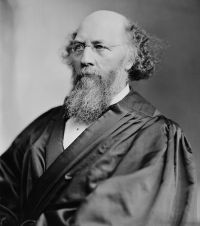 Stephen Johnson Field,
Young v. Martin — Opinion of the Court
Stephen Johnson Field,
Young v. Martin — Opinion of the Court
“ It is no part of the duty of the clerk to note in his entries the exceptions taken, or to note any other proceedings of counsel, except as they are preliminary to, or the basis of, the orders of judgment of the court. To be of any avail, exceptions must not only be drawn up so as to present distinctly the ruling of the court upon the points raised, but they must be signed and sealed by the presiding judge. ”
by John Marshall Harlan, United States v. Finnell — Opinion of the Court
“ Said the court: 'There is ample power in a court which has been regularly convened to adjourn to a futurn time, provided it be not beyond the term; but in the absence of a statute authorizing it, the clerk or other ministerial officer cannot act for the judge in either opening or adjourning court. The clerk is a ministerial officer, and, without statutory authority, can exercise no judicial function. The opening, holding, and adjournment of court are the exercise of judicial power to be performed by the court. ”
P. H. Ditchfield, The Parish Clerk
“ The dismissal of a parish clerk was a somewhat difficult and dangerous task. In the eyes of the law he is no menial servant--no labourer who can be discharged if he fail to please his master. The law regards him as an officer for life, and one who has a freehold in his place. ”
Peter Vivian Daniel, Byers v. Surget — Opinion of the Court
“ The offices of clerk and sheriff were never designed to be mere names, nor to be engines and pretexts, to be used at the will of any one. By what authority, then, could the appellant assume the functions of both clerk and sheriff ”
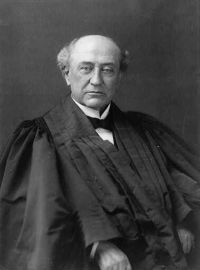 David Josiah Brewer,
Richmond Company v. Elliott — Opinion of the Court
David Josiah Brewer,
Richmond Company v. Elliott — Opinion of the Court
“ The deputy clerk of this court, for example, is very efficient and faithful, and, if there should be a vacancy in the office of clerk of the court, it is not only possible, but very probable, that he would be appointed to fill the vacancy, thereby obtaining a much larger salary then he now receives ”
Horace Gray, United States v. McMillan — Opinion of the Court
“ Among the provisions of the act of 1853, and of chapter 16 of title 13 of the Revised Statutes, expressly extended by congress to the territories, is the provision that the maximum personal compensation of a clerk of a district court or of a circuit court of the United States shall be no greater if he holds both clerkships than if he holds only one. This clearly indicates the intention of congress that the maximum compensation of the clerk of a territorial district court should not be increased even if his fees and emoluments were derived from two distinct sources of authority. ”
Parliament of New South Wales, Masters and Servants Act (1902)
“ Any clerk of petty sessions may receive any complaint made to him personally by any master or servant, and after the same has been reduced into writing and signed by the complainant, may issue his summons against the defendant, and such summons shall have the same force and effect as if issued by a justice. ”
the English Parliament, Benefit of Clergy Act 1275
“ And because the State of [1] the holy Church had been evil kept, and the Prelates and religious Persons of the Land grieved many ways, and the People otherwise intreated than they ought to be, and the Peace less kept, and the Laws less used, and the Offenders less punished than they ought to be, by reason where of the People of the Land feared the less to offend; the King hath ordained and established these Acts underwritten, which he intendeth to be necessary and profitable unto the whole Realm.A Clerk convict of Felony, delivered to the Ordinary, shall not depart without Purgation. ”
Related terms
Authors who wrote about “Lord Justice Clerk”
P. H. Ditchfield Lysander SpoonerPortal:United States CongressRoss De Witt NethertonMary L. ArmittDakota Territory Legislative Assembly
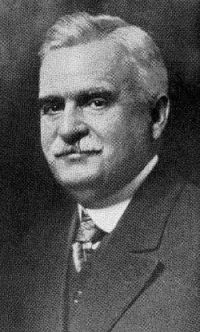 Charles DeLano HineJohn Palmer GavitHenry Billings BrownVariousPeter Vivian DanielDavid Josiah Brewerby John Marshall HarlanHorace Gray
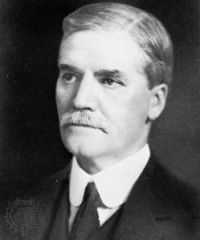 Dugald ClerkEdward Douglass WhiteSir Edward Abbott ParryAnonymous
 Hugo BlackHenry Reeve
Lysander SpoonerPortal:United States CongressRoss De Witt NethertonMary L. ArmittDakota Territory Legislative AssemblyCharles DeLano HineJohn Palmer GavitHenry Billings BrownVariousPeter Vivian DanielDavid Josiah Brewerby John Marshall HarlanHorace GrayDugald ClerkEdward Douglass WhiteSir Edward Abbott ParryAnonymousHugo BlackHenry Reeve