“ And the goods of King Tarquin were given up for plunder to the people.2. Then the traitors were brought up before the consuls, and the sight was such as to move all beholders to pity; for among them were the sons of Lucius Junius Brutus himself, the first consul, the liberator of the Roman people. And now all men saw how Brutus loved his country; for he bade the lictors put all the traitors to death, and his own sons first; and men could mark in his face the struggle between his duty as a chief magistrate of Rome and his feelings as a father. ”
Lucius Junius Brutus
Definition and stakes
Lucius Junius Brutus, a semi-legendary figure from the 6th century BC, is traditionally regarded as the founder of the Roman Republic and one of its earliest consuls. His involvement in driving out the tyrant Tarquinius Superbus, following the rape of Lucretia, represents Rome’s shift from monarchy to republic.
Historians such as Plutarch and Livy portray him as a steadfast revolutionary, while Shakespeare’s Julius Caesar echoes his legacy through the character of Marcus Brutus. Cicero commended his integrity in defending freedom, and Seneca connected him to later republican values. His tale, characterized by personal sacrifice and political determination, embodies lasting themes of responsibility and upheaval, influencing Rome’s republican identity.
Quotes about “Lucius Junius Brutus”
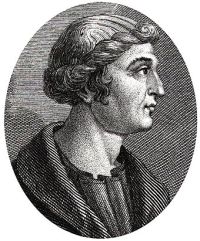 Cassius Dio,
Dio's Roman History
(1914)
Cassius Dio,
Dio's Roman History
(1914)
“ But as Apollo declared that he should be driven from his domain only when a dog should use human speech, he was inspired with confident hope, thinking that the oracle could never be fulfilled. Now Lucius Junius was a son of Tarquin's sister; his father and brother Tarquin had killed. So he, fearing now for his own person, feigned stupidity, especially when he is of a distinguished family, becomes an object of suspicion to tyrants. And when once he had set out on this course, he acted his part with the greatest precision, and for that reason was also called Brutus ”
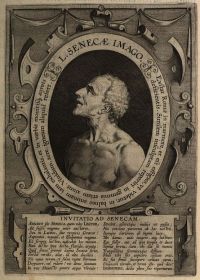 Lucius Annaeus Seneca,
The Tragedies of Seneca
Lucius Annaeus Seneca,
The Tragedies of Seneca
“ This play, unlike its predecessors, was not written at the time of the events which it portrays, but may still be classed with them, so far as its object is concerned, since it is generally thought to have been written in honor of D. Junius Brutus who was consul in 138 B.C., and with whom the poet enjoyed an intimate friendship.Another praetexta of Accius is preserved, the Decius, of which eleven short fragments remain. ”

Related terms
Authors who wrote about “Lucius Junius Brutus”
 William Shakespeare
 Plutarch
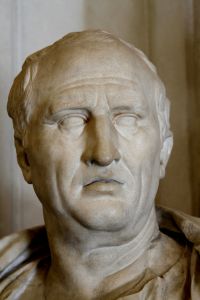 Marcus Tullius Cicero
 Sir Mungo William MacCallumNicolaus of Damascus
 Richard Brinsley SheridanHenry George LiddellCassius DioThomas HeywoodRichard ShortC. J. Wills
 J. A. Giles
 Felicia Buttz Clark
 Henry LawsonOliver GoldsmithLucius Annaeus SenecaLucanCharles MorrisEugene Lawrence
 Suetonius