“ I spent such another half-hour at Ludlow, which is a much grander and more famous monument. Ludlow, however, is a ruin—the most impressive and magnificent of ruins. The charming old town and the admirable castle 241 form a capital object of pilgrimage. Ludlow is an excellent example of a small English provincial town that has not been soiled and disfigured by industry; it exhibits no tall chimneys and smoke-streamers, no attendant purlieus and slums. The little city is perched upon a hill near which the goodly Severn wanders, and it has a remarkable air of civic dignity. ”
Ludlow Castle
Definition and stakes
The theme of “Ludlow Castle” has been addressed by authors such as Ella S. Armitage, Charles Henry Ashdown, George Thomas Clark, S. Baring-Gould and J. T. Barber. It is often associated with terms like England, river, Durham, English and Thomas.
Quotes about “Ludlow Castle”
Thos. D. Murphy, In Unfamiliar England
“ Sixty years later the Parliamentary cannon planted on Whitcliff, just opposite, brought the active history of Ludlow Castle to an end. In 1651 it was finally dismantled; the lead and timbers were stripped from the roof, the mantels and furnishings were sold and the fine old structure given over to unhindered decay for nearly two hundred years. ”
H. Thornhill Timmins, Nooks and Corners of Shropshire
“ Retracing our steps to the castle-garth, we pass through the outer doorway and fare forth into Ludlow town in search of antiquarian spoil. Our quest is quickly rewarded, for at yonder street corner, beyond some tall elms, rises the Castle Lodge, a picturesque structure of timber and plaster, built by Thomas Sackford, a burgess of Ludlow, in Queen Elizabeth's reign. ”
James John Hissey, A Leisurely Tour in England
“ Coming to it from the south, the castle-crowned town of Ludlow greets the traveller with a genuine flavour of antiquity. He enters it, as did the traveller of centuries ago, through a narrow, arched, stone gateway with round flanking towers. The gateway stands "massive and grim across the street," a graphic reminder of the feudal days when Ludlow was surrounded by fortified walls, broken and ruined now, but they can still be traced encircling the town. ”
Thos. D. Murphy, In Unfamiliar England
“ It is prosperous today in a quiet way as a country market, and though it has many visitors, it has in no sense, as yet, become a tourist resort. One will find many fine buildings, odd nooks and corners, and very quaint streets, all quite devoid of any taint of modernity. The town is deservedly proud of its parish church—as fine, perhaps, as any in England. It occupies the opposite end of the high rock on which the castle sits and, after the castle, is easily the glory of Ludlow. It is built of red sandstone, time-stained to a dull brown, touched in places with silver gray ”
George Thomas Clark, Mediæval Military Architecture in England…
“ The Castle of Ludlow crowns a rocky promontory which projects at a height of above a hundred feet over the union of the Corve with the Teme. Eastwards, and in its immediate rear, and rather lower than the castle, but much above the adjacent plain, stands the grand cruciform church with its lofty central tower, and about and below it the quaint old town. To the north, far below the walls, the Corve and the Teme are seen to wind across the meads which they fertilise, while to the west opens the deep and narrow ravine274 down which their combined waters flow to the distant Severn. ”
Katharine Lee Bates, From Gretna Green to Land's End…
“ As we left Ludlow, we looked back on the looming grey mass of its own still stupendous castle and were hardly [261] prepared to find the rival fortress in such utter desolation of decay. Standing on its sentry height, girdled with its massive walls, it was once a menace to the English throne. Now such towers as yet remain are rent and ragged. Only a curtain of ivy guards the inner gate. Trees have sprung from the dirt-choked embrasures, and purple thistles grow rank in the empty courts. ”
 George Saintsbury,
A History of the French Novel, Vol…
George Saintsbury,
A History of the French Novel, Vol…
“ In more elaborate and adorned narrative the influence, not merely of the name but of the beautiful name, comes in, and that of the name itself remains. In that tragic story of Ludlow Castle which was given above (Chap. iv. pp. 84-6) , something, for the present writer at least, would have been lost if the traitor had been merely "a knight" instead of Sir Ernault Lisle and the victim merely "a damsel" instead of Marion de la Brière. ”
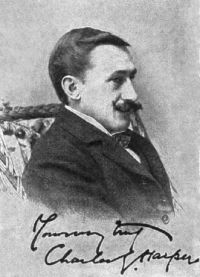 Charles G. Harper,
The Old Inns of Old England, Volume 2…
Charles G. Harper,
The Old Inns of Old England, Volume 2…
“ Turn we now to Shropshire, to that sweet and gracious old town of Ludlow, where—albeit ruined—the great Castle of the Lords Presidents of the Council of the Marches of Wales yet stands, and where many an ancient house belonging to history fronts on to the quiet streets: some whose antique interiors are altogether unsuspected of the passer-by, by reason of the Georgian red-brick fronts or Early Victorian plaster faces that have masked the older and sturdier construction of oaken beams. ”
 Gordon Risley Hearn,
The Seven Cities of Delhi
(1906)
Gordon Risley Hearn,
The Seven Cities of Delhi
(1906)
“ Ludlow Castle. — From the cemetery the Alipur Road runs to the gate of the grounds of Ludlow Castle, now the Delhi Club; near the gate are three more batteries. One is in the garden of a house adjoining the cemetery, close to the wall of the latter ; this was the right half of No. II., the great breaching battery. In those days the present dense grove of trees within the cemetery walls did not exist. The left half of this battery was in the grounds of Ludlow Castle, at a somewhat greater range ; the miniature embrasure is visible from the road. ”
A. Hamilton Thompson, Military Architecture in England During the Middle Ages
“ The site of Ludlow (96) , like that of Richmond, is a rocky peninsula, where a stone curtain, for which material existed on the spot, formed the obvious means of defence. There was no mount and no keep. Exeter, again, is an early example of a stone-walled castle upon a rocky site, where a gateway with a tower above formed the principal entrance. Such sites were protected naturally by the fall of the ground on the steeper sides; the side on which approach was possible was covered by a ditch cut in the rock. ”
1911 Encyclopædia Britannica (1911)
“ The country neighbouring Ludlow is richly wooded and hilly, while the scenery of the Teme is exquisite. Westward, Vinnal Hill reaches 1235 ft., eastward lies Titterstone Clee (1749 ft.) . Richard’s Castle, 3 m. S. on the borders of Herefordshire, dates from the reign of Edward the Confessor, but little more than its great artificial mound remains. At Bromfield, 3 m. above Ludlow on the Teme, the church and some remains of domestic buildings belonged to a Benedictine monastery of the 12th century. ”
Mrs. Rodolph Stawell, Motor Tours in Wales & the Border Counties
“ History and the camera must wait; the first day must be given up to the sheer joy of the road.So, as we shall not be able to hurry in Shropshire, seeing that there history cannot be ignored, we shall do well to cross its border in the evening, and spend the night in Ludlow. We will drop gently down the hill by Ludford House, and cross the Teme when the light is growing dim, and we can only tell by the deepening of the shadows in the trees on the left that the castle stands among them. ”
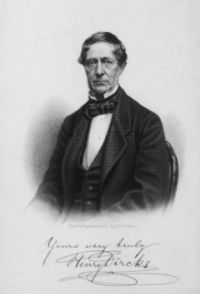 Henry Dircks,
The Life, Times, and Scientific Labours of the Second Marquis of Worcester
Henry Dircks,
The Life, Times, and Scientific Labours of the Second Marquis of Worcester
“ On Friday, the 18th of July, his Majesty returning to the Castle dined there, continuing his visit until the 22nd, when he set out for a place called The Creek. In the evening, however, he had supper at the Castle, and remained there until Thursday, the 24th. He purposed going to Bristol, but apprehending the approach of the Scots, on arriving at The Creek, he went thence to Newport, Cardiff, Radnor, and Ludlow Castle. After a lapse of six weeks, his Majesty, on Sunday, the 7th of September, paid his third visit to Raglan Castle in time to partake of supper. ”
George Thomas Clark, Mediæval Military Architecture in England…
“ Wigmore and Richard’s Castle were the advanced posts of Ludlow. Cleobury Mortimer was held by Ralph Mortimer at the Survey, and probably came to him from the forfeiture of Earl Roger de Britolio. Knighton and Knucklas are on the right bank of the Teme, just outside the Shropshire border. Their exposed position made them very important posts. In 1180 Randulf Puher, Sheriff of Herefordshire, accounted for the expenses of works at the castles of Knighton and Camerino, and a little later, while employed in building a border castle, he was slain by the Welsh. Of Knighton only the mound remains. ”
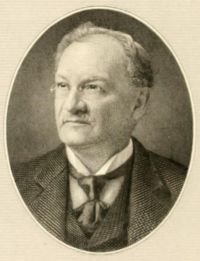 Joel Cook,
England, Picturesque and Descriptive…
Joel Cook,
England, Picturesque and Descriptive…
“ The town of Ludlow adjoins the castle, and on approaching it the visitor is struck by the fine appearance of the tower of the church of St. Lawrence. The church is said to be the finest in Shropshire, and this tower was built in the time of Edward IV. Its chantry is six hundred years old, and belonged to the Palmers' guild. Their ordinances are still preserved, one of which is to the effect that "if any man wishes, as is the custom, to keep night-watches with the dead, this may be allowed, provided that he does not call up ghosts." ”
Thos. D. Murphy, British Highways and Byways from a Motor Car
“ The splendid dark-oak paneling that reached to the ceiling of the dining room and the richly carved mantel-piece, they told us, were once in rooms of Ludlow Castle. As we sat at our late dinner, a famPg 70iliar melody from the sonorous chimes of the church-tower came through the open window to our great delight. "O, what a nuisance those bells are," said the neat waiting maid, "and a bad thing for the town, too. Why, the commercials all keep away from Ludlow. They can't sleep for the noise." "Do the chimes ring in the night?" ”
Charles Harding Firth, Dictionary of National Biography… (1893)
“ At the close of the first campaign he returned to his native county, and became captain of a troop of horse for Sir Edward Hungerford's regiment (10 April 1643) . When Hungerford took Wardour Castle, Wiltshire (8 May 1643) , he appointed Ludlow its governor. Ludlow made himself famous by the tenacity with which he endured a three months' siege. ”
1911 Encyclopædia Britannica (1911)
“ The constant necessity of defending their territories against the Welsh prompted the Norman lords of Shropshire to such activity in castle-building that out of 186 castles in England no less than 32 are in this county. Of these the most famous are Ludlow, founded by Roger de Montgomery; Bishop's Castle, which belonged to the bishops of Hereford; Clun Castle, built by the Fitz-Alans; Cleobury Castle, built by Hugh de Mortimer; Caus Castle, once the barony of Peter Corbett, from whom it came to the Barons Stratford; Rowton Castle, also a seat of the Corbetts; Red Castle, a seat of the Audleys. ”
Kate Norgate, England under the Angevin Kings… (1887)
“ At last, on April 9, she and her cousin Henry met at Durham; David and Henry gave hostages for their pacific conduct in the future, and the English earldom of Northumberland was granted to Henry. [795] Thei.301 treaty was ratified by Stephen at Nottingham; [796] the Scottish prince stayed to keep Easter with his cousins, and afterwards accompanied the king in an expedition against Ludlow. The castle of Ludlow, founded probably by Roger de Lacy in the reign of William Rufus, was destined in after-days to become a treasure-house alike for historian, antiquary and artist. ”
James M. Ludlow, The Captain of the Janizaries
“ His jaws are as slender as a heron's beak: chest deep as a lion's: belly thin as a weasel's: a double span of my arms from tip to tail. To-morrow night meet me at the castle. Should I not have arrived, this will give you admission," presenting him with a small knife, on the bone handle of which was a rude carving of the 187 crest of Amesa. "Give it to the warden. He will recognize it."Long before the arrival of Amesa and Drakul at the castle in company with Elissa, the stranger, whom the reader will recognize as Captain Ballaban dressed as an Albanian peasant, had been admitted. ”
James M. Ludlow, The Captain of the Janizaries
“ At length, with slow speech and tremulous voice, he portrayed the scenes of that terrible night when the castle of the gallant De Streeses was destroyed, its owner slain, the fair Mara driven back into the flames from which she would have fled."It is a lie," shouted Amesa. "The deed was wrought by Turks!"——"Thy words condemn thee!" said Castriot. "The crime was not laid to thy charge, Amesa. But now it shall be. Let Drakul be brought."Soldiers led in the man. ”
A. Hamilton Thompson, Military Architecture in England During the Middle Ages
“ The arrangement, however, is a complete contrast to the haphazard projection of towers from earlier curtains, as at Ludlow. The castle stands high on the right bank of the Coquet: the river bends round it, so that the only level approach is from the plateau on the west side, and the town climbs the tongue of land between the castle and the river.245 The mount is at the apex of the castle site, immediately above the town. On the west side of the enclosure the curtain, which is strong and thick, is unbroken by any tower: against the inner face are the domestic buildings. ”
George Thomas Clark, Mediæval Military Architecture in England…
“ It stands upon the eastern slope of the Vinnall Hill, an elevated ridge which extends hither from Ludlow, and a little to the west of the castle is cleft by two deep parallel gorges, beyond which the high ground reappears in two diverging ridges, of which one extends westward in the direction of Wigmore and the other more southerly to the river Lugg, at Mortimer’s Cross, having on its ridge the ancient British earthwork of Croft Ambrey, and below it the fortress of Croft Castle, reported to occupy an early English site. ”
Emily Sarah Holt, In Convent Walls
“ Only I do hope Jack shall have more wit than his father, and I shall think the fairies have changed him if he have not. My son should not be short of brains.But now, to have back, and begin my story: for I reckon I shall never make an end if I am thus lone: in coming to the beginning.We were all brought up in the Castle of Ludlow, going now and then to sweeten (to have the house thoroughly cleaned) to the Castle of Wigmore. ”
Anonymous, The Cambrian Directory [1800]; Or…
“ Should the tourist find time to make any stay at Ludlow, several excursions in the neighbourhood, will prove highly gratifying. Oakley Park, the elegant seat of the Dowager Lady Clive, claims the greatest attention; it is situated about two miles from Ludlow, on the banks of the Teme river; just beyond this, is a seat of — Walpole, Esq. About five miles is Downton Castle; the noble mansion, and fine walks of Richard Payne Knight, Esq. one of the representatives in Parliament for the borough of Ludlow. ”
 G. A. Henty,
Both Sides the Border: A Tale of Hotspur and Glendower
G. A. Henty,
Both Sides the Border: A Tale of Hotspur and Glendower
“ The others must, on an alarm being given, gather in strong houses, selected by themselves as the most defensible in their district, with their wives and families, so as to repel any attack the Welsh may make; leaving behind them the boys and old men, to drive out their flocks and herds, either towards the nearest castle, or to Hereford or Shrewsbury, as may be nearest to them."When the knights had left, messengers were sent out to all the owners of castles in Radnor, Hereford, and Shropshire; bidding them assemble, in four days' time, at Ludlow. ”
James M. Ludlow, The age of the crusades (1896)
“ Men had not evolved the morality which could make a commonwealth. Law was bound on men only by force. The wall of the castle, grand and impressive as wealth could build it, or only a rude addition to the natural rock, was the sole earthly object of reverence. ”
Thos. D. Murphy, In Unfamiliar England
“ The incident related shows its wealth of romantic associations. Its sober history is no less full of interesting vicissitudes. It figured largely in [Pg 386] the wars of the Roses; it was for many years the home of Prince Arthur, eldest son of Henry VII., and his early death placed the irrepressible Henry VIII. on the throne. For nearly two hundred years the castle was the seat of the Lord President of the Marches, and Ludlow was in a certain sense the capital of the border counties. ”
Richard Garnett, The Age of Dryden
“ One writer of the day, Samuel Pepys, has placed himself for all time at the head of this class of composition, by an achievement little likely to be repeated. Among memoir-writers proper the most important is [Pg 184] Edmund Ludlow, the Cato of the Commonwealth (1617-1692) .Ludlow, the son of a Wiltshire knight of extreme political views, enlisted at the commencement of the Civil War in the bodyguard of the Earl of Essex, and afterwards highly distinguished himself by his obstinate, though unsuccessful defence of Wardour Castle, in his native county. ”
Related terms
Authors who wrote about “Ludlow Castle”
Ella S. ArmitageCharles Henry AshdownGeorge Thomas ClarkS. Baring-GouldJ. T. BarberA. Hamilton ThompsonThos. D. MurphyH. Thornhill TimminsMrs. Rodolph StawellClive Holland Walter ScottKate NorgateGordon HomeThomas DugdaleWalter Scott Dalgleish
 Charles PerraultCharles Harding Firth
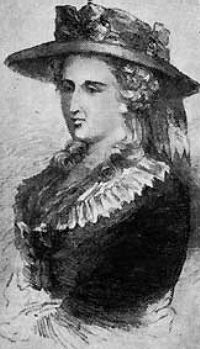 Ann Ward Radcliffe
 John CassellJames M. Ludlow
Walter ScottKate NorgateGordon HomeThomas DugdaleWalter Scott DalgleishCharles PerraultCharles Harding FirthAnn Ward RadcliffeJohn CassellJames M. Ludlow