“ And thus passed the seasons of the year until the harvest came. And he went to look at one of his crofts, and behold it was ripe. “I will reap this to-morrow,” said he. And that night he went back to Narberth, and on the morrow in the grey dawn he went to reap the croft, and when he came there he found nothing but the bare straw. Every one of the ears of the wheat was cut from off the stalk, and all the ears carried entirely away, and nothing but the straw left. ”
Croft
Definition and stakes
The theme of “croft” has been addressed by authors such as J. U. Giesy and Alfred Ollivant. It is often associated with terms like soil, crop, wheat, maize and fertilizer.
Quotes about “croft”
J. U. Giesy, Palos of the Dog Star Pack
“ Here Croft found the man he sought, reclining on a padded divan, his too full red lips slightly parted in a bibulous smile, his long hair curled and anointed and perfumed till he reeked of aromatic scents; his well-formed hands loaded with rings, his body clad in a crimson garment, embroidered in gold.Beside him, lying outstretched like some splendid creature of the jungle as it came to Croft, was a woman; tawny as a lioness in the tint of her hair and heavy-lidded eyes, lithe as a lioness, too, in every sensuous line of her body, well-nigh unclothed. ”
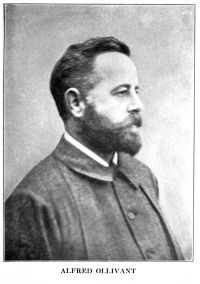 Alfred Ollivant,
One Woman: Being the Second Part of a Romance of Sussex
Alfred Ollivant,
One Woman: Being the Second Part of a Romance of Sussex
“ They entered Saffrons Croft, which lay black or silver-blanched before them, peopled now only with tall trees. The groups of elms, thickening with blossoms, gathered the stars to their bosoms, and laid their shadows like patterns along the smooth sward. Beyond the threadbare tapestry of trees rose the solid earth-work of the Downs, upholding the brilliant night, encircling them as in a cup, and keeping off the hostile world. Ernie felt their strength, their friendship, the immense and unfailing comfort of them. ”
1911 Encyclopædia Britannica (1911)
“ Of green crops turnips do well in certain districts, artificial manures being extensively used. In those quarters where the soil is dry, potatoes are successfully raised. An immense number of the holdings are crofts averaging 5 acres or under. ”
 Virgil,
Georgics (Rhoades) — I
Virgil,
Georgics (Rhoades) — I
“ Why tell of him, who, having launched his seed, Sets on for close encounter, and rakes smooth The dry dust hillocks, then on the tender corn Lets in the flood, whose waters follow fain; And when the parched field quivers, and all the blades Are dying, from the brow of its hill-bed, See! see! he lures the runnel; down it falls, Waking hoarse murmurs o'er the polished stones, And with its bubblings slakes the thirsty fields? Or why of him, who lest the heavy ears O'erweigh the stalk, while yet in tender blade Feeds down the crop's luxuriance, when its growth First tops the furrows? ”
 William Cowper,
Ye sons of earth prepare the plow
William Cowper,
Ye sons of earth prepare the plow
“ Ye sons of earth prepare the plow, Break up your fallow ground! The Sower is gone forth to sow, And scatter blessings round. The seed that finds a stony soil, Shoots forth a hasty blade; But ill repays the sower's toil, Soon withered, scorched, and dead. The thorny ground is sure to baulk All hopes of harvest there; We find a tall and sickly stalk, But not the fruitful ear. ”
 Flora Annie Webster Steel,
The Flower of Forgiveness
Flora Annie Webster Steel,
The Flower of Forgiveness
“ Strange work, but pleasant too, with a charm of its own wrought by infinite variety and sudden surprise. Sometimes watching the stream sapping at a wheat-field, where the tender green spikes fringed the edges of each crack and fissure in the fast-drying soil. A promise of harvest,--and then, sheer down, the turbid water gnawing hungrily. Every now and again a splash, telling that another inch or two of solid earth had yielded. Sometimes standing on a mud bank where the ever watchful villagers had sown a trial crop of coarse vetch ”
Mrs. Lance Rawson, Australian enquiry book of household and general information… (1894)
“ The rotation of crops means—taking a surface crop, such as wheat, oats, maize, &c., off the land, and then ploughing and planting a root crop, say turnips, potatoes, &c., &c. One of the best ways to manure a field impoverished by successive cropping without rest or manure is by sowing broadcast some such crop as peas, vetches, turnips, or any quick growing tender leaf plant, and when it is a few weeks old, or when the plants have leafed out well, plough it under and leave the field fallow till the following spring. ”
Ida D. Bennett, The Busy Woman's Garden Book
“ It is amazing, once one has started to conserve fertility, how much one can find to add to this compost heap; I recall that one spring,77 from a well-tended compost heap and one horse stable, I had hauled on to the garden ten large, two-horse loads of fertilizer, and put the garden in excellent shape, and not only this,—it had kept the premises tidy as nothing else would have done. The gatherings of the summer and fall will, by spring, have rotted down into available form and the action of the soil, sun and rain will complete the process. ”
Robert H. Elliot, Gold, Sport, and Coffee Planting in Mysore
“ But to keep the soil in good condition, and yet comply with the fruit cultivators' chief axiom that, "from the time of blossom till the crop is ripe the roots should not be disturbed," is a matter of great difficulty—I might almost indeed say an impossibility. For, from the trampling of the people in their passage up and down the lines, and the dash of the rain, the soil becomes exceedingly hard immediately after, or at least very shortly after the rain. ”
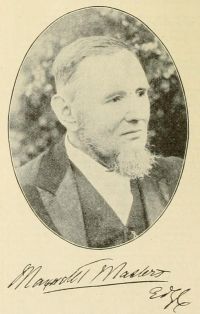 Maxwell Tylden Masters,
Popular Science Monthly
(1873)
Maxwell Tylden Masters,
Popular Science Monthly
(1873)
“ Notes are taken at frequent intervals during the season of growth, the appearance of the plants noted, their relative luxuriance observed, and their comparative tendency to produce flower or stem and leaf, the abundance of flowers, etc., etc. Root-growth is studied, and also the character of the soil in the various plots, and the way in which its texture and its capacity for holding or transmitting water are modified according to the manure applied. When the crop is cut from each plot, its weight is estimated, and also the amount of dry produce. ”
 James Bruce,
Travels to Discover the Source of the Nile…
James Bruce,
Travels to Discover the Source of the Nile…
“ Before the wheat, or any grain soever can appear, this grass has shot up so high and so thick as absolutely to choke it. Suppose it was possible to hoe or weed it, the grass will again overtop the grain before it is an inch from the ground. Say it could be again hoed or cleared, by this time the rains are so continual, the black earth becomes a perfect mire. The rain increases, and the grain rots without producing any crop. ”
George Howard Alford, How to Prosper in Boll Weevil Territory
“ The soil may be kept in the proper condition of fertility for cotton by practicing a suitable rotation of crops, including legumes, and by turning under the corn stalks, the oat and pea stubble, and the grass. ”
John Herbert Aloysius Bone, The Atlantic Monthly (1866)
“ The soil thus prepared by the painful and unrequited toil of those who had gone down to obscure graves, sorrowing and hopeless, offered less obstruction to the strong arms and better appliances of the reformers of a later day. Of the seed scattered by the early sowers, a grain found here and there a sheltering crevice, and struggled into life, bearing fruit that in the succession of years increased and multiplied until thousands were fed and strengthened by its harvest. ”
Louis Hémon, Maria Chapdelaine: A Tale of the Lake St…
“ The grain was yet unripe, though yellowed by the drought; nothing save the hay was in barn; the other crops could draw nutriment from the soil only while the too brief summer warmed it, and already autumn was here, the forerunner of relentless winter, of the frosts, and soon the snows ... ”
Various, Popular Science Monthly (1893)
“ The exceedingly fine texture of the soil, and its consequent compactness and retentiveness of moisture, render it for the most part quite unsuitable for the production of root crops, and at the same time adapt it admirably for the growth of hay and of cereals, especially oats, barley, and wheat. ”
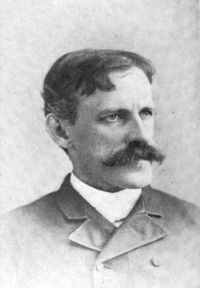 William Elliot Griffis,
Corea: The Hermit Nation
(1911)
William Elliot Griffis,
Corea: The Hermit Nation
(1911)
“ Children light brands or torches of dry reeds or straw, and set fire to the dry herbage, stubble, and shrubbery on the borders of the roads, in order to singe the hair of the various field or ground-burrowing animals, or burn them out, so as to obtain a plentiful crop of cotton. ”
 Henry Ward Beecher,
Pleasant Talk About Fruits, Flowers and Farming
Henry Ward Beecher,
Pleasant Talk About Fruits, Flowers and Farming
“ When crop after crop is taken off the first four or five inches of top earth, it tends speedily to rob it of all materials required by grass or grain. Every blade taken from the soil, takes off some portion of that soil with it.2. Deep plowing brings up from beneath a greater amount of earth, which, when subjected to the frosts, the atmosphere, and the action of the plow, becomes fit for vegetation.3. Summer droughts seldom injure deeply-plowed soils; certainly not to that degree that they do shallow soils. ”
George P. Marsh, The Earth as Modified by Human Action
“ The wheat decays in the ground, or dies as soon as it sprouts. Winter crops are given up, and summer cultivation tried for a time; but the increasing humidity, and the saline matter communicated to the earth—which affects the taste of all its products, even to the grasses, which the cattle refuse to touch—at last compel the husbandman to abandon his fields and leave uncultivated a soil that no longer repays his labor."—Tableau de l'Agriculture Toscane, pp. ”
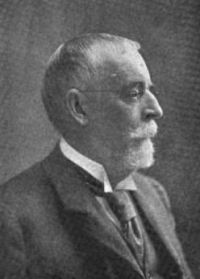 Thomas Curtis Clarke,
American Pocket Library of Useful Knowledge…
(1841)
Thomas Curtis Clarke,
American Pocket Library of Useful Knowledge…
(1841)
“ Heating the soil so destroys the green roots, and the ashes are so beneficial that a good crop of wheat or Indian corn may be had without ploughing or manuring. Plough shallow in autumn, cross plough deeper in the spring, harrow well, and be sure of golden crops. ”
Anthony Florian Madinger Willich, Domestic Encyclopædia (1802)
“ On the approach of winter, the young crop should be slightly covered with long stable-dung, old thatch, or even sand, earth, or any other manure. The land ought, likewise, to be occasionally cleared of the weeds, together with their roots, and the vacant spots fresh seeded. ”
T. L. Haines, Museum of Antiquity: A Description of Ancient Life
“ The land being cleared of the water, and presenting in some places a surface of liquid mud, in others nearly dried by the sun and the strong northwest winds (that continue at intervals to the end of Autumn and commencement of Winter) , the husbandman prepared the ground to receive the seed, which was either done by the plow and hoe, or by more simple means, according to the nature of the soil, the quality of the produce they intended to cultivate, or the time the land had remained under water. ”
Joseph Harris, Talks on Manures
“ But if you will plow such land in the fall, and expose it to the disintegrating effects of the frost, and plow it again in the spring, and let the sun and air act upon it, more or less of the organic matter in the soil will be decomposed, and the nitrogen rendered soluble. And then if you sow this land to wheat after a good summer-fallow, you will stand a chance of having a great crop. ”
Select Epigrams from the Greek Anthology
“ If the cornfield gets sufficient rain, and does not breed a crop of flowering weeds, and frost does not crack the furrows, nor hail flay the heads of the springing blades, and the pricket does not devour the crop, and it sees no other injury of weather or soil, I prophesy you a capital summer, and you will cut the ears successfully: only fear the locusts. ”
Mary Huston Gregory, Checking the Waste: A Study in Conservation
“ A portion goes into the plants to nourish them, and still another part runs off the surface, carrying away the worn-out parts of the soil.Crops can use to advantage all the rain that falls during the growing season; and in most cases crops are all the better for all the water that can be carried over from the winter. There are many local exceptions, but in general crops are best when the soil can be made to absorb as much of the rainfall and snowfall as possible. ”
 Jean-Henri Fabre,
Field, Forest and Farm
(1919)
Jean-Henri Fabre,
Field, Forest and Farm
(1919)
“ Weeds spring up freely, and at the same time water, air, and frost act on the soil, disintegrating and mellowing it and inducing the formation of certain substances necessary to vegetation. The weeds are converted into mold, and finally the land, rested and recuperated, is ready to bear a new crop. ”
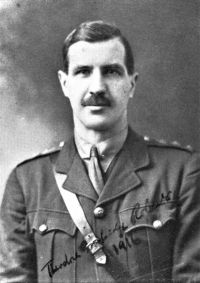 Theodore Goodridge Roberts,
Tom Akerley
Theodore Goodridge Roberts,
Tom Akerley
“ Thus he had taken a crop of grain, or a crop of fodder if the frosts fell early, from each patch of new land in the first year, and harvests of hay in the following years. Now the whole clearing stood thick with long spears of timothy grass that topped the gray and black stumps. ”
Jas. F. W. Johnston, Elements of agricultural chemistry and geology (1842)
“ Finally, plough up the old pastures, on the surface of which this light and most favourable soil has been long accumulating—and the heavy soil from beneath will be again mixed up with it—the vegetable matter will disappear rapidly by exposure to the air,—and if again laid down to grass, the slow changes of many years must again be begun through the agency of the same natural causes, before it become capable of again bearing the same rich herbage it was known to nourish while it lay undisturbed. ”
Robert H. Elliot, Gold, Sport, and Coffee Planting in Mysore
“ But if the maiden crop threatens to be a heavy one it should certainly be lessened, as the following year there would be little crop, and much growth of superfluous wood, and an over heavy crop the succeeding year, and so on continuously. ”
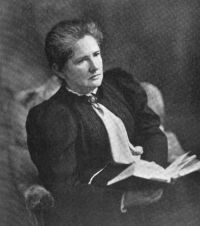 Laura Elizabeth Howe Richards,
Mrs. Tree
Laura Elizabeth Howe Richards,
Mrs. Tree
“ You can have drought, and you can have caterpillars, and you can have frost. You can lose your hay crop, and your apple crop, and your potato crop; but there's one crop there can't nothin' touch, and that's the fool crop. ”
Jas. F. W. Johnston, Elements of agricultural chemistry and geology (1842)
“ First, that land laid down to artificial grasses for one, two, three, or more years, is in some degree rested or recruited, and is fitted for the better production of after-corn crops. Letting it lie a year or two longer in grass, therefore, is one of the received modes of bringing back to a sound condition a soil that has been exhausted by injudicious cropping. ”
 Jethro Tull,
Horse-hoeing husbandry
Jethro Tull,
Horse-hoeing husbandry
“ Therefore, whenever a Soil receives more Supplies of fine Earth from the Atmosphere, than is exhausted by all the Plants that grow in the Soil, it becomes richer; but if the contrary, then it becomes poorer. [253] On an undung’d low Six feet Ridge, we have Three Rows, Eight Inches asunder, all which being equal, during the Winter, but each of the Two outside Rows at Harvest producing Ten times as much Wheat as the middle Row doth, all Three together produce a Quantity equal to One-and-twenty of this middle Row. ”
Stanley F. Horn, The Hermitage, Home of Old Hickory
“ We have not had rain enough to wet the earth one inch for three months, every vegetable is burnt up, our cattle starving, the springs in many places dried up, and still no prospects of rain. The earth is so parched that we can sow no fall crop; no turnips, no potatoes, no cabbages. Our crops of cotton and corn are only a half crop. ”
Alva Agee, Crops and Methods for Soil Improvement
“ Good Soil Conditions.—When the grasses and clovers desired for a sod are sown with small grain, there is competition between them and the grain crop for fertility, moisture, and light. The grain crop is the one that will produce the income the following summer, and naturally is given right of way. The amount of seed is used that experience teaches is best for a maximum yield of grain. Usually this gives a thicker stand of plants than is best for the tiny grass and clover plants that often are struggling for existence down under the taller grain. ”
Alfred Pink, Gardening for the Million
“ Peas.—For the production of heavy summer and autumn crops a rich and deeply-stirred soil is essential, one of the best fertilisers being well-decayed farmyard manure; but for the earliest crop a poorer soil, if deep and well pulverised, will give the best results. ”
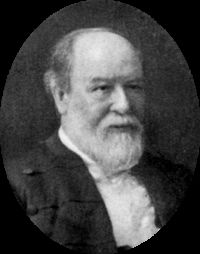 Hugh Macmillan,
Popular Science Monthly
(1873)
Hugh Macmillan,
Popular Science Monthly
(1873)
“ Before we can have the wheat which forms our daily bread, or the grass which yields us, through the instrumentality of our herds, our daily supply of animal food, or the cotton and lint which form our clothes, countless generations of lichens and mosses must have been at work preparing a soil for the growth of the plants which produce these useful materials. ”
 Charles Dudley Warner,
My Winter on the Nile
Charles Dudley Warner,
My Winter on the Nile
“ The season will open too wet or too dry, the seed may rot in the ground, the young plant may be nipped with frost or grow pale for want of rain, the crop runs the alternate hazards of drought or floods, it is wasted by rust or devoured by worms ”
the Elder Pliny, The Natural History of Pliny, Volume 4…
“ The best method of ensuring a good crop of grass, is first to plough the land, and then to harrow it: but, before passing the harrow over it, the ground should be sprinkled with such seed as may have fallen from the hay in the hay-lofts and mangers. ”
 James Lane Allen,
Aftermath — Chapter VIII
(1895)
James Lane Allen,
Aftermath — Chapter VIII
(1895)
“ When the harvest has been gathered from our strong, true land, a growth comes on which late in the year causes the earth to regain somewhat of its old greenness. New blades spring up in the stubble of the wheat ”
