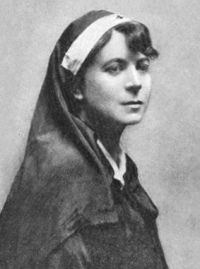
Mustafa Pasha

Definition and stakes

Mustafa Naima,  Annals of the Turkish Empire, from 1591 to 1659

“ Before alluding directly to the result of this rupture, it is necessary to observe, first, that Mustafa Páshá, son of Ahmed Páshá, who had been formerly governor of Semendria, had his father’s palace in the At-maidán pulled down, on the ruins of which Sultán Ahmed’s mosque was built. This Mustafa Páshá, when he was commander in the Sanjak of Kilis, was in the habit of committing depredations on the frontiers of the infidels’ dominions; and this also provoked the Germans and Croatians to cross their respective boundaries, and to commit atrocities against the Osmánlís. ”
Source: Gutenberg

Mustafa Naima,  Annals of the Turkish Empire, from 1591 to 1659

“ Mustafa Aghá, ághá of the palace; the lord high treasurer, Ahmed Páshá, or Etmekjí Zádeh; and Mustafa Páshá, who had formerly been governor of Constantinople, took every opportunity they could to injure him. They talked amongst themselves, and in the presence of others, that Murád Páshá was entirely averse to his being employed against the Persians. “He is an old frail man,” they said (sneeringly) , “and the emperor will not force him.” A hint of this conversation was communicated to his majesty by Muftí Mohammed Effendí. ”
Source: Gutenberg

1911 Encyclopædia Britannica, Volume 15… (1911)

“ Another Kara Mustafa Pasha (d. 1643) , who figures in Turkish history, was by birth a Hungarian, who was enrolled in the Janissaries, rose to be Kapudan Pasha under Murad IV., and after the capture of Bagdad was made grand vizier. He was severe, but just and impartial, and strove to effect necessary reforms by reducing the numbers of the Janissaries, improving the coinage, and checking the state expenditure. But the discontent of the Janissaries led to his dismissal and death in 1643. ”
Source: Wikisource

Get perspective with Kwize: daily news enlightened by great literature