Mímir

Definition and stakes

Anonymous,  Cultus Arborum: A Descriptive Account of Phallic Tree Worship

“ Another stem springs in the warm south over the ethereal Urdar-fountain, the swans swimming in which denote the sun and moon. The third stem takes its rise in the cold and cheerless regions of the north, over the source of the ocean, typified by Mimir’s well. The myth of Odin leaving his eye as a pledge to Mimir, signifies the descent of the sun every evening into the sea—to learn wisdom from Mimir during the night; the mead quaffed by Mimir every morning being the ruddy dawn that, spreading over the sky, exhilarates all nature. ”
Source: Gutenberg

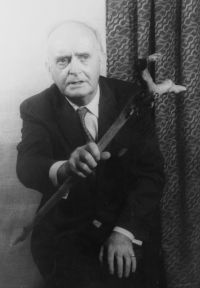
Portrait of Padraic Colum Padraic Colum,  The Children of Odin: The Book of Northern Myths

“ It was under the great root of Ygdrassil—the root that grew out of Jötunheim. And there sat Mimir, the Guardian of the Well of Wisdom, with his deep eyes bent upon the deep water. And Mimir, who had drunk every day from the Well of Wisdom, knew who it was that stood before him.
"Hail, Odin, Eldest of the Gods," he said. [Pg 81]
Then Odin made reverence to Mimir, the wisest of the world's beings. "I would drink from your well, Mimir," he said.
"There is a price to be paid. All who have come here to drink have shrunk from paying that price. Will you, Eldest of the Gods, pay it?"
”
Source: Gutenberg

Saemund,  The poetic Edda (1923)

“ It appears here and in stanza 29 as a drinking-vessel, from which Mimir drinks the magic mead, and from which he pours water on the ash Yggdrasil. Othin’s sacrifice of his eye in order to gain knowledge of his final doom is one of the series of disasters leading up to the destruction of the gods. There were several differing versions of the story of Othin’s relations with Mimir; another one, quite incompatible with this, appears in stanza 47. In the manuscripts I know and I see appear as “she knows” and “she sees” (cf. note on 21) . ”
Source: Gutenberg

Get perspective with Kwize: daily news enlightened by great literature