North Bridge

Definition and stakes

Charles James Billson,  Mediaeval Leicester (1920)

“ Throsby, writing in 1791, said that the bridge was then "patched with repairs at various periods; the fence walls thereon are low and dangerous." The Rev. William Bickerstaffe, who died in 1789, left the following description of it. "The North Bridge, now commonly St. Sunday's Bridge, has eight wet arches, the midmost high and wide; two more on the town side, small and useless, obstructed on both sides by dyers' buildings, and made-ground. It is 98 yards one foot long, five yards two feet wide; parapet walls about a yard high, their thickness one foot two inches. ”
Source: Wikisource

Richard Thompson,  Chronicles of London Bridge

“ Perchance thou mayest learn something, unless thou art half-ashamed to learn under my tuition. But why should we not now return to the matter of the Bridge? London Bridge then, as it extends itself from North to South, has twenty cataracts; but of arches, incurvated passages formed of solid stone, there are no more than nineteen. That platform, having the figure of a Bridge, made of level wooden planks, capable of being raised or lowered by machines, that an enemy may not find an open passage, I neither can, nor will, nor ought reasonably to call an arch. ”
Source: Gutenberg

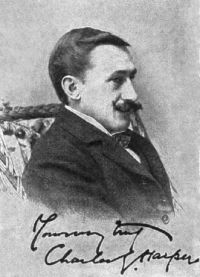
Portrait of Charles G. Harper Charles G. Harper,  The Great North Road, the Old Mail Road to Scotland…

“ Let those who have no concern with old times take their easeful way through the gloomy portals of the High Level Bridge, eighty-five feet above high-water mark. But let us examine the steep and smelly street, paved with vile granite setts and strewn with refuse, which conducts to the Tyne Bridge, or the Swing Bridge as it is nowadays, since the old structure was removed, the channel of the river deepened, and the wonderful swinging portion of the remodelled bridge, 281 feet in length, and swung open or closed by hydraulic power, constructed in 1876. ”
Source: Gutenberg

Get perspective with Kwize: daily news enlightened by great literature