“ In foreign discussions on the Papal question it is always assumed, as an undisputed fact, that the maintenance of the Papal court at Rome is, in a material point of view, an immense advantage to the city, whatever it may be in a moral one. ”
Papal Court
Definition and stakes
The theme of “Papal Court” has been addressed by authors such as W. C. Cartwright, William John Sparrow Simpson, Henry Charles Lea, Various and Edward Dicey. It is often associated with terms like pope, Rome, church, law and bishop.
Quotes about “Papal Court”
James MacCaffrey, History of the Catholic Church from the Renaissance to the French Revolution…
“ In any scheme for the reform of the abuses that afflicted the Church the reformation of the Papal Court itself should have occupied the foremost place. At all times a large proportion of the cardinals and higher officials were men of blameless lives, but, unfortunately, many others were utterly unworthy of their position, and their conduct was highly prejudicial to religion and to the position of the Holy See. ”
Joseph Bernhart, The Vatican as a World Power (1939)
“ What the Congregation of Rites is for the whole Church, the Con- gregation of Ceremonials is for the Papal Court. It regulates not only the rite of divine services in which the Pope officiates, or which are held in the Papal chapels, but also supervises the formalities which prevail in the Vatican in so far as its residence, its visitors, and the extra-mural activities of its dignitaries are concerned. As a custodian of decorum, it delivers to everyone who needs it a private lecture on etiquette. ”
J. N. Larned, History for ready reference, Volume 6 (1895)
“ Existing laws will be enforced to the utmost against the Papacy, while new measures may be looked for to restrict further the activity of the Church as a factor in political life, to extend the control of the government over all ecclesiastical enterprises and undertakings and to emphasize the fact that all Italians, no matter whether they form part of the Papal Court or not, are Italian citizens, as well as subjects of the Italian crown, and required to obey the laws and to fulfil their obligations as such. ”
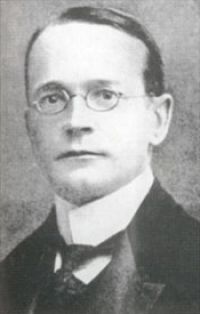 Joseph McCabe,
Crises in the History of the Papacy
“ The body of lay scholars and lawyers grows larger and more critical, while the Papal Court sinks lower and lower. The Papacy is fiercely criticized throughout Europe, and the resentment of its moral complexion leads to a discussion of the bases of its power. ”
James MacCaffrey, History of the Catholic Church from the Renaissance to the French Revolution…
“ Most of them, with the exception of Alexander VI., were not positively unworthy men, but they were too much concerned with secular pursuits to undertake a reform of the gross abuses which flourished at the very gates of their palace. The papal court was no worse and very little better than the courts of contemporary rulers, and the greed for money, which was the predominant weakness of the curial officials, alienated the sympathy of all foreigners, both lay and cleric. ”
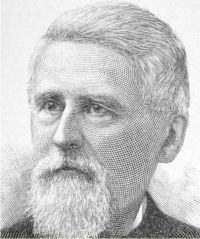 Henry Charles Lea,
A History of the Inquisition of Spain…
“ In matters of faith and all pertaining directly or indirectly thereto, its jurisdiction was exclusive. In the extensive field of civil and criminal business, of which it obtained cognizance through the immunities of its officials and, in the frequent quarrels arising from questions of ceremony and precedence, no court, whether secular or spiritual, had power to inhibit any action which it might see fit to take. By special papal favor, however, it had power to inhibit their action and thus to cripple them on the spot. ”
Louis Marie Olivier Duchesne, Denis Jean Achille Luchaire, Ludwig von Pastor, William Walker Rockwell, Franz Xaver Kraus, and Walter Alison Phillips, 1911 Encyclopædia Britannica, Volume 20… (1911)
“ Nominations directly made by the court of Rome, especially in the case of dioceses long vacant, became increasingly numerous. The principle of election by canons was repeatedly violated, and threatened to disappear; and at the end of the 13th century the spectacle was common of prelates, whether nominated or confirmed by the pope, entitling themselves “bishops by the grace of the Holy See.” The custom in force required bishops established by papal authority to take an oath of fidelity to the pope and the Roman Church, and this oath bound them in a particular fashion to the Curia. ”
Louis Marie Olivier Duchesne, Denis Jean Achille Luchaire, Ludwig von Pastor, William Walker Rockwell, Franz Xaver Kraus, and Walter Alison Phillips, 1911 Encyclopædia Britannica, Volume 20… (1911)
“ In common with all enlightened opinion, he complained bitterly of the excessive multiplication of exemptions, of the exaggerated extension of appeals to Rome, of the luxury of the Roman court, of the venality of the cardinals, and of the injury done to the traditional hierarchy by the very extent of the papal power, which was calculated to turn the strongest head. In St Bernard’s treatise De consideratione, addressed to Pope Eugenius III., the papacy receives as many reprimands and attacks as it does marks of affection and friendly counsel. ”
 James Anthony Froude,
The Divorce of Catherine of Aragon
“ Nor has the effect of Henry’s legislation been confined to England. Every great country, Catholic or Protestant, has practically adopted its chief provisions. Popes no longer pretend a power of deposing princes, absolving subjects from their allegiance, or selling dispensations for offences against the law of the land. Appeals are no longer carried from the national courts to the court of the Rota. The papal treasury is no longer supplied by the plunder of the national clergy, collected by resident papal officials. ”
W. C. Cartwright, On Papal Conclaves (1868)
“ The constitution of the Court of Rome is therefore so far from being what it is popularly supposed, a thing of strictly limited nature, over-weighted with the encumbrance of absolute injunctions, that it will be found, when the heart of the system is reached, to be actually one of the most elastic in existence. Let only the instincts of the body representing the Church be alive to a necessity, however new, and that body can at once, without taint of illegal and revolutionary pretension, recognise the call for new conditions. ”
W. C. Cartwright, On Papal Conclaves (1868)
“ The more one studies the regulations of the Court of Rome, the more will one he impressed by the fact, how, athwart all the dense accumulation of punctilious formalism which has been the aggregate deposit of a current setting in the same direction for centuries, there is yet preserved a cunning element of subtle elasticity that has been shrewdly cherished in secret against the event of the force of altered circumstances, making it some way desirable to seek protection in what has been so jealously suppressed and scouted in ordinary times— liberty of individual initiative. ”
J. A. Wylie, Pilgrimage from the Alps to the Tiber
“ This tribunal is simply the Inquisition; and yet it is by this tribunal that the Pope, who professes to be the first minister of justice on earth, governs his kingdom. No man is safe at Rome. However innocent, his liberty and life hang by a single thread, which the Government, by the help of such a tribunal as this, may snap at any moment.This is the established, the legal course of papal justice. Let the reader lift his eyes, and survey, if he have courage, the wide weltering mass of misery and despair which the Papal States present. We cannot bring all into view ”
Auguste Boudinhon, 1911 Encyclopædia Britannica (1911)
“ Under the jurisdiction of the Rota, in addition to cases of first instance submitted to it by the pope, are such judgments of episcopal courts as are strictly speaking subject to appeal; for petitions against non-judicial decisions are referred to the Congregations. Appeal is sometimes allowed from one “turn” to another; if the second sentence of the Rota confirms the first, it is definitive; if not, a third may be obtained. (3) The supreme tribunal of the papal Signatura (Signatura Apostolica) . ”
Walter George Frank Phillimore, 1911 Encyclopædia Britannica, Volume 8… (1911)
“ The statute is aimed at appeals; but the words used in it concerning “citations and all other processes” are wide enough to take away also the “original” jurisdiction of the pope. No appeal was yet given to the crown. Canterbury, York, Armagh, Dublin, Cashel and Tuam are put in the place of Rome. The English and Irish provinces are treated as self-contained. All ends there. The “Act of Submission of the Clergy” (25 Hen. VIII. c. 19) took away all appeals to Rome and gave a further appeal, “for lack of justice,” from the several courts of the archbishops to the king in chancery. ”
The Great Events by Famous Historians…
“ No one shall ever appeal to the pope without passing previously through the intermediate tribunal. If anyone, believing himself injured by an intermediate tribunal subject to the pope, makes an appeal to the holy see, the pope shall name the judges from the same places, unless there should be important reasons for bringing the cause directly to Rome. ”
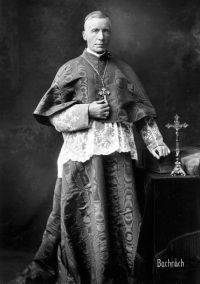 James Gibbons,
The Faith of Our Fathers
“ As the present question, however, is a subject of vast importance, I shall endeavor to show, from incontestable historical evidence, that the Popes have always, from the days of the Apostles, continued to exercise supreme jurisdiction not only in the Western Church till the Reformation, but also throughout the Eastern Church till the great schism of the ninth century. First—Take the question of appeals. An appeal is never made from a superior to an inferior court, nor even from one court to another of co-ordinate jurisdiction. ”
Walter George Frank Phillimore, 1911 Encyclopædia Britannica, Volume 8… (1911)
“ The next step in the hierarchy, that of “primates” (supra) , has “in the present state of the Church” ceased to exist for our purpose (Sanguineti, op. cit. p. 334) , as a result of Tridentine legislation. The only appellate jurisdiction from the metropolitans is the Roman See. To it also lies a direct appeal from the court of first instance, omisso medio (Smith, op. cit. i. 224) . The pope’s immediate and original jurisdiction in every diocese is now expressly affirmed by the Vatican Council (ib. p. 239) . ”
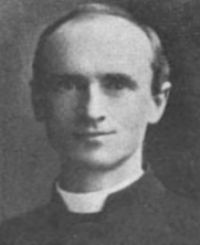 George Hayward Joyce,
Catholic Encyclopedia (1913) — Pope
(1913)
“ The Right of Entertaining Appeals in All Ecclesiastical Causes The Council goes on to affirm that the pope is the supreme judge of the faithful, and that to him appeal may be made in all ecclesiastical causes. The right of appeal follows as a necessary corollary from the doctrine of the primacy. If the pope really possesses a supreme jurisdiction over the Church, every other authority, whether episcopal or synodal, being subject to him, there must of necessity be an appeal to him from all inferior tribunals. ”
Henry Charles Lea,
A History of the Inquisition of Spain…
“ They speedily multiplied again, and the Suprema took advantage of the Lutheran excitement of 1558 to procure their withdrawal. In its report of September 9th of that year to Paul IV, it represented that many prelates and frailes kept prohibited books, in spite of edicts and censures, refusing to surrender them on the plea that they held papal licences; in view of the danger thence arising to the faith, the pope was asked for a brief revoking all such licences, ordering their surrender under heavy penalties and authorizing rigorous prosecution of transgressors. ”
Various, The Catholic World, Vol. 05, April 1867 to September 1867
“ We deny it, and maintain that it is for him to prove that jurisdiction is usurped, and not held by divine right. The laboring oar is in his hands. It is always for those who resist authority to justify their resistance. The author can justify his resistance to papal authority only by producing some law of God or some canon of the universal church that restricts the jurisdiction of the Roman pontiff to the Western patriarchate, and forbids him to exercise jurisdiction over the whole church. ”
William Arthur, The Pope, the Kings and the People
“ Friedrich was deeply moved by what he found in the Rules, coupled with what he considered the ignorance of the bishops.Every adept, he cries, must see that virtually the form here used in propounding decrees contains Papal infallibility. It is the Pope, and he alone, that defines and decides. Infallibility is even now attributed to him, and not to the Council, and then, seeing that this formula is to be acted upon in the first session (or public ceremony) , it is the Pope who formulates the decree without having taken even the advice of the Council, and without any discussion on its part. ”
Henry Charles Lea,
A History of the Inquisition of the Middle Ages…
(1887)
“ This was by no means the only mode in which the supreme jurisdiction of Rome worked inestimable evil throughout Christendom. While the feudal courts were strictly territorial and local, and the judicial functions of the bishops were limited to their own dioceses so that every man knew to whom he was responsible in a tolerably well-settled system of justice, the universal jurisdiction of Rome gave ample opportunity for abuses of the worst kind. The pope, as supreme judge, could delegate to any one any portion of his authority, which was supreme everywhere ”
Walter George Frank Phillimore, 1911 Encyclopædia Britannica, Volume 8… (1911)
“ If this be done, the synod of first instance is to send letters to Julius, bishop of Rome. If that prelate think the cause should be heard again, he is to appoint judges; if otherwise, the original judgment is to be confirmed. Pending appeal, the appellant’s see is not to be filled up. The judges appointed by the bishop of Rome to hear the appeal are to be from the neighbouring provinces. The appellant may, however, request that bishop to send priests from his side to sit with the synod of appeal. If such priests are sent, they are to preside in the court of appeal. ”
William Arthur, The Pope, the Kings and the People
“ No prince can have any title to exercise an exequatur, placet, or any other form of check upon an edict of the Pope. Every man who denies the validity of a Papal law, because it is prohibited by the government of the country, is solemnly condemned; he interrupts the communication between the authority of the Pontiff and the conscience of his subjects. ”
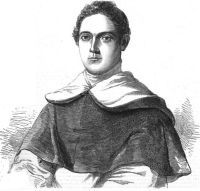 Giacinto Achilli,
Dealings with the Inquisition; Or…
“ At the last dread tribunal he believes it will only be demanded of him, has he been obedient?—this is all he has to look to; he who gives the order is alone answerable for its justice or its iniquity. Such is the teaching that these degraded beings are accustomed to receive. What its results are we need only look round those countries where it is most extensively carried on, to determine.Now these so-called superiors ascend by regular degrees, and at their head is the Pope himself. ”
William Arthur, The Pope, the Kings and the People
“ In the projected reconstruction the ultimate end, the restoration of facts, would always include these cardinal points. Every man and every woman in Christendom, and, by a due extension of "the kingdom of God," every man and every woman living, must be bound by law to appear, at the least annually, in the internal tribunal of the Church, the confessional. In order to this, every civil magistrate must be set in obvious and in practical subordination to the ecclesiastical magistrate or bishop, by the subjection of the civil court to the external tribunal of the Church, the ecclesiastical court. ”
Cornelius à Lapide, The great commentary of Cornelius à Lapide (1908)
“ In fine it is more agreeable to truth that the Pope possesses judicial power to bind and loose those only who are living upon the earth, but not the dead. When therefore he gives indulgences applicable to the departed, it is not in the way of judicial absolution, because the dead are no longer under his jurisdiction, but by way of suffrages, as he is accustomed fully to express in his Bulls—namely, by expending for the dead so much of the treasure of the Church, of which he is the steward, as the departed owe of penalties to God. ”
Edgar Holmes McNeal, A Source Book for Mediæval History
“ No one who has been elected by less than two-thirds, shall presume to act as pope, and if he does he shall suffer the same penalty. This decree shall not be to the prejudice of the canon law or of the practice in other churches where the voice of the majority is declared to be decisive in elections, because any dispute arising in these churches can be settled by appeal to higher authority. The Roman church requires a special law, because there is in her case no higher authority to appeal to. ”
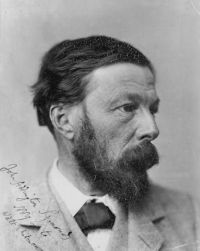 John Addington Symonds,
Renaissance in Italy, Volumes 6 and 7…
“ The method of procedure adopted by the Council, and the temper in which its business was conducted, were no less favorable to the Papacy than the authoritative sanction which it gave to dogmas. From the first, the presidency and right of initiative in its sessions were conceded to the Papal Legates; and it soon became customary to refer decrees, before they were promulgated, to his Holiness in Rome for approval. The decrees themselves were elaborated in three congregations, one appointed for theological questions, the second for reforms, the third for supervision and ratification. ”
Related terms
Authors who wrote about “Papal Court”
W. C. CartwrightWilliam John Sparrow SimpsonHenry Charles LeaVarious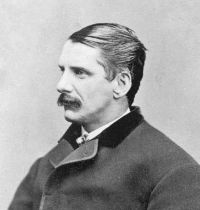 Edward DiceyJames MacCaffreyWilliam ArthurLouis Marie Olivier Duchesne, Denis Jean Achille Luchaire…William HuntJoseph BernhartJoseph McCabeGiuseppe GaribaldiJ. N. LarnedJames Anthony FroudeAuguste BoudinhonJ. A. WylieJohn Addington SymondsP. V. N. Myers
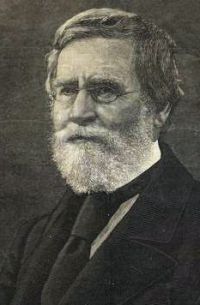 Jacob Abbott
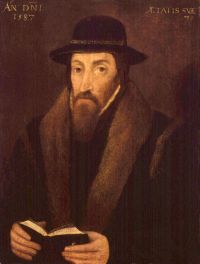 John Foxe
Henry Charles LeaVariousEdward DiceyJames MacCaffreyWilliam ArthurLouis Marie Olivier Duchesne, Denis Jean Achille Luchaire…William HuntJoseph BernhartJoseph McCabeGiuseppe GaribaldiJ. N. LarnedJames Anthony FroudeAuguste BoudinhonJ. A. WylieJohn Addington SymondsP. V. N. MyersJacob AbbottJohn Foxe