Paulinus of Nola

Definition and stakes

1911 Encyclopædia Britannica, Volume 20… (1911)

PAULINUS, SAINT, of Nola (333–431) . Pontius Meropius Anicius Paulinus, who was successively a consul, a monk and a bishop, was born at Bordeaux in A.D. 353. His father, pracfectus praclorio in Gaul, was a man of great wealth, who entrusted his son's education, with the best of results, to Ausonius. In 378 Paulinus was raised to the rank of consul suffectus, and in the following year he appears to have been sent as consularis into Campania. It was at this period, while present at a festival of St Felix of Nola, that he entered upon his lifelong devotion to the cult of that saint.
Source: Wikisource

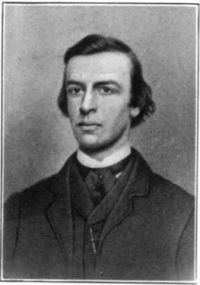
Portrait of Philip Schaff Philip Schaff Nicene and Post-Nicene Fathers… (1885)

This valuable treatise is not, however, the only account of the historical origin of Pelagianism that we have, from Augustin’s hands. Soon after the death of Innocent (March 12, 417) , he found occasion to write a very long letter [54] to the venerable Paulinus of Nola, in which he summarized both the history of and the arguments against this “worldly philosophy.” He begins by saying that he knows Paulinus has loved Pelagius as a servant of God, but is ignorant in what way he now loves him. For he himself not only has loved him, but loves him still, but in different ways.
Source: Wikisource

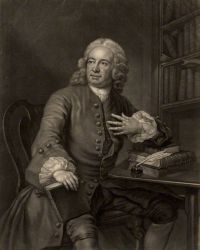
Edward Mallet Young Dictionary of Christian Biography and Literature (1911)

His correspondence with Paulinus of Nola evidently belongs to these later years. The date of his death is unknown, but he was certainly alive in A.D. 388, as he rejoices in the victory of Theodosius over the murderer of Gratian at Aquileia (Clar. Urb. vii.) .
The question of the poet's religion has always been a matter of dispute.
Source: Wikisource

Get perspective with Kwize: daily news enlightened by great literature