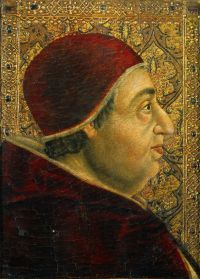
Philip VI of Valois

Definition and stakes

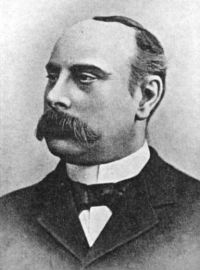
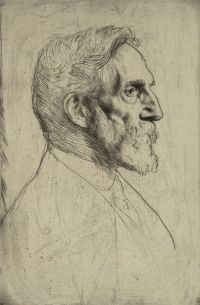
Portrait of Thomas Okey Thomas Okey Paris and Its Story

ETIENNE MARCEL—THE ENGLISH INVASIONS—THE MAILLOTINS—MURDER OF THE DUKE OF ORLEANS—ARMAGNACS AND BURGUNDIANS WITH the three sons of Philip who successively became kings of France, the direct line of the Capetian dynasty ends: with the accession of Philip VI. in 1328, the house of Valois opens the sad century of the English wars—a period of humiliation and defeat, of rebellious and treacherous princes, civil strife, famine and plague, illumined only by the heroism of a peasant-girl, who, when king and nobles were sunk in shameless apathy or sullen despair, saved France from utter extinction.
Source: Gutenberg

1911 Encyclopædia Britannica, Volume 21… (1911)

At the assembly of barons called to choose a regent, Edward III. of England, the nephew and nearest male relation of Charles IV., put in a claim. Edward III., however, descended from the royal house of France by his mother Isabel, and the barons, probably actuated by an objection to the regency of an English king, decided that neither a woman, “nor by consequence her son, could succeed to the kingdom of France,” and Philip of Valois, in spite of his belonging to a junior branch of the family, was elected regent.
Source: Wikisource

1911 Encyclopædia Britannica (1911)

The direct line ruled in France from 987 to 1328, when, at the death of King Charles IV., it was succeeded by the younger, or Valois, branch of the family. Philip VI., the first of the Valois kings, was a son of Charles I., count of Valois and grandson of King Philip III. (see Valois) . The Capetian-Valois dynasty lasted until 1498, when Louis, duke of Orleans, became king as Louis XII., on the death of King Charles VIII. (see Orleans) .
Source: Wikisource

Get perspective with Kwize: daily news enlightened by great literature