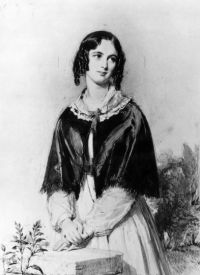
Philippa of Hainault

Definition and stakes

M. B. Synge,  Great Englishwomen: An Historical Reading Book for Schools

“ Sorrow and adversity had taught Eleanor many a stern lesson, and few women have lived to a more honourable old age than “Eleanor, beloved of God and man,” as the monks of Canterbury used to address her.
[Pg 23]
PHILIPPA OF HAINAULT (1313-1369) . Philippa, afterwards Queen of Edward III. of England, was born in the province of Hainault in Belgium, in 1313. Her mother, the Countess of Hainault, was a wise and good woman, devoted to her husband and her four little daughters, of whom Philippa was the second.
”
Source: Gutenberg

Emily Sarah Holt,  In Convent Walls

“ The Lady Philippa of Hainault, that was our young Queen, came over to England late in that same year, to wit, the first of King Edward, and was married the eve of the Conversion of Saint Paul, the year of our Lord 1327, after the computation of the Church of England (Note 5) . Very praisable (lovely) and fulbright (beautiful) was the said lady, being sanguine of complexion, of a full fair face, and fair hair, having grey (grey) cyen and rosen colour of her cheeks. She was the same age as the King, to wit, fifteen years. ”
Source: Gutenberg

Various,  Court Memoirs of France Series…

“ While France followed a more restricted policy, England threw open her ports to all comers; trade grew in London as it waned in Paris; by his marriage with Philippa of Hainault, Edward secured a noble queen, and with her the happiness of his subjects and the all-important friendship of the Low Countries. In 1336 the followers of Philip VI. persuaded Louis of Flanders to arrest the English merchants then in Flanders ”
Source: Gutenberg

Get perspective with Kwize: daily news enlightened by great literature