Piazza Navona

Definition and stakes

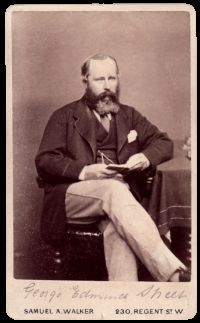
Portrait of Sir Hall Caine Sir Hall Caine,  The Eternal City

“ The Piazza Navona is the heart and soul of old Rome. In other quarters of the living city you feel tempted to ask: "Is this London?" or, "Is this Paris?" or, "Is this New York or Berlin?" but in the Piazza Navona you can only tell yourself, "This is Rome!"
In an apartment-house of the Piazza Navona, David Rossi had lived during the seven years since he became Member of Parliament for Rome. The ground floor is a Trattoria, half eating-house and half wine-shop, with rude frescoes on its distempered walls, representing the Bay of Naples with Vesuvius in eruption.
”

Source: Gutenberg

Nathan Gallizier,  Under the Witches' Moon: A Romantic Tale of Mediaeval Rome

“ A crowd of maskers had invaded the Piazza Navona, and the uncommon spectacle at last drew Tristan from his point of vantage and caused him to mingle with the crowds, which increased with every moment, their shouts and gibes and the clatter of their tongues becoming quite deafening to his ears. Richly decorated chariots, drawn by spirited steeds, rolled past in a continuous procession. The cries of the wine-venders and fruit-sellers mingled with the acclaim of the multitudes. ”
Source: Gutenberg

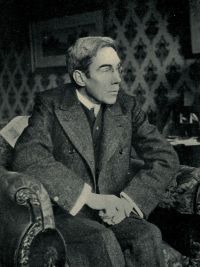
Portrait of Augustus J. C. Hare Augustus J. C. Hare,  Walks in Rome

“ The Piazza Navona has been used as a market ever since 1447. In the hot months, the singular custom prevails of occasionally stopping the escape of water from the fountains, and so turning the square into a lake, through which the rich splash about in carriages, and eat ices and drink coffee in the water, while the poor look on from raised galleries. It is supposed that this practice is a remnant of the pleasures of the Naumachia, once annually exhibited almost on this very spot, formerly the Circus Agonalis. ”
Source: Gutenberg

Get perspective with Kwize: daily news enlightened by great literature