Gian Lorenzo Bernini

Definition and stakes

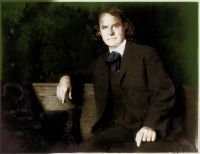
Portrait of Lilian Whiting Lilian Whiting,  Italy, the Magic Land

“ A sculptor who left his impress upon the sixteenth-century art was Lorenzo Bernini, a Neapolitan (born in 1598) who died in Rome in 1685. The work of Bernini has a certain fascination and airy touch that, while it sometimes degenerates into the merely fantastic and even into tawdry and puerile affectations, has at its best a refinement and grace that lend to his sculptures an enduring charm, as seen in his “Apollo and Daphne” (a work executed in his eighteenth year) which is now in the Casino of the Villa Borghese. Bernini’s name is perpetuated in the colossal statues on the colonnade of St. ”
Source: Gutenberg

1911 Encyclopædia Britannica (1910)

“ BERNINI, GIOVANNI LORENZO (1598–1680) , Italian artist, was born at Naples. He was more celebrated as an architect and a sculptor than as a painter. At a very early age his great skill in modelling introduced him to court favour at Rome, and he was specially patronized by Maffeo Barberini, afterwards Pope Urban VIII., whose palace he designed. None of his sculptured groups at all come up to the promised excellence of his first effort, the Apollo and Daphne, nor are any of his paintings of particular merit. ”
Source: Wikisource

Clara Erskine Clement Waters,  A History of Art for Beginners and Students…

“ The fame of Bernini extended to other lands, and he was invited to France, where he went when sixty-eight years old, accompanied by one of his sons and a numerous retinue. He was loaded with favors, and received large sums of money and many valuable presents. In Rome, too, he was much favored; he held several church benefices, and his son was made a Canon of Santa Maria Maggiore; and it was in this church that Bernini was buried with great magnificence, as became his position and his wealth, for he left the immense fortune of four hundred thousand Roman crowns. ”
Source: Gutenberg

Get perspective with Kwize: daily news enlightened by great literature