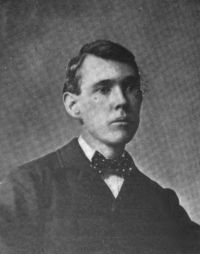
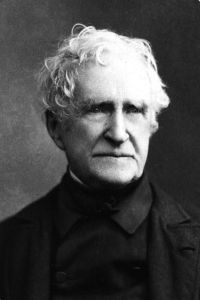
Louisa May Alcott,
Little Men — Chapter I. Nat
(1871)
Louisa May Alcott,
Little Men — Chapter I. Nat
(1871)
“ "PLEASE, sir, is this Plumfield?" asked a ragged boy of the man who opened the great gate at which the omnibus left him. ”
Plumfield emerges in literature as a multifaceted setting, often evoking rural simplicity, educational idealism, or familial heritage. Louisa May Alcott portrays it as a nurturing community in Little Men, where a ragged boy’s inquiry underscores its role as a sanctuary for growth. Burton Egbert Stevenson depicts it as a sprawling, fragmented village, emphasizing its elusive boundaries, while Charles Lamb links the name to a Hertfordshire family lineage, blending history with legend.
These varied portrayals—ranging from Alcott’s pedagogical haven to Curwood’s secluded forest retreat—reveal Plumfield’s adaptability as a symbol of both physical space and social unity. The theme ultimately reflects literature’s capacity to transform a name into a resonant, multifaceted emblem of human connection.
Louisa May Alcott,
Little Men — Chapter I. Nat
(1871)
“ "PLEASE, sir, is this Plumfield?" asked a ragged boy of the man who opened the great gate at which the omnibus left him. ”
 Burton Egbert Stevenson,
The quest for the rose of Sharon
(1909)
Burton Egbert Stevenson,
The quest for the rose of Sharon
(1909)
“ Chester told us that from their summit, on a clear day, one could see the ocean, forty or fifty miles away to the eastward.Plumfield struck me as a very fragmentary and straggling sort of village—so straggling, in fact, that it was scarcely recognizable as a village at all, and seemed to have no beginning and no end. There were two or three little stores, a church and a few houses—“Though,” Mr. Chester explained, “the village isn’t so small as it looks. It is spread out a good deal, and you can’t see it all at one glance.” ”
Louisa May Alcott,
Jo's Boys
(1886)
“ An especially lovely one shone over Plumfield as this interesting anniversary came round, bringing the usual accompaniments of roses, strawberries, white-gowned girls, beaming youths, proud friends, and stately dignitaries full of well-earned satisfaction with the yearly harvest. As Laurence College was a mixed one, the presence of young women as students gave to the occasion a grace and animation entirely wanting where the picturesque half of creation appear merely as spectators. ”