Pterodactylus

Definition and stakes

Edward Forbes,  The Palace and Park

“ A somewhat larger species—the Pterodactylus macronyx, or Long-clawed Pterodactyle—was subsequently discovered by the Rev. Dr. Buckland, in the lias formation of Lyme Regis: its wings, when expanded, must have been about four feet from tip to tip. The smallest known species—the Pterodactylus brevirostris, or Short-beaked Pterodactyle—was discovered in the lithographic slate at Solenhofen, Germany, and has been described by Professor Soemmering.
Remains of the largest known kinds of Pterodactyle have been discovered more recently in chalk-pits, at Burham, in Kent.
”
Source: Gutenberg

Edward Forbes,  The Palace and Park

“ The remains of this species have also been found in the chalk of Kent. From the same formation and locality a third large kind of Pterodactyle, although inferior in size to the two foregoing, has been discovered, called the Pterodactylus conirostris, and also—until the foregoing larger kinds were discovered—Pterodactylus giganteus. The long, sharp, conical teeth in the jaws of the Pterodactyles indicate them to have preyed upon other living animals; their eyes were large, as if to enable them to fly by night. ”
Source: Gutenberg

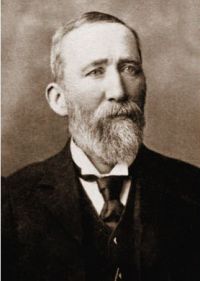
Portrait of Henry Alleyne Nicholson Henry Alleyne Nicholson,  The Ancient Life History of the Earth

“ The Pterosaurs are wholly Mesozoic, ranging from the Lias to the Chalk inclusive; and the fine-grained Lithographic Slate of Solenhofen has proved to be singularly rich in their remains. The genus Pterodactylus itself has the jaws toothed to the extremities with equal-sized conical teeth, and its species range from the Middle Oolites to the Cretaceous series, in connection with which they will be again noticed, together with the toothless genus Pteranodon. ”
Source: Gutenberg

Get perspective with Kwize: daily news enlightened by great literature