Pterygotus

Definition and stakes

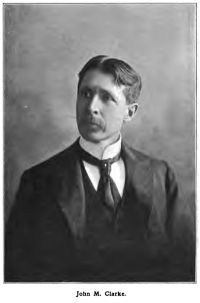
Portrait of John Mason Clarke John Mason Clarke,  The Eurypterida of New York (1912)

“ Metastomas and telsons, referable to Pterygotus, have also been observed in the Otisville beds. The latter are of bilobed form and indicate Huxley & Salter's genus Erettopterus. The half of one telson, obviously too short, through anteroposterior compression shows a fringe of very minute, acute points such as have, to our knowledge, not been observed before on the telson of a Pterygotus. Smaller specimens (as that reproduced in plate 82, figure 12) are better preserved and consist of elongate bilobate bodies with a central, posteriorly tapering, raised axis. ”
Source: Wikisource

Portrait of John Mason Clarke John Mason Clarke,  The Eurypterida of New York (1912)

“ Sarle has separated this and a metastoma [15] [pl. 70, fig. 4] on the ground that they belong to coarse-scaled fragments that represent another species. Inasmuch as the carapace as a rule has a much finer sculpturing than the rest of the body (e. g. in P. macrophthalmus) , there seems little ground to assume the presence of more than one species of Pterygotus in the Pittsford beds. ”
Source: Wikisource

Portrait of John Mason Clarke John Mason Clarke,  The Eurypterida of New York (1912)

“ I, pl. 3, fig. 1b] or lenticular depressions with a hexagonal scleral test [Woodward, pt. 2, p. 56] . More frequently it is stated that the facets are not discernible, a fact attributed to their extremely small size.
Several carapaces of Pterygotus macrophthalmus and P. buffaloensis, their visual surfaces excellently retained, permit us to elaborate the anatomy of this type of eye with a fair degree of precision, and to demonstrate the entire homology in structure of the eyes of Pterygotus and Limulus.
”
Source: Wikisource

Get perspective with Kwize: daily news enlightened by great literature