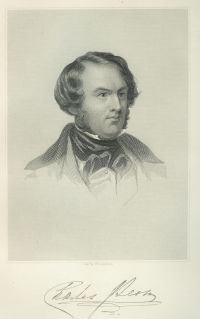
Richard Owen

Definition and stakes

Arthur Bower Griffiths Biographies of Scientific Men (1912)

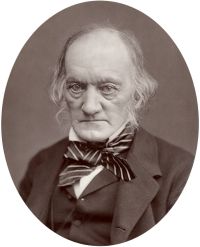
To talk to Sir Richard Owen was to be struck by the vastness of his knowledge, and "the noble dignity of his personal character was in every way worthy of his fame." To be in his company was to feel that one was in the presence of a genius. Nearly every one of his memoirs represents a large amount of laborious research, and in the aggregate they bear ample testimony to the soundness of that consensus of opinion which stamps Sir Richard Owen as the greatest palæontologist since Cuvier, and a comparative anatomist only second in the immensity and importance of his labours to Hunter himself.
Source: Wikisource

Various Popular Science Monthly (1897)

Owen was a gentle and reverent man, unassuming and unselfish in all his relations—a man of perfect courtesy of manners because of perfect courtesy of thought; a man whom everybody loved because his love went out to every one. He was the highest type of teacher, of naturalist, of scholar, of soldier even, because above all his was the highest type of man. [2]
↑ So far as I know, Dr. Richard Owen, of New Harmony, was not related to the famous comparative anatomist in London who bore the same name.
Source: Wikisource

John Andrew Hamilton Dictionary of National Biography… (1895)

OWEN, THOMAS (d. 1598) , judge, second son of Richard Owen, a merchant of Shrewsbury, by his wife Mary (d. 1568) , daughter of Thomas Ottley of the same town, was born at Condover in Shropshire. He went to Oxford, and graduated in arts on 17 April 1559, either at Broadgates Hall or at Christ Church. On 18 April 1562 he entered at Lincoln's Inn, and was called to the bar on 4 June 1570.
Source: Wikisource

Get perspective with Kwize: daily news enlightened by great literature