1911 Encyclopædia Britannica (1911)
“ The signature of the deponent must be written opposite to the jurat, which must contain the place, date and time of swearing, and this signed by the officer or magistrate before whom the affidavit is sworn. ”
1911 Encyclopædia Britannica (1911)
“ The signature of the deponent must be written opposite to the jurat, which must contain the place, date and time of swearing, and this signed by the officer or magistrate before whom the affidavit is sworn. ”
Horace Gray, Sparf v. United States — Dissent
“ In the maxim, 'Ad quaestionem juris respondent judices, ad quaestionem facti respondent juratores,' the word 'quaestio' denotes an issue joined by the pleadings of the parties, or otherwise stated on the record, for decision by the appropriate tribunal. Issues of law, so joined or stated, are to be decided by the judge; issues of fact, by the jury. If the accused demurs to the indictment, an issue of law only is presented, which must be decided and judgment rendered thereon by the court, and by the court alone. ”
Junius, Letters of Junius (1772)
“ It is you, my Lord, who then try the crime, not the jury. As to the probable effect of the motion in arrest of judgment, I shall only observe, that no reasonable man would be so eager to possess himself of the invidious power of inflicting punishment, if he were not predetermined to make use of it. Again;—we are told that judge and jury have a distinct office;—that the jury is to find the fact, and the judge to deliver the law. De jure respondent judices, de facto jurati. The dictam is true, though not in the sense given to it by Lord Mansfield. The jury are undoubtedly to determine the fact ”
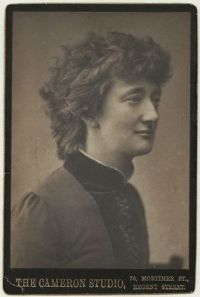 Alice Stopford Green,
Town Life in the Fifteenth Century…
Alice Stopford Green,
Town Life in the Fifteenth Century…
“ The subjection of the whole confederation to his rule was publicly recognized every year in the Court of Shepway, when at his summons there came from every port the mayor and a little group of jurats carrying with them the required gifts and dues, wine and swans and fish and spices to furnish breakfast for officials and suitors at the court; or costly offerings to soften the hearts of wardens and judges, and induce them on their first entering into office to look favourably on their subjects. ”
1911 Encyclopædia Britannica, Volume 5… (1911)
“ The bailiff in each island is president of the royal court, which is composed of twelve jurats, elected for life, in Jersey by the ratepayers of each parish, in Guernsey by the Elective States, a body which also elects the prévôt, who, with the jurats, serves upon it. ”
Jonathan Elliot, Debates in the Several State Conventions on the Adoption of the Federal Constitution (1907)
“ A constitution, sir, ought to be, like a beacon, held up to the public eye, so as to be understood by every man. Some gentlemen have observed that the word jury implies a jury of the vicinage. There are so many inconsistencies in this, that, for my part, I cannot understand it. By the bill of rights of England, a subject has a right to a trial by his peers. ”
Junius, Letters of Junius (1772)
“ Now, my Lord, without pretending to reconcile the distinctions of Westminster-hall with the simple information of common sense, or the integrity of fair argument, I shall be understood by your Lordship, when I assert that, if a jury or any other court of judicature (for jurors are judges) have no right to entertain a cause, or question of law, it signifies nothing whether their decision be or be not according to law. Their decision is, in itself, a mere nullity: the parties are not bound to submit to it ”
Horace Gray, Sparf v. United States — Dissent
“ Therefore, the jury have a power of deciding an issue upon a general verdict. And, if they have, is it not an absurdity to suppose that the law would oblige them to find a verdict according to the direction of the court, against their own opinion, judgment, and conscience?' 'The general rules of law and common regulations of society, under which ordinary transactions arrange themselves, are well enough known to ordinary jurors. The great principles of the constitution are intimately known. They are sensibly felt by every Briton. ”
Francis Stoughton Sullivan, Lectures on the constitution and laws of England (1776)
“ It may here be asked, When a civil suit is depending between a lord and a commoner, how the issue is to be tried, whether by the lords alone, or by commoners only, or by a jury composed of an equal number of each; in the same manner, as, when an alien is tried, it is by a jury half natives, half aliens? The answer is, it shall be tried by a jury of commoners; only, on account of the dignity of the lord, there must be a knight on the jury. ”
Jonathan Elliot, Debates in the Several State Conventions on the Adoption of the Federal Constitution (1907)
“ I was astonished when I heard the honorable gentleman say that he wished the trial by jury to be struck out entirely. Is there no justice to be expected by a jury of our fellow-citizens? Will any man prefer to be tried by a court, when the jury is to be of his countrymen, and probably of his vicinage? We have reason to believe the regulations with respect to juries will be such as shall be satisfactory. ”
Manasseh Dawes, England's Alarm! (1785)
“ The jurors it contains are chosen by the people, to fit, hear, and redress every grievance, by their special and general verdict, which they deliver to the Sovereign Judge, for his final declaration. But does he ever question their right to deliver a general verdict in all cafes whatsoever? The Sovereign on the throne is in many respects similar to the Judge on the bench It is his business to declare the law, and he must leave his jurors to their free opinions. The only material difference between a Sovereign and a Judge is, that the one enforces the law, and the other explains it. ”
Horace Gray, Capital Traction Company v. Hof…
“ Under the act of 1895, as under the previous acts of congress, where the matter in controversy exceeds $5 in value, an appeal lies to a court of record from any judgment of a justice of the peace, whether rendered upon a verdict or not, and either party may have a trial by a common-law jury in the appellate court; and the trial by jury in that court is, and the trial before a justice of the peace is not, a trial by jury, within the meaning of the seventh amendment to the constitution. ”
Horace Gray, Bauman v. Ross — Opinion of the Court
“ Some confusion has perhaps arisen from designating the tribunal of seven men, which is to estimate the damages and to assess the benefits, as 'a jury,' when it is in truth an inquest or commission, appointed by the court under authority of the act of congress, and differing from an ordinary jury in consisting of less than 12 persons, and in not being required to act with unanimity. ”
The Tryal of William Penn & William Mead for Causing a Tumult
“ REC. Gentlemen, you shall not be dismist till we have a Verdict, that the Court will accept; and you shall be lock'd up, without Meat, Drink, Fire, and Tobacco; you shall not think thus to abuse the Court; we will have a Verdict, by the help of God, or you shall starve for it. PEN. My Jury, who are my Judges, ought not to be thus menaced; their Verdict should be free, and not compelled; the Bench ought to wait upon them, but not forestall them. I do desire that Justice may be done me, and that the Arbitrary Resolves of the Bench may not be made the Measure of my Jury's Verdict. ”
Thurgood Marshall, Mu'Min v. Virginia — Dissenting Opinion
“ Indeed, the only firm conclusion that can be drawn from our impartial-jury jurisprudence is that a prospective juror's own "assurances that he is equal to the task cannot be dispositive of the accused's rights." ”
 Hugo Black,
United States ex rel. Toth v. Quarles…
Hugo Black,
United States ex rel. Toth v. Quarles…
“ The law has established this tribunal because it is believed that, from its numbers, the mode of their selection, and the fact that the jurors come from all casses of society, they are better calculated to judge of motives, weigh probabilities, and take what may be called a common sense view of a set of circumstances, involving both act and intent, than any single man, however pure, wise and eminent he may be. ”
William Johnson, Livingston v. Moore — Opinion of the Court
“ That the acts and proceedings of these special tribunals need not be according to the course of the common law, but must be according to the exigencies of the state. Such has been the practice from the earliest period of the commonwealth, allowing finally, on appeal or otherwise, a trial by jury, since 1785. 7. That the proceedings of such tribunals, however constituted, are entitled to respect; they are not to be collaterally questioned; and after a length of time, everything is to be presumed in their favor, as in favor of any other tribunal. ”
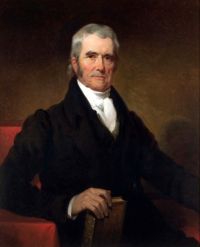 John Marshall,
Craig v. Missouri — Opinion of the Court
John Marshall,
Craig v. Missouri — Opinion of the Court
“ Had the cause been tried before a jury, the regular course would have been to move the court to instruct the jury that the act of assembly, in pursuance of which the note was given, was repugnant to the constitution of the United States; and to except to the charge of the judges, if in favour of its validity: or a special verdict might have been found by the jury, stating the act of assembly, the execution of the note in payment of certificates loaned in pursuance of that act; and referring its validity to the court. ”
 Lysander Spooner,
An Essay on the Trial By Jury
Lysander Spooner,
An Essay on the Trial By Jury
“ Every man, therefore, ought to refuse to sit in a jury, and to take the oath of a juror, unless the form of the oath be such as to allow him to use his own judgment, on every part of the case, free of all dictation whatsoever, and to hold in his own hand a veto upon any verdict that can be rendered against a defendant, and any sentence that can be inflicted upon him, even if he be guilty. ”
 Edmund Burke,
The Works of the Right Honourable Edmund Burke…
Edmund Burke,
The Works of the Right Honourable Edmund Burke…
“ To suppose that juries are something innate in the Constitution of Great Britain, that they have jumped, like Minerva, out of the head of Jove in complete armor, is a weak fancy, supported neither by precedent nor by reason. Whatever is most ancient and venerable in our Constitution, royal prerogative, privileges of Parliament, rights of elections, authority of courts, juries, must have been modelled according to the occasion. ”
John M. Taylor, The Witchcraft Delusion in Colonial Connecticut…
“ If a judge pronounces a judgment, renders a decision, delivers a verdict duly signed and sealed and afterwards alters his judgment, they shall call that judge to account for the alteration of the judgment which he had pronounced, and he shall pay twelvefold the penalty which was in the said judgment, and, in the assembly, they shall expel him from his seat of judgment, and he shall not return, and with the judges in a case he shall not take his seat. ”
Horace Gray, Capital Traction Company v. Hof…
“ In the constitution of that state of 1776, it was declared that 'in all controversies at law, respecting property, the ancient mode of trial by jury is one of the best securities of the rights of the people, and ought to remain sacred and inviolable.' 2 Charters and Constitutions, 1410. ”
Horace Gray, Capital Traction Company v. Hof…
“ If any of the persons so summoned and returned as jurors shall not appear, or be challenged and set aside, the justice before whom said cause is to be tried shall direct the constable to summon and return forthwith a tales, each of whom shall be subject to the same exceptions as the jurors aforesaid, so as to make up the number of twelve, after all causes of challenge are disposed of by the justice ”
Various, Blackwood's Edinburgh Magazine…
“ It is but natural, therefore, that you should lean to the cause of those who favour yours. In setting aside a Catholic as a juryman on the trial of Repealers, this is the imputation made upon him. Now, what is there in that to wound any man's feelings? Lastly, it is alleged that the presiding judge summed up in terms unfavourable to the Repealers. Of course he did; and, as an upright judge, how could he have done otherwise? Let us for one moment consider this point also. It is often said that the judge is counsel for the prisoner. ”
Nathan Clifford, Mercantile Mutual Insurance Company v…
“ The right of having an appellate tribunal pass upon matters of law in all contests between parties, is regarded in some sort as a sacred right by our people. It is given in the broadest terms by the great Judiciary Act of 1789. ”
 Noah Webster,
A Collection of Essays and Fugitiv Writings
Noah Webster,
A Collection of Essays and Fugitiv Writings
“ If the people esteem them so highly, why do they ever neglect them, and suffer the trial by them to go into disuse? In some States, Courts of Admiralty have no juries, nor Courts of Chancery at all. In the City Courts of some States, juries are rarely or never called, altho the parties may demand them; and one State, at least, has lately passed an act, empowering the parties to submit both law and fact to the court. ”
by John Marshall Harlan, Pointer v. United States — Opinion of the Court
“ In some jurisdictions the mode pursued in the challenging of jurors is for the accused and the government to make their peremptory challenges as each juror, previously ascertained to be qualified, and not subject to be challenged for cause, is presented for challenge or acceptance. ”
William Fayette Fox, Civil Government of Virginia
“ The attorney for the commonwealth—that is, the attorney who prosecutes the accused—may CHALLENGE—that is, object to—a juror, but he must assign a reason for his objection, and if the judge decides in favor of his objection, the person challenged is not put on the jury. A panel is a list of persons summoned to serve as jurors.To SUMMON is to call or notify a person or persons to appear in court. A person who is summoned to attend as a juror and who, without sufficient reason, fails or neglects to do so, may be punished by a fine of not less than five nor more than twenty dollars. ”
Various, Blackwood's Edinburgh Magazine…
“ Of that evidence, according to the genius and spirit, and also the letter of English law, twelve intelligent jurymen were the proper judges, under judicial guidance; and greatly to be deprecated is any attempt to deprive them of their right, and their fellow-subjects—the public at large—of the protection afforded by its unfettered exercise. ”
William Russell, Recollections of a Policeman
“ But there may be occasions when it would be very desirable that a jury should be interposed between a party to a cause and the presiding Judge; and certainly if the jurisdiction of these Courts is extended, it will be most desirable that suitors should be able to satisfy themselves that every opportunity is open to them of obtaining justice.”“For my own part,” said I, “I would as soon have the decision of one honest man as of twelve honest men, and perhaps I would prefer it. ”
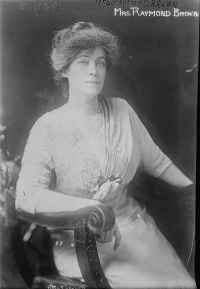 Gertrude Foster Brown,
Your vote and how to use it
(1918)
Gertrude Foster Brown,
Your vote and how to use it
(1918)
“ The Grand Jury is a body of men chosen from the taxpayers of a county to inquire into alleged crimes during a particular term of court. The supervisors or the commissioner of jurors makes out a list of three hundred names of men of integrity and sound judgment, from which the names of twenty-four men are drawn by lot. [B] From sixteen to twenty-three of these men sit in secret session, and hear the presentment of a case, and decide by a vote of at least twelve members whether the evidence is sufficient to warrant holding the accused for trial. ”
Lysander Spooner,
An Essay on the Trial By Jury
“ The people are no more arrayed against themselves, when a jury puts its veto upon a statute, which the other tribunals have sanctioned, than they are when the same veto is exercised by the representatives, the senate, the executive, or the judges. ”
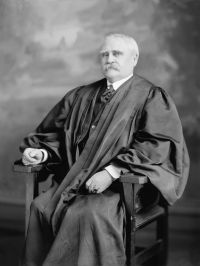 Horace Harmon Lurton,
Jordan v. Massachusetts — Opinion of the Court
Horace Harmon Lurton,
Jordan v. Massachusetts — Opinion of the Court
“ Subject to the requirement of due process of law, the states are under no restriction as to their method of procedure in the administration of public justice. That the court had jurisdiction and that there was a full hearing upon the issue made by the suggestion of the insanity of the juror is not questioned. ”
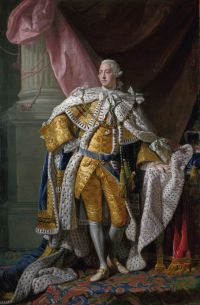 George III,
Massachusetts Government Act
(1837)
George III,
Massachusetts Government Act
(1837)
“ And be it further enacted by the authority aforesaid, That no person who shall serve as a Juror, at any of the said Courts, shall be liable to serve again as a Juror at the same Court, or any other of the Courts aforesaid, for the space of three years then next following, except upon special Juries. ”
Stephen H. Branch's Alligator, Vol…
“ Should the jury adopt the precedent of convicting a man under such circumstances, then God help the liberty of the citizen; but the consequences would rest upon the heads of them and their children. [Mr. Ashmead here read extracts from the opinions of eminent Judges, showing that a prisoner had a right to a preliminary examination before the case could go before the Grand Jury.] ”
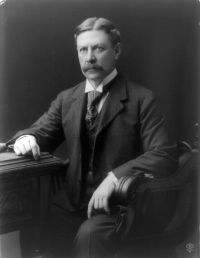 William Henry Moody,
Keizo v. Henry — Opinion of the Court
William Henry Moody,
Keizo v. Henry — Opinion of the Court
“ Dispualifications of grand jurors do not destroy the jurisdiction of the court in which an indictment is returned, if the court has jurisdiction of the cause and of the person, as the trial court had in this case. ”
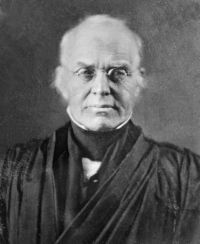 Joseph Story,
United States v. Bailey — Opinion of the Court
(1835)
Joseph Story,
United States v. Bailey — Opinion of the Court
(1835)
“ He had such a jurisdiction as the secretary of the treasury deemed competent. And as he has exercised it, and the paper has been used as an affidavit or sworn paper by the party, the objection of the want of jurisdiction will not lie.It is not necessary at common law, in a prosecution for perjury, to show that the oath was expressly directed by an act of parliament. Perjury may be committed in false swearing in a court of equity, ecclesiastical, military or maritime. 1 Hawk. ”
