Ratitae

Definition and stakes

1911 Encyclopædia Britannica (1911)

“ The separation of the Ratitae from the other birds, and their seemingly fundamental differences, notably the absence of the keel and of the power of flight, induced certain authors to go so far as to derive the Ratitae from the Dinosaurian reptiles, whilst Arrhaeopteryx (q.'v.) and the Carinatae were supposed to have sprung from some Pterosaurian or similar reptilian stock. Such vagaries require no refutation. But it is quite another question, whether the “ Ratitae ” form a natural group. ”

Source: Wikisource

Various,  Encyclopaedia Britannica, 11th Edition…

“ It follows that new groups of Ratitae can no longer be developed since there are no Carinatae living which still retain so many low characters, e.g. configuration of the palate, precoracoid, pelvis, intestinal convolutions, copulatory organ, &c. Loss of the keel is co-ordinated with the power of using the forelimbs for locomotion; although a “Ratite” character, it is not sufficient to turn a Notornis, Cnemiornis or Stringops, not even a Phororhacos into a member of the Ratitae. ”
Source: Gutenberg

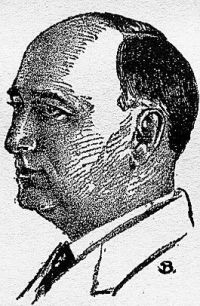
Portrait of Walter Rothschild Walter Rothschild,  Extinct Birds (1907)

“ I have divided these into genera according to Professor Parker's classification, only adding Palaeocasuarius of Forbes, with 3 species, and Megalapteryx, with 5, which brings my number up to 38 species, divided into 7 genera. My reasons for not uniting these into 7 species and 7 genera, as those of the "lumping school" do, are twofold,—first, the bones of the Ratitae are much more solid than those of other birds, and are not given to so much individual variation ”
Source: Wikisource

Get perspective with Kwize: daily news enlightened by great literature