Robert II of France

Definition and stakes

Pierce Butler Women of Mediæval France

He was innocently vain of his powers as a musician and singer, and on a pilgrimage to Rome in after years, 1016, he deposited on the altar of Saint Peter his Latin poems set to music. The very graces and virtues for which his contemporaries praise Robert are the ones that make him manifestly out of place as King of France in the year 1000, and the misery of his domestic career is only more pitiful than the disorder which reigned in his kingdom. That one of the most pious kings of France should nevertheless have begun his career in opposition to the Church is very remarkable.
Source: Gutenberg

A Cyclopædia of Canadian Biography

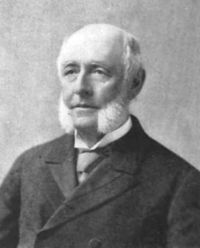
Sir Robert’s Imperial services have been such, and his legal attainments are so well known that at the time of writing his elevation to the peerage as a colonial representative on the legal committee of the Privy Council, which is the Court of Appeal for the whole Empire, is being strongly advocated in the Motherland. In his private relations Sir Robert is greatly beloved, and though his duties have brought him in contact with all the leading figures of Great Britain, France and the United States, he is a thorough democrat in bearing.
Source: Gutenberg

1911 Encyclopædia Britannica (1911)

In 1320 Robert summoned his kinsman Philip V. of France to Italy, and he waged war against Sicily once more from 1325 to 1341, but failed to drive out the Aragonese. He died in 1343, just as he was about to lead another expedition to the island. Robert was a man of learning, devoted to literature, and a generous patron of literary men: he befriended the poet Petrarch, who admired the king so greatly as to express the wish to see him lord of all Italy; while Boccaccio celebrated the virtues and charms of Robert’s natural daughter Maria, under the name of Fiammetta.
Source: Wikisource

Get perspective with Kwize: daily news enlightened by great literature