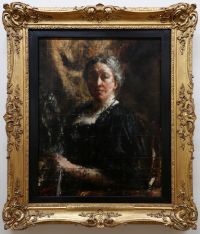
Saint Brigid of Kildare

Definition and stakes

Charles Johnston Ireland, Historic and Picturesque

Saint Brigid is one of the great figures in the epoch immediately succeeding the first coming of the Word. She was the foundress of a school of religious teaching for women at Kildare, or Killdara, "The Church of the Oak-woods," whose name still records her work. Her work, her genius, her power, the immense spiritual influence for good which flowed from her, entitle her to be remembered with the women of apostolic times, who devoted their whole lives to the service of the divine. We have seen the esteem in which women were always held in Ireland.
Source: Gutenberg

John Healy Insula Sanctorum et Doctorum; Or…

Brigid’s famous shrine in Kildare, by the hands of the bishop of that ancient see, who seems to have been in some way connected with the family of the saint. We need not dwell on the alleged prophecies of the saint’s future greatness—too often these prophecies were composed after the event. A few years at most after the birth of the child, Dermott M‘Murrough, of infamous memory, became king of Leinster, and, as Gerald Barry testifies, he was a tyrant from the beginning, a cruel oppressor of the nobles, a man whose hand was against every man, and who had every man’s hand against him.
Source: Gutenberg

Thomas Olden Dictionary of National Biography… (1887)

CONDLAED of Kildare (d. 520) , bishop and saint, according to the pedigree in the 'Book of Leinster' and other authorities, was descended from Cucorb, king of Leinster, and through him from Ugaine Mor, monarch of Ireland, who was also the ancestor of St. Brigid [q. v.] in another line. His original name was Ronchend, and he is first heard of as a 'solitary adorned with every virtue' who dwelt in the south of the plain of the Liffey. At this time Brigid had determined to erect here the famous monastery of Kildare.
Source: Wikisource

Get perspective with Kwize: daily news enlightened by great literature