“ Old Shoreham, with its air of commerce, of stagnant commerce, stood by the sea. The tide was out, the sea gates were dry, only a few pools flashed silver amid the ooze; and the masts of the tall vessels,—tall vessels aground in that strange canal or rather dyke which runs parallel with and within a few yards of the sea for so many miles,—tapered and leaned out over the sea banks, and the points of the top masts could be counted. ”
Shoreham-by-Sea
Definition and stakes
Quotes about “Shoreham-by-Sea”
Edward Verrall Lucas,
Highways and Byways in Sussex
(1904)
“ Between the river and the sea were then some two miles—possibly more—of flat meadow land, on which Aldrington was largely built. Over the ruins of that Aldrington the Channel now washes. Beyond Aldrington is Portslade, with a pretty inland village on the hill; beyond Portslade is Southwick, notable for its green; and beyond Southwick is Shoreham. Southwick and Shoreham both have that interest which can never be wanting to the seaport that has seen better days. The life of a harbour, whatever its state of decay, is eternally absorbing; and in Shoreham harbour one gets such life at its laziest. ”
Edward Verrall Lucas,
Highways and Byways in Sussex
(1904)
“ Hove the impeccable—The Aldrington of the past—A digression on seaports—Old Shoreham and history—Mr. Swinburne's poem—A baby saint—Successful bribery—The Adur—Old Shoreham church and bridge. The cliffs that make the coast between Newhaven and Brighton so attractive slope gradually to level ground at the Aquarium and never reappear in Sussex on the Channel's edge again, although in the east they rise whiter and higher, with a few long gaps, all the way to Dover. It is partly for this reason that the walk from Brighton to Shoreham has no beauty save of the sea. ”
E. V. Lucas,
Highways and Byways in Sussex
“ The road from Lewes to the sea runs along the edge of the Ouse levels, just under the bare hills, passing through villages that are little more than homesteads of the sheep-farmers, albeit each has its church—Iford, Rodmell, Southease, Piddinghoe—and so to Newhaven, the county's only harbour of any importance since the sea silted up the Shoreham bar. You may be as much out of the world in one of these minute villages as anywhere twice the distance from London; and the Downs above them are practically virgin soil. ”
Robert Browning,
The letters of Robert Browning and Elizabeth Barrett Barrett…
(1899)
“ Its one packet a week from Shoreham cannot get in if the wind and tide are unfavourable. There is the greatest uncertainty in consequence ... as I have heard before—while, of course, from Southampton, the departures are calculated punctually. He considers that the least troublesome plan, and the cheapest, is to go from London to Havre ... the voyage being so arranged that the river passage takes up the day and the sea-crossing the night—you reach Havre early in the morning and get to Paris by four o’clock, perhaps, in the afternoon ... ”
James Anthony Froude,
History of England
(1893)
“ The English admiral was obliged to hang along the shore, where boats passing to and fro continually could furnish a succession of supplies. After a fortnight of ineffectual cruising, the two fleets, on the morning of the 15th, were in sight of each other off Shoreham. The light air which was stirring came in from the sea. The French were outside, and stretched for five miles along the offing. Having the advantage of the wind, they could force an engagement if they pleased, and Lisle hourly expected that they would bear down upon him. The galleys came out as before ”
Leslie Stephen,
Dictionary of National Biography…
(1897)
“ A few weeks later he was posted to the Seaford, a small frigate on the Irish station, in which, and afterwards, from January 1705, in the Shoreham, he continued till 1710, cruising in the Irish Sea, chasing and sometimes capturing the enemy's privateers, and convoying the local trade between Whitehaven, Hoylake, Milford, and Bristol on the one side, and on the other from Belfast to Kinsale. ”
Hilaire Belloc,
Sussex, Painted by Wilfrid Ball
(1906)
“ SHOREHAM HARBOUR will always be a rather anxious place to get in and out of, especially as there is a very strong tide in the Ouse. A dozen miles or so farther westward along the coast is the modern entrance of Shoreham Harbour. ”
Edward Verrall Lucas,
Highways and Byways in Sussex
(1904)
“ After the life of the harbour, the chief interest of Shoreham is its river, the Adur, a yellow, sluggish, shallow stream, of great width near the town, which at low tide dwindles into a streamlet trickling through a desert of mud, but at the full has the beauty of a lake. ”
Clive Holland, From the North Foreland to Penzance
“ Shoreham harbour formerly was of much greater area than nowadays, when, as one writer puts it, “Nature has been too kind to Shoreham folk by giving them too much land, by taking from them most all the water save that which lies in the channel of the Adur.” In former times, indeed, Shoreham had some reputation for the building of fast-sailing luggers and other craft, many of which, in the last half of the eighteenth and early years of the nineteenth centuries, were engaged in smuggling ventures and privateering. ”
1911 Encyclopædia Britannica (1911)
“ The town is sometimes known as New Shoreham, in distinction from the village of Old Shoreham, a mile up the river, which was the former port. The church of St Mary the Virgin lacks almost the entire nave, but the remainder shows fine work ranging from Norman to Early English. Of no less interest is the church of St Nicholas, Old Shoreham, a cruciform Norman structure retaining some remarkable early woodwork. There are public gardens containing a museum and theatre. The trade of the small port is chiefly in coal, corn and timber. Shipbuilding is also carried on. ”
Laura Elizabeth Howe Richards,
Pippin; A Wandering Flame
“ You never was built for a crook, my lad; you're too slow, and you're too—call it clumpsy. You've no quicksilver in your toes, nor yet in your fingers. You'd ben run in, and then you'd gone to Shoreham. First offense, they might let you off with six months—more likely a year, but say six months! For six months, then, you'd worked as you never worked before in your little life, alongside of men—well—the Lord made 'em, amen!—only they ain't the kind you're used to. What I would say, there's no romance about Shoreham, not a mite, and don't you forget it! ”
Hilaire Belloc,
Sussex, Painted by Wilfrid Ball
(1906)
“ You can do nothing with Newhaven except leave it a port. Littlehampton refuses to be the pleasure ground that its landlord desires it to be. Bosham is still the ancient harbour and village which its history demands that it should be. Shoreham will not consent to become a lesser Worthing or a second Brighton, and this is the more remarkable from the fact that these harbour towns and villages are geographically more in touch with London than those other towns whose special character it is to lie sheltered by the hills and far from the gaps by which a railway could approach them from the north. ”
Clive Holland, From the North Foreland to Penzance
“ Shoreham privateers were not a whit less skilfully handled and bravely fought than those sailing out of larger and more famous ports of the west country. The town, in Armada times, had furnished a fair share of ships and men with which to fight the Spanish Dons, and the spirit which animated the local seamen of the Elizabethan age was not “dead bones” in those of the seventeenth and eighteenth centuries, as is shown by the extraordinary exploits of a certain Captain Gyffard. ”
John Fleming Wilson,
The closed door
(1922)
“ Gorham went on composedly:“At dawn we still had six miles to drag the Western Pacific. The line still held, because of Owen’s extraordinary seamanship. That was his hold on his crew. I am convinced that no other man afloat could have kept his men at work as Harry did. And what work!“The gale had piled up a sea that ran irresistibly from horizon to horizon, which lifted the Shearwater up to dizzy heights, flung her savagely to one side, dropped her into vast hollows that resounded like caverns. ”
Children's book of patriotic stories… (1917)
“ Detachments were sent off to Skenesborough (now Whitehall) , and another place on the lake, with orders to seize all the boats they could find and bring them to Shoreham, opposite Ticonderoga, whither Allen prepared to proceed with the main body. ”
William Scoresby, The northern whale-fishery (1849)
“ The British legislature, by exempting the produce of the Greenland Seas from existing duties on the condition of its being imported in British ships, held out encouragements to the company similar to those offered to former adventurers. The South Sea Company caused a fleet of twelve new ships, about 306 tons’ burden each, [Pg 26] to be built in the river Thames, equipped each vessel with the necessary supplies of cordage, casks, and fishing instruments, and engaged for their use the duke of Bedford’s wet-dock at Deptford, where boiling-houses and other conveniences were constructed. ”
John Fleming Wilson,
The Salving of John Somers
(1920)
“ In all this splendor the Maid of Bath became small and diminished; the island looked miniature, surrounded by the iridescent sea. Somers changed the course and headed in where a space showed be tween the lines of leaping breakers on the reef. For some time they slipped along soundlessly. Presently the boom of the surf rose about them. Somers took the wheel himself and conned the schooner, with two hands forward in the bows and two at the sheets. The deck began to rise and fall with greater liveliness, the blocks of the gear to thump and creak. ”
Duke of Saxe-Weimar-Eisenach Bernhard, Travels Through North America, During the Years 1825 and 1826…
“ The shores are generally covered with bushes and pine trees, are hilly, and afford a pleasing prospect. At the village of Shoreham, twelve miles above Crownpoint, on the eastern shore of Vermont, we left the Phœnix, which went twenty miles further to Whitehall, the southern point of Lake Champlain, and landed to see Lake George, which is celebrated for its romantic situation and shores. Sir Michael and Lady Clare continued with us, and resolved not to part from us till we arrived at Albany, after which they would travel to Boston. ”
Edric Holmes, Seaward Sussex: The South Downs from End to End
“ Public conveyances run from Brighton to Shoreham several times each day by Portslade and Southwick; the railway to Worthing also follows the road and little will be lost if the traveller goes direct to New Shoreham. Portslade and Southwick churches have some points of interest, the latter a one time church of the Knights Templar, but they are not sufficient compensation for the melancholy and depressing route. ”
Jacob Abbott,
History of King Charles the Second of England
“ The little vessel—its burden was about sixty tons—was brought into a small cove at Brighthelmstone, a few miles to the eastward from Shoreham, and run upon the beach, where it was left stranded when the tide went down. ”
Frederick Whymper, The Sea: Its Stirring Story of Adventure…
“ And yet the voyage from the Thames to the Tyne is more dangerous than an over-sea voyage. There are a whole crowd of dangerous shoals off the Essex coast alone, to be avoided or steered between, as the case may be, as soon as the ship leaves the Thames, followed by equal dangers on the Suffolk and Norfolk coasts. The latter sands are all under water even when the tide is at ebb, but there is not water enough on them to float a ship ”
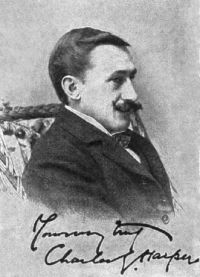
Charles G. Harper,
The Somerset Coast
“ All the eastern ports of the Somerset coast are severely afflicted by “trippers,” who descend in their thousands upon Clevedon, Weston-super-Mare, and Burnham, not to mention the neighbouring villages. ”
Charles G. Harper,
The Somerset Coast
“ This singular geographical heresy, although totally unsupported by map-makers, who on all maps and charts show a very well-defined seaboard, seems to be widely distributed; but it is not shared by (among others) the inhabitants of Clevedon, of Watchet (where furious seas have twice within the last few years demolished the harbour) , of Weston-super-Mare, Burnham, Minehead, 2or Porlock. The people of all these places think they live on the coast; and it would be really quite absurdly difficult to persuade them that they do not, or that they do not live in Somerset. ”
E. F. Knight,
The Cruise of the 'Alerte'
“ It was blowing hard from the eastward, and the sea was, I think, running higher than on any occasion since we left Southampton. The surf on the island was far heavier than we had ever seen it before, and was breaking on every portion of the coast with great fury. We now ran before the wind towards South-west Bay, and the squalls that occasionally swept down the ravines were so fierce that we sailed with foresail down and the tack of our reefed mainsail triced well up. We saw that the seas were dashing completely over the pier, and sending great fountains of spray high into the air. ”
Royal Society, Miscellanea Curiosa, Vol. 3
“ The Channel at Archer's Hope Point lies close by the Shoar, and makes such an Angle there by reason of Hog Island, that going up or down the River, let the Wind be where it will, they must there bring the contrary Tack [Pg 320] on Board, and generally when they About the Ship as they call it, they are so near the Shoar, that a Man may almost fling a Finger-stone on Board. ”
Crittenden Marriott, The isle of dead ships (1909)
“ Like all who have sailed these waters, Howard had heard many tales of the great Sargasso Sea, and had whiled away many an hour listening to the sailors’ yarns of the haven of dead ships buried far within those tangled confines—a haven in the middle of the ocean, a haven without a harbor, a haven where the ships, dropping to pieces at last by slow decay, must sink for two miles or more before they reached the floor of the ocean.And into this haven the Queen was drifting, slowly but surely. Nothing but sinking could prevent her from moving onward till she reached the innermost haven. ”
Joseph Conrad,
Within the Tides — Chapter 8
“ In the faint airs the schooner crept on past a sturdy squat headland, and it was pitch dark when her headsails ran down, she turned short on her heel, and her anchor bit into the sandy bottom on the edge of the outer reef; for it was too dangerous then to attempt entering the little bay full of shoals. After the last solemn flutter of the mainsail the murmuring voices of the Moorsom party lingered, very frail, in the black stillness. ”
F. Morton Howard, "Strictly Business"
“ Doomed to pleasant disappointment, however, were such good folks of Shorehaven as anticipated any spectacular ill-conduct that evening on the part of the returned crew. Before the rope fender of the despicable “Jane Gladys” had rubbed the sides of the quay for five minutes, an atmosphere of heavy gloom had settled upon the hardy mariners who peopled her, and this though they had arrived in port in the best of spirits, and were, moreover, furnished with several p. ”
John Hunter,
An Historical Journal of the Transactions at Port Jackson and Norfolk Island
“ The anchorage in this bay, as I have before observed, is extensive, and the passage into it easy; there is a cluster of rocks, which lie south-south-east, about two cables length from a little bare island on the north shore, on which the sea frequently breaks very high; but if you keep Cape Banks open, you will avoid them; both shores are bold to, till you come thus high. A little above Point Southerland (south shore) is another patch of rocks, which, to avoid in turning, keep the land below this point open. ”
Matthew Flinders,
A Voyage to Terra Australis
(1814)
“ On the south side of the entrance, which is the deepest, there is ten feet at low water; and within side, the depth is from 2 to 4 fathoms in a channel near the south shore: the rest of the bay is mostly occupied by shoals, over which boats can scarcely pass when the tide is out. High water appeared to take place about seven hours after the moon's passage; at which time, a ship drawing not more than fourteen feet might venture in, if severely pressed. Shoal Bay is difficult to be found, except by its latitude, which is 29° 261⁄2′ ”
James Fenimore Cooper,
The Sea Lions; Or, The Lost Sealers
“ Perhaps it may be one of ourselves; for we sailors never know what port will next fetch us up.""I hope it will be old Sag, sir," answered Hazard, cheerfully; "for, though no great matter of a seaport, it is near every man's home, and may be called a sort of door-way to go in and out of the country through.""A side-door, at the best," answered Roswell. "With you, I trust it will be the next haven that we enter; though I shall take the schooner at once in behind Shelter Island, and tie her up to the deacon's wharf." ”