“ They are tall of stature, idle, for the most part, and therefore the greater theeves."—De Monfart, p. 23.1623.—"Having found a good opportunity, such as I desired, of getting out of Goa, and penetrating further into India, that is more to the south, to Canara...."—P. della Valle, ii. 601; [Hak. Soc. ii. 168] .1672.—"The strip of land Canara, the inhabitants of which are called Canarins, is fruitful in rice and other food-stuffs."—Baldaeus, 98. There is a good map in this work, which shows 'Canara' in the modern acceptation. ”
South Canara
Definition and stakes
The theme of “South Canara” has been addressed by authors such as Edgar Thurston, Henry Yule, A. C. Burnell, Sir Clements R. Markham and Élisée Reclus. It is often associated with terms like canary, islands, Tenerife, people and Goa.
Quotes about “South Canara”
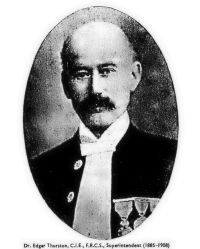 Edgar Thurston,
Castes and Tribes of Southern India…
Edgar Thurston,
Castes and Tribes of Southern India…
“ She knows how to collect green leaves for her manure, and to help the fuel reserve on the hill slope above her house grow by a system of lopping the branches and leaving the standards. She knows also how to collect her areca nuts, and to prepare them for the market, and to collect her cocoanuts, and haggle for a high price for them with her customers. There is, in fact, not a single thing about agriculture which the South Canara man knows, and which the South Canara woman does not know. ”
Edgar Thurston,
Castes and Tribes of Southern India
(1909)
“ Sappaliga.— It is noted, in the Madras Census Report, 1901, that "in some tāluks of South Canara they are said to be identical with, or a sub-caste of Gāniga." The Gānigas are a Canarese caste, of which the traditional occupation is oil-pressing. ”
Edgar Thurston,
Castes and Tribes of Southern India
(1909)
“ Mr. H. A. Stuart writes,* [1] "is a caste of Canarese farmers found only in South Canara. The Nādavas have returned four sub-divisions, one of which is Bant, and two of the other three are sub-divisions of Bants, the most important being Masādi. ”
Edgar Thurston,
Castes and Tribes of Southern India
(1909)
“ To Malpe in the South Canara district, during the fishing season, come fishermen with a flotilla of keeled and outrigged sailing boats from Ratnagiri in the Bombay Presidency. Hither also come fishermen from Goa. The reasons given by the Ratnagiri fishermen for coming southward are that fish are not so abundant off their own coast, competition is keener, and salt more expensive. ”
Edgar Thurston,
Omens and Superstitions of Southern India
“ In South Canara, silver rats and pigs are offered to protect the crops from destruction by these animals. Silver rice-grains are offered when children do not take their food properly, and silver sheaves of grain if the crop is abundant. At Pyka, brass or clay figures of the tiger, leopard, elephant, wild boar, and bandicoot rat, are presented at the shrine of a female bhūtha42 named Poomanikunhoomani, to protect the crops and cattle from the ravages of these animals. ”
Edgar Thurston,
Castes and Tribes of Southern India
(1909)
“ The Nāyars assembled in their kūttams whenever hunting, or war, or arbitration, or what not was in hand, and this organisation does not seem to have been confined to Malabar, for the koot organisation of the people of South Canara gave the British officers much trouble in 1832-33. In so far as Malabar was concerned, the system seems to have remained in an efficient state down to the time of the British occupation, and the power of the Rājas was strictly limited. ”
Edgar Thurston,
Castes and Tribes of Southern India
(1909)
“ These balls are said to be named after deceased female ancestors. Bēgāra or Byāgāra is a synonym, applied to the Holeyas by Kanarese Lingāyats. Māila means dirt, and probably refers to the washerman section, just as Mailāri (washer-man) occurs among the Mālas. The Tulu-speaking Holeyas must not be confounded with the Canarese-speaking Holeyas. In South Canara, Holeya is a general name applied to the polluting classes, Nalkes, Koragas, and the three divisions of Holeyas proper, which differ widely from each other in some respects. ”
 Henry Yule,
Hobson-Jobson — C
(1903)
Henry Yule,
Hobson-Jobson — C
(1903)
“ So also the coast of Canara seems meant in the following:— c. 1760.—"Though the navigation from the Carnatic coast to Bombay is of a very short run, of not above six or seven degrees...."—Grose, i. 232. " "The Carnatic or province of Arcot ... its limits now are greatly inferior to those which bounded the ancient Carnatic; for the Nabobs of Arcot have never extended their authority beyond the river Gondegama to the north; the great chain of mountains to the west; and the branches of the Kingdom of Trichinopoli, Tanjore, and Maissore to the south; the sea bounds it on the east."—Ibid. ”
Sir Clements R. Markham, Travels in Peru and India
“ There is a great deal in North Canara of small size, and still more in Cochin and Travancore; but the reckless system of felling threatened the same results as has already overtaken the supply of chinchona-bark in South America. The only forests containing teak, in Malabar, in which Government has a proprietary right, are 25 square miles in the Palghat talook, where all the mature trees have long since gone to the Bombay dockyard ”
 Richard Francis Burton,
To the Gold Coast for Gold — VIII. To Grand Canary…
(1863)
Richard Francis Burton,
To the Gold Coast for Gold — VIII. To Grand Canary…
(1863)
“ Here a perpendicular face of calcareous rock fronts a deep valley, backed by a rounded hill, with the blue chine of El Cumbre in the distance: this is the highest of the ridge, measuring 8,500 feet. The wall is pierced, like the torrent-side of Mar Saba (Jerusalem) , with caves that shelter a troglodyte population numbering some 2,000 souls. True to their Berber origin, they seek refuge in the best of savage lodgings from heat, cold, and wind. The site rises some 2,000 feet above sea-level, and the strong wester twists the trees. Grand Canary preserves more of these settlements than Tenerife ”
Henry Yule,
Hobson-Jobson — S
(1903)
“ Mountain, 121.1885.—"The inhabitants of this singular tract (Soopah plateau in N. Canara) were in some parts Mahrattas, and in others of Canarese race, but there was a third and less numerous section, of pure African descent called Sidhis ... descendants of fugitive slaves from Portuguese settlements ... the same ebony coloured, large-limbed men as are still to be found on the African coast, with broad, good-humoured, grinning faces."—Gordon S. Forbes, Wild Life in Canara, &c., 32-33. ”
 William Dampier,
A Voyage to New Holland, Etc. in the Year 1699
William Dampier,
A Voyage to New Holland, Etc. in the Year 1699
“ AND THE GOVERNORS AT LAGUNA AND SANTA CRUZ.It is reported they can raise 12,000 armed men on this island. The governor or general (as he is called) of all the Canary Islands lives at Laguna: his name is Don Pedro de Ponto. He is a native of this island, and was not long since President of Panama in the South Seas: who bringing some very rich pearls from thence, which he presented to the Queen of Spain, was therefore, as it is said, made general of the Canary Islands. The Grand Canary is an island much superior to Tenerife both in bulk and value ”
Edgar Thurston,
Castes and Tribes of Southern India
(1909)
“ Parava.— The Tulu-speaking Paravas of South Canaraare, like the Nalkes and Pombadas, devil-dancers. and are further employed in the manufacture of baskets and umbrellas. Socially, they occupy a higher position than the Nalkes, but rank below the Pombadas. ”
Sir Clements R. Markham, Travels in Peru and India
“ On the day after sailing from Cannanore we put into Mangalore, where the town, like that of Calicut, is completely hidden from the sea, the lighthouse and a few bungalows being visible on a hill in the rear. This was the dry season, and the coast of Canara was not nearly so pretty as that of Malabar, looking parched and dried up. North of Mangalore is the port of Compta, with a lighthouse on a steep conical hill, but no town visible. Compta is now the port of shipment for the cotton of Dharwar, and there were several pattamars in the anchorage, with their decks piled up with bales of cotton. ”
Florence Du Cane, The Canary Islands (1911)
“ The Canarios seem to have been especially fond of cave-dwellings, which are very common in Grand Canary, though they are by no means unknown in the other islands; and it is no unusual thing to find districts where a scanty population is troglodytic in habit, living entirely in cave-dwellings scooped out of the soft sandstone rock. Some families have quite a good-sized though strange home, and besides rooms with whitewashed walls are stables for goats or mules. ”
 Carl Ritter,
Comparative geography
(1865)
Carl Ritter,
Comparative geography
(1865)
“ There is, therefore, no close connection between the inanimate nature of continent and islands and their respective populations; no physical conditions have imposed upon them a common historical development. Only the Canary Islands, southwest of the Atlas Mountain range, and Madagascar, could be regarded as at all exceptional to this. But the nine Canaries are relatively extremely small, embracing but about 3000 square miles in all; much too small to exercise any important influence, or to harbor a large population. ”
 Élisée Reclus,
Africa by Élisée Reclus/Volume 4
(1890)
Élisée Reclus,
Africa by Élisée Reclus/Volume 4
(1890)
“ These civilised half-castes thus constitute a natural intermediate element between the pure whites and the Negroes, between the colonists and the natives. Some share in the general civilisation of the country is also taken by the hybrid Hindus from Goa, chiefly priests, traders, and teachers, who are commonly known as " Canarians," because mainly immigrants from the district of Canara, on the west coast of India. ”
Florence Du Cane, The Canary Islands (1911)
“ To attain the rude little shrine at the Fortaleza where a rest was to be taken, the path leads down into the Cañadas itself. A stretch of fine yellow sand, like the sand of the Sahara, thoroughly sun-baked, proved too great a temptation to one of the mules, and regardless of its rider and luncheon-basket, it enjoyed a good roll in the soft warm bed—luckily with no untoward results. After a welcome rest in the grateful shade of a retama bush, we turned our backs to the Peak and left this beautiful solitary scene. The island of La Palma seemed to be floating in the sky ”
Élisée Reclus,
Africa by Élisée Reclus/Volume 3
(1892)
“ Hierro is now no longer taken as the first meridian by any country. Administration of the Canaries. The Canaries constitute a province of Spain, sending six deputies to the Cortes, and represented by two or three notables in the Senate. Santa-Cruz de Teneriffe is the residence of the civil governor and of the Captain-General of the archipelago, while Las Palmas is the seat of the High Courts. Trade is exempt from all customs dues beyond an impost of one-thousandth on imports and a slight tax on wines and tobacco. Each island contributes a small contingent to the army. ”
Gomes Eannes de Zurara, The Chronicle of the Discovery and Conquest of Guinea…
“ Now of all these islands which I have already named Grand Canary is the largest, and it will be in circumference six-and-thirty leagues. Its people are not without cunning, but of little good faith; and they know that there is a God from whom those who work good will receive good, and those who work evil will receive evil. And they have two men amongst them whom they call kings, and one duke, but all the rule of the island is in the hands of certain knights, who cannot be less than one hundred and ninety in number, nor as many as two hundred. ”
1911 Encyclopædia Britannica (1911)
“ The archipelago is divided into two naval districts, commanded by royal navy captains. Roman Catholicism is the official religion, and ecclesiastical law is the same as in other Spanish provinces. The convents have been suppressed, and in many cases converted to secular uses. Laguna and Las Palmas are episcopal sees, in the archbishopric of Seville. Industry and Commerce.—Owing to the richness of the volcanic soil, agriculture in the Canaries is usually very profitable. Land varies in value according to the amount of water available, but as a rule commands an extraordinarily high price. ”
Florence Du Cane, The Canary Islands (1911)
“ Advancing under their majestic shadow one discovers at every turn fresh views, and one’s imagination, carried away by the tales of the ancients, is filled with poetic impressions. These enchanted regions are well worthy of the fictions of fables, and in the enthusiasm they give birth to when wandering in their midst, the Canarios appear to have lost nothing of their celebrity; these are still the Fortunate Islands and their shady groves the Elysium of the Greeks, the wandering place of happy souls. ”
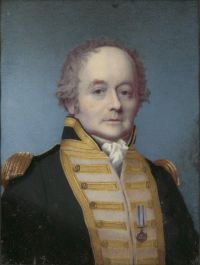 William Bligh,
A Voyage to the South Sea — Chapter 2
(1792)
William Bligh,
A Voyage to the South Sea — Chapter 2
(1792)
“ Tenerife is considered of more value than all the other Canaries: the inhabitants however, in scarce seasons, receive supplies from the Grand Canary; but their vineyards here are said to be greatly superior. Their produce of corn, though exceedingly good, is not sufficient for their consumption; and owing to this the Americans have an advantageous trade here for their flour and grain, and take wine in return. The town of Santa Cruz is about half a mile in extent each way, built in a regular manner, and the houses in general large and airy, but the streets are very ill paved. ”
Richard Francis Burton,
To the Gold Coast for Gold — VIII. To Grand Canary…
(1863)
“ We then pushed on to Teror, famous for turkeys, traversed the high and forested northern plateau, visited Galdar and Guia of the cheeses, and rode back by Bañaderos Bay and the Cuesta da Silva, renowned in olden island story.These three days gave me a fair general view of Grand Canary. The Cumbre, or central plateau, whose apex is Los Pexos (6,400 feet) , well wooded with pines and Alpines, collects moisture in abundance. ”
Élisée Reclus,
Africa by Élisée Reclus/Volume 3
(1892)
“ Flora of the Canaries. With a drier climate than Madeira, and especially the Azores, the Canaries present a less verdant appearance than the northern archipelagoes, and in many places are even quite destitute of vegetation. In Lanzarote and Fuerteventura neither forests nor plantations of the same species are any longer visible, and the land here assumes the aspect of the steppe. But patches of woodland still survive in the western group, and especially in Palma, at once the best-timbered and the best-watered of all. ”
Élisée Reclus,
Africa by Élisée Reclus/Volume 3
(1892)
“ In many respects these archipelagoes form an inter- mediate domain between three worlds. In climate and products the Azores, Madeira, and even the Canaries, belong rather to Europe than to the neighbouring African mainland. Through their first known inhabitants the Canaries formed part of the Berber world, that is, of North Africa; lastly, many of their vegetable species have been brought by the Gulf Stream from the American continent. Historically, also, these groups formed natural zones of transition, serving as links in the discovery of the New World. ”
James Grey Jackson, An account of the empire of Marocco… (1811)
“ The opinion of the author of the History and Conquest of the Canary Islands, is, that the inhabitants came originally from Mauritania, and this he founds on the resemblance of names of places in Africa and in the islands: for, says he, “Telde, [177] which is the name of the oldest habitation in Canaria, Orotaba, and Tegesta, are all names which we find given to places in Mauritania and in Mount Atlas. It is to be supposed that Canaria, Fuertaventura, and Lancerotta, were peopled by the Alarbes, [178] who are the nation most esteemed in Barbary ”
Various, Popular Science Monthly (1898)
“ THE Canary Islands have appealed to the world under various aspects. The ancients idealized them, mediævals fought over them, and moderns are analyzing them. The fire-tried rocks, crevasselike gorges, and confused mountain masses make a fascinating field for geologists; curious Coleoptera attract the entomologists; hills, valleys, and shores abound in interesting plants; the climate and meteorological conditions have been the study of many doctors. One's first view of Grand Canary is most disappointing. ”
Henry Yule,
Hobson-Jobson — C
(1903)
“ And as from the Ghauts to the sea on the west of the Decan all that strip is called Concan, so from the Ghauts to the sea on the west of Canará, always excepting that stretch of 46 leagues of which we have spoken [north of Mount Dely] which belongs to the same Canará, the strip which stretches to Cape Comorin is called Malabar."—Barros, Dec. I. liv. ix. cap. 1.1552.—"... The Kingdom of Canará, which extends from the river called Gate, north of Chaul, to Cape Comorin (so far as concerns the interior region east of the Ghats) ... and which in the east marches with the kingdom of Orisa ”
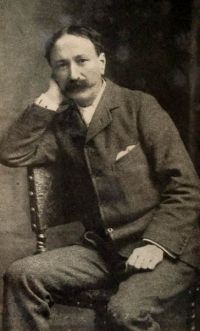 Morley Roberts,
A Tramp's Notebook
Morley Roberts,
A Tramp's Notebook
“ And after all, some day, no doubt, the English will buy or steal a Canary Island. There is a lingering suspicion among us all that no island ought to belong to any other nation, unless indeed it is the United States. With an enterprising people these cinder heaps would be less heavily taxed and more prosperous. For the prosperity of Las Palmas itself is much a matter of coaling. ”
