
“ A young man, one spring, plowed a pocket-book and $30 in greenbacks under, and by a singular coincidence the next spring it was plowed out, and, though rotten clear through, was sent to the Treasury, where it was discovered that the bills were on a Michigan National Bank, whither they were sent and redeemed. ”
Spring Bank
Definition and stakes
The theme of “Spring Bank” has been addressed by authors such as William Graham Sumner, Chester Arthur Phillips, George M. White, Andrew Everett Durham and Clément Juglar. It is often associated with terms like states, capital, state, mortgage and currency.
Quotes about “Spring Bank”
 William Graham Sumner,
A History of Banking in the United States…
(1896)
William Graham Sumner,
A History of Banking in the United States…
(1896)
“ It was only after the debt was paid and the surplus revenue began to accumulate that the attraction of this bonanza overcame prudence and good sense. The popular sentiment now swung over again to a mania for banks. Each district wanted a deposit bank so as to get a share in the stream of wealth which was expected to flow from the public treasury. If a deposit could not be obtained, then a bank was formed in order to participate in the carnival of credit and speculation; for a non-deposit bank had the advantage of being bound by no rule. ”
William Graham Sumner,
A History of Banking in the United States…
(1896)
“ Morris's bills, drawn for the Dutch loan, are under protest. It is well known that the bank, by some means or other, must provide for this sum. The child must not desert its parent in distress; and such is their connection that whatever is fatal to the one must be so to the other. * * * I have had several interviews with our friend, Gouverneur Morris. He is for making the Bank of New York a branch of the Bank of North America; but we differ widely in our ideas of the benefit that would result from the connection. ”
William Graham Sumner,
A History of Banking in the United States…
(1896)
“ The jealousy of the rural population in respect to banks led them to insist on inserting in bank charters a provision that a certain fraction of the capital should be loaned on mortgage of land. We shall presently see the antagonism, which here arose between parts of the same State, marking the relations of parts of the Union. We observe that a bank was conceived of primarily as a means of creating wealth. Every one wanted a share in its beneficent operation. If the Legislature created it, all the people ought to participate in its blessings. ”
William Graham Sumner,
A History of Banking in the United States…
(1896)
“ August 28th, it was resolved to take no branch notes save at the branch which issued them; but the use of branch drafts was extended, with the same effect. They led to the device of drawing and re-drawing between the branches what were called "race horse bills," which combined the qualities of accommodation paper and endless renewals. They tended to draw the capital of the Bank away from the sounder and more conservative branches to the weaker and more reckless ones. ”
William Graham Sumner,
A History of Banking in the United States…
(1896)
“ It is impossible for us to picture the ruin and distress that followed, the effects of which are still remaining. It is said, and we presume correctly, that in one county of this State there were $100,000 of the bills of the Farmers' Exchange Bank in circulation at the time it failed, and probably in the State there were $400,000 or $500,000, all of which, after being bartered at various discounts, became a total loss to the last holders, which, in most instances, were the poorer and less informed parts of the community. ”
 Stewart Edward White,
The Rose Dawn
(1920)
Stewart Edward White,
The Rose Dawn
(1920)
“ But this bank cannot loan you money for the purposes of the Fremont Hotel unless the Fremont Hotel can carry it; and the Fremont Hotel is mortgaged to the full at present. In other words this bank holds that any going business ought to take care of itself in prosperous times. ”
William Graham Sumner,
A History of Banking in the United States…
(1896)
“ Borrowers during 1821 were to take oath as to the purpose for which they wanted the loan. Here then was a novelty in banking, an institution which sought as borrowers, not solvent persons of high credit, but embarrassed and perhaps insolvent debtors. When complete, the bank had twelve branches; its capital was to consist of all money thereafter paid in for land warrants, or land west of the Tennessee river [this was a contingent revenue, which, inasmuch as the land speculation had passed by, proved very small] ”
 Tom C. Clark,
First National Bank of Logan, Utah v…
Tom C. Clark,
First National Bank of Logan, Utah v…
“ During the economic depression there was much agitation that bank failures were due to small undercapitalized rural banks and that these banks should be supplanted by branches of larger and stronger banks. The Comptroller of the Currency advocated that national banks be permitted to branch regardless of state law. ”
William Graham Sumner,
A History of Banking in the United States…
(1896)
“ Everywhere there was a scarcity of money, and a demand for more banks to furnish a supply. One per cent. a month was not considered a high rate in any of the great cities. In April the best commercial paper was quoted at New York at 30 per cent. to 40 per cent. per annum; second rate, at a-half of one per cent. per day. "There is an awful pressure for money in most of the cities." [62] In May, the "Globe" called on the deposit banks to contract loans, demand bank balances, and "check the raging mania for wild speculation and over-trading." ”
Various, Blackwood's Edinburgh Magazine…
“ It is the branches alone which make this astonishing increase. Now, as a branch is merely a local agency of the parent bank, established at a distance for the sake of outlying business, the number of parties engaged in banking who are responsible to the public is not thereby increased, nor is the amount in circulation extended. In fact, the multiplication of the branch banks has been of extraordinary benefit to the public, by affording the inhabitants of even the remotest districts a ready, easy, and favourite method of deposit, and by extinguishing all risks of credit. ”
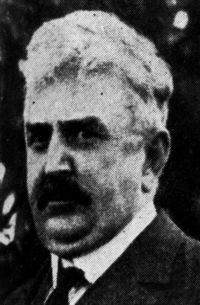 Raymond S. Spears,
The Golden Pears — Chapter 7
(1912)
Raymond S. Spears,
The Golden Pears — Chapter 7
(1912)
“ The planter was in no great hurry to put in operation the plan upon which he had determined. He must wait until the proper moment before breaking the Deerport National Bank and young Andrest by the same blow. In a week or two the bank would be moving cotton in large quantities, and the planters who owed it money could be depended on to be slow in taking up their notes, most of which would run till mid December, or even over the New Year. ”
William J. Brennan, Jr., United States v. Philadelphia National Bank…
“ And the amount of the funds held by commercial banks is very large indeed; demand deposits alone represent approximately three-fourths of the money supply in the United States. [49] Since a bank's assets must be sufficiently liquid to accommodate demand withdrawals, short-term commercial and industrial loans are the major element in bank portfolios, thus making commercial banks the principal source of short-term business credit. Many other services are also provided by banks, but in these more or less collateral areas they receive more active competition from other financial institutions. ”
Stuart Brent, The seven stairs (1962)
“ He surveyed the situation and assured me that the job was simple—two men could do it in a week. It would cost about one thousand dollars.Well what about it? Of course all of my profits were tied up in increased stock, but I was certainly not going to let money check my enthusiasm at this point. The time had come, I decided, to see about a bank. Every day while riding the bus I saw signs offering me money on my signature only. Do you want a new car? Need to pay old bills? Buy a car? Buy a refrigerator? Buy anything? See your friendly banker. What really decent fellows these bankers must be! ”
William Graham Sumner,
A History of Banking in the United States…
(1896)
“ Each branch had a great degree of independent life and action. The directors of each branch were to borrow specie from time to time for that branch and on its credit, not issuing more notes than the actual specie on hand until that amounted to $25,000. After that they might put in circulation three times the amount of specie, provided that the last should never exceed $300,000. Five hundred dollars were appropriated to procure plates and paper, and the Legislature might appropriate money in the Treasury to fill the coffers of the bank. ”
Benjamin M. Anderson, The Value of Money
“ But banks do need a substantial margin of liquidity, to protect the rest. They get it from stock exchange collateral loans, and from ownership of listed and easily marketable bonds, primarily. They get part of it from true commercial paper. Thus, the director of a country bank in Iowa told the writer that banks in his section—where banks owned in large measure by farmers, and dealing largely with farmers, are very numerous and important—make a regular practice of buying, through brokers, a considerable amount of notes of outside merchants. They do this to protect themselves. ”
 Carl Schurz,
Speeches, correspondence and political papers of Carl Schurz
(1913)
Carl Schurz,
Speeches, correspondence and political papers of Carl Schurz
(1913)
“ The complaint is that the Eastern States have an undue amount of national-bank circulation, and therefore enjoy in a measure a monopoly. I admit this to be true. I will not discuss here the system of banking in all its aspects, but I will inquire how far the establishment of more national banks of issue in the West and South will remedy the real evil complained of—which evil consists in a lack of loanable capital there. If the remedy proposed is to serve any good purpose at all, then the establishment of new national banks of issue must increase the available amount of loanable money. ”
 Mary Jane Holmes,
The Merivale banks
Mary Jane Holmes,
The Merivale banks
“ The words were caught up by those outside, and ran through the crowd like wildfire, gaining strength as they ran, until by the time they reached the outer circle it was affirmed that the bank could pay no more that day.Those who have witnessed a run on a bank know how the excitement grows until people, ordinarily cool and sane, grow wild and mad, and howl sometimes like beasts at the prospect of losing their money. And so it was now at the White Bank, where the excitement was intense, especially among the small depositors—the women, whose little was all in the bank. ”
William Graham Sumner,
A History of Banking in the United States…
(1896)
“ If bonds were to be sold, it might act as financial agent to market them. If it bought them itself, it would lock up its capital and become a canal or railroad company, not a bank. It might make temporary advances before stocks were sold or taxes collected; but if the bank was to stay sound, these must run but a short time and payment must be strictly secured. If banks were used otherwise than in these limits, they and the improvements must all fail together. This is what happened. The Bank of the State engaged at once in a supply of capital for speculative operations at Alton. ”
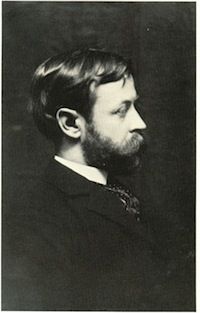 Henry Blake Fuller,
The Cliff-Dwellers: A Novel
Henry Blake Fuller,
The Cliff-Dwellers: A Novel
“ The Underground is not one of the old banks, nor is it one of the large ones; if Brainard had no other irons in the fire he would not cut much of a figure in business circles. The Underground is simply one in a batch of banks that have sprung up in the last seven or eight years and that are almost unknown, even by name, to men who, in the clearing-house at that time, have since passed on to other and different affairs. It is spoken of as Brainard's bank, just as other banks are spoken of as Shayne's, or Cutter's, or Patterson's. ”
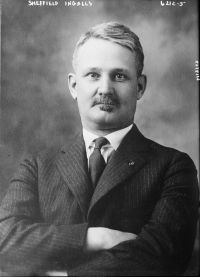 Sheffield Ingalls,
History of Atchison County, Kansas
Sheffield Ingalls,
History of Atchison County, Kansas
“ It has always had the benefit of the services of experienced men in the banking business, and has followed a conservative policy during the whole of its existence. In 1910 the controlling interest in the First National Bank was purchased by the Commercial State Bank, which was organized in Atchison in 1906 by Sheffield Ingalls and O. A. Simmons. ”
Mary Jane Holmes,
The Merivale banks
“ LOUIE COMES TO THE RESCUE When she heard the cry, “Put it in Grey’s Bank, where Sheldon has put his,” she started quickly, struck with a thought of something she had read about. Going into the bank, where two or three were already depositing their money, she drew her father aside and said:“Do you think the White Bank can stand the run?”“Doubtful, if the most of them pitch in as they seem likely to do. They are just crazy, and one excites the other.” ”
William Graham Sumner,
A History of Banking in the United States…
(1896)
“ Many of these banks were started with little or no real capital; specie was borrowed for one day to be counted by the Bank Commissioner, and on the next it was replaced by the notes of the stockholders. The bills of these banks, loaned in violation of the usury laws at high rates of interest, were used in the wildest speculations. The country was flooded with them, and specie was becoming scarce. The ratio of specie to deposits and circulation had fallen to one to thirteen and a-half, or less than seven and a-half per cent., the smallest then ever known. ”
Gertrude W. Morrison, The Girls of Central High Aiding the Red Cross
“ You pass out any old kind of money to your customers; but you never see a banker with anything but new bank-notes in his pocket."The man listened to her sharply. A sudden quickened interest appeared in his countenance. The others heard Mother Wit's speech with growing excitement."See," said the girl of Central High, extracting one of the bank-notes from the packet "Here is another bill on the Drovers' Levee Bank, of Osage, Ohio. Did you notice that? Doesn't it sound familiar to you?" ”
William Graham Sumner,
A History of Banking in the United States…
(1896)
“ In fact, the paid-up capital was never over two-thirds of five millions, but the government deposits ran at times as high as four millions. The assets consisted very largely of unavailable loans, so that with a discount line of six or seven millions, scarcely two hundred thousand dollars was in active business paper. [23] In 1836 Dr. Dyott of Philadelphia established what he called a Manual Labor Bank. "His motive for this is to give to the meritorious workingman the full legal interest which he ought always to obtain for his savings." ”
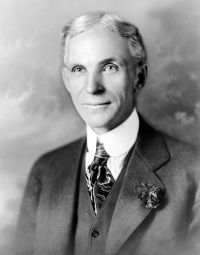 Henry Ford,
The International Jew: The World's Foremost Problem…
(1920)
Henry Ford,
The International Jew: The World's Foremost Problem…
(1920)
“ While there is a scarcity of money for the producing sections of the West and Northwest, the South and Southwest, “we find that individual banks in New York City are borrowing from the Reserve System, in a number of cases, more than $100,000,000 each; and sometimes as much as $145,000,000 is loaned there to a single bank—twice as much as some of the Reserve Banks have been lending recently to all the member banks in their districts.” ”
William Graham Sumner,
A History of Banking in the United States…
(1896)
“ Under the Independent Treasury System, the Regulation of Banking and Currency is left entirely to the States. The Federal Government Handles only Coin. Banks Organized under General Joint Stock Laws gradually, and to a great extent supersede Chartered Banks. In the Ohio Valley and the Northwest, Banks of the new kind run to great extravagance and abuse. By the development of new Institutions of Finance, Commerce, Transportation, and General Industry, Banks lose Comparative Importance. CHAPTER XVI. The Local Bank System. ”
Various, Trotwood's Monthly, Vol. II, No… (1905)
“ When a manufacturer investigates with a view to locating, he invariably asks: “What are the banking facilities?” Florence can well be proud of her banks, and a glance at their advertisements herein will tell the story. The First National has stood the test of time, and the Alabama Trust and Savings Bank show by their deposits that they have the entire confidence of the people, for they are but a few months old. ”
George Ogilvy Preshaw, Banking Under Difficulties (1888)
“ Future travellers by the beach road may yet benefit themselves, or, if they are honest, the bank, by making it a part of the object of their journey to search for some of the undiscovered coin. It is not recorded that as yet anyone has discovered more than a few half-sovereigns, or has thought of delivering the same to the bank. It is insinuated, however, that there was for one night a considerable amount of spare cash among some people at Charlestown, and that there was more liberality in the matter of ‘shouting’ than is usual at the present dry season and dull times. ”
William Graham Sumner,
A History of Banking in the United States…
(1896)
“ The State banks, anxious to retrieve lost time and make a good dividend, do the same thing, and money becomes instantly plenty. Property speedily assumes a price beyond what it had before its fall; the house or piece of land, which sold, 'a little month ago' for $1,000, is valued at $1,500, and the gentlemen speculators then sell; offering to purchasers assistance from the Bank, if needful to make a good bargain for themselves. ”
William Graham Sumner,
A History of Banking in the United States…
(1896)
“ The Tammany society being in debt, a plan was proposed for paying the debt by making a bank. [12] When the great fire occurred in New York, in 1835, a proposition was made to create a bank as a mode of relieving the sufferers. "To make a bank," said Niles, "is the great panacea for every ill that can befall the people of the United States; and yet it adds not one cent to the capital of the community." ”
Related terms
Authors who wrote about “Spring Bank”
William Graham SumnerChester Arthur PhillipsGeorge M. WhiteAndrew Everett Durham Clément JuglarHenry Warren
 Louis Dembitz Brandeis
 Cole YoungerBenjamin M. Anderson
 John Law
 Thomas JeffersonMary Jane HolmesCarl SchurzSheffield IngallsVariousRaymond S. SpearsGeorge Ogilvy Preshaw
 Arthur Conan Doyle
 Henry David ThoreauStuart Brent