Strait of Dover

Definition and stakes

The New Student's Reference Work (1914)

“ Dover, a port of England 70 miles from London, on the southeast coast of Kent, on the Strait of Dover. It is 21 miles from the French coast, and is the English seaport nearest to France. It lies in a low valley or basin between high chalk-cliffs, and is guarded by Dover Castle, which is built on the heights east of the town. The town is said to have been founded by the Romans. Elaborate fortifications are also built on the height to the west. Dover is the chief port which connects England and France, and steamers run daily from it to Boulogne and Calais. ”

Source: Wikisource

The New International Encyclopædia…

“ The Ridge Shoals near the middle of the strait are over 8 miles long, and have a depth of 10 to 24 feet. Both the English and French shores are formed by chalk cliffs. The strait has been carefully surveyed by engineers with a view to bridging or tunneling it. There is great opposition in England, on military grounds, against the construction of a tunnel. It is, perhaps, the most frequented maritime route in the world. Captain Webb, of the British mercantile navy, in August, 1875, swam the strait in 213⁄4 hours. ”
Source: Wikisource

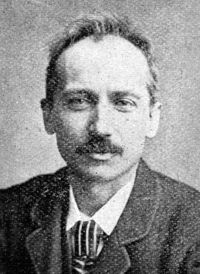
Portrait of Clement Reid Clement Reid,  Submerged forests (1913)

“ If we commence at the Strait of Dover we are immediately confronted with clear evidence of the change of sea-level. Submerged forests are well seen between tide-marks in Pegwell Bay, and valleys with their seaward ends submerged and forming harbours are conspicuous in Kent. Owing to local conditions, the valleys are mostly narrow and steep, and the small harbours therefore soon filled up, or were lost through the cutting back of the cliffs on either side. ”
Source: Gutenberg

Get perspective with Kwize: daily news enlightened by great literature