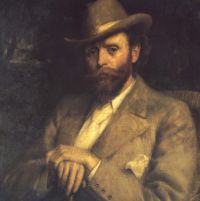
“ This is a story of Morocco in the last years of the Sultan Abd er-Rahman. The ashes of that tyrant are cold, and his grandson sits in his place; but men who earned his displeasure linger yet in his noisome dungeons, and women who won his embraces are starving at this hour in the prison-palaces in which he immured them. His reign is a story of yesterday; he is gone, he is forgotten; no man so meek and none so mean but he might spit upon his tomb. ”
Sultan of Morocco
Definition and stakes
Quotes about “Sultan of Morocco”
Walter Harris, Tafilet (1895)
“ It was easy to perceive how one and all, from the greatest of the Viziers to the least of the soldiery, lived in terror of, and with it almost adoration for, their Sultan. For of all autocrats there is none who holds power as does the Sultan of Morocco. Life and death, imprisonment and confiscation, as well as advancement and wealth, are all in his hands. A nod of his head, and a man rises from poverty to riches ”
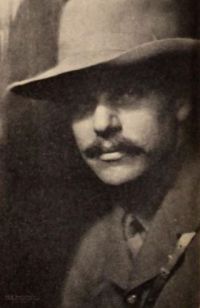
E. Alexander Powell,
The Last Frontier: The White Man's War for Civilisation in Africa
“ The new Sultan, who is the seventeenth of the dynasty of the Alides and the thirty-seventh lineal descendant of Ali, uncle and son-in-law of the Prophet, is known to his subjects as Emir-el-Mumenin, or Prince of True Believers, and as such he exercises a spiritual influence over his subjects which the French are far too shrewd to disregard. The position of the Sultan of Morocco has, indeed, become strikingly similar to that of his fellow-ruler in the other corner of Africa, the Khedive of Egypt, for, like him, he must needs content himself henceforth with the shadow of power. ”
Walter Harris, Tafilet (1895)
“ It is usual for the rulers of Morocco to change their residence from year to year, spending the winters in one of the larger cities, either Fez, Meknas, or Marakesh, and during the summer and autumn to make the long marches from the north to the south of the empire, or vice versa. The enormous retinue accompanying the Sultan, the quantity of baggage to be transported, to say nothing of the insufficiency of all commissariat arrangements and the entire absence of roads, renders these royal progresses matters often of several months’ duration. ”
“ But when they built cities it was as their ancestors and their neighbours pitched tents; and they destroyed or abandoned them as lightly as their desert forbears packed their camel-bags and moved to new pastures. Everywhere behind the bristling walls and rock-clamped towers of old Morocco lurks the shadowy spirit of instability. Every new Sultan builds himself a new house and lets his predecessors' palaces fall into decay; and as with the Sultan so with his vassals and officials. Change is the rule in this apparently unchanged civilization, where "nought may abide but Mutability." ”
E. Alexander Powell,
The Last Frontier: The White Man's War for Civilisation in Africa
“ Though the reins of Moorish power are already firmly in the hands of the French Resident-General at Fez, there is no reason to believe that the French expect, for the present at least, to depose the Sultan, it being to their interests, for obvious reasons, to maintain the pleasant fiction that Morocco is still an independent empire to which they have disinterestedly lent their protection, In August, 1912, Sultan Mulai-abd-el-Hafid, appreciating the emptiness of his title under the French régime, abdicated in favour of his brother, Mulai Youssef, who is known to be friendly to France. ”
Frederick Ferdinand Moore,
The Passing of Morocco
(1908)
“ Abdul Aziz says he will not punish Hafid—when the rebellion is put down and he is captured—except to imprison him in some princely palace.The historic empire of Morocco has to all intents come to an end. Whether the French or a combination of European Powers control hereafter, it remains that the once great empire has passed as an independent State. In name perhaps its independence will survive for many years; the Sultan Abdul Aziz may return to Fez and gain [172] again, with the aid of the French, the loyalty of the interior that is lost to him ”
John Augustus O'Shea, Romantic Spain: A Record of Personal Experiences…
“ The Government in Morocco would satisfy the most ardent admirer of force. It is an unbridled despotism. The Sultan is head of the Church as of the State, and master of the lives and property of his subjects. He dispenses with ministers, and deliberates only with favourites. When favourites displease him, he can order their heads to be taken off. Favourites are careful not to displease him. The land is a terra incognita to Europeans, and is rich in beans, maize, and wool, which are exported, and in wheat and barley, which are not always permitted to be exported. ”
R. B. Cunninghame Graham,
Mogreb-el-Acksa: A Journey in Morocco
“ The Arabs and Berbers of Morocco work hard, and would work harder had they not got the ever-present fear of their bad government before them. When one man quarrels with another, after exhausting all the usual curses on his opponent’s mother, sister, wife, and female generation generally, he usually concludes by saying: “May God, in his great mercy, send the Sultan to you”—for he knows that even Providence is not so merciless as our Liege Lord. ”
James Richardson,
Travels in Morocco, Volume 2
“ Not that a Sultan of Morocco is necessarily bad or worse than an European Sovereign, but because a personage of such power and character, armed with unbounded attributes of despotism over his own subjects, who are considered his Abeed, or slaves, whilst feebly aided by the perception of the common rights of men, and imperfectly acquainted with European civilization, can never, unless, indeed by accident or miracle, justly decide upon the case of an Englishman, or upon a dispute between his own and a foreign subject ”
R. B. Cunninghame Graham,
Mogreb-el-Acksa: A Journey in Morocco
“ Both a musician and a philosopher, but yet a moralist, and a fanatic preacher of the graces of Mohammed, but still a sceptic at the heart, and above all a traveller, “for by travelling a man, although his purse grows light, still lays up treasures on which to live when he is old. What is a Sultan, Kaid, Pasha, or Governor, compared to him who is the Sultan of the world, when where night catches him he rests and looks upon the stars?” ”
Lady Judith Cohen Montefiore, Diaries of Sir Moses and Lady Montefiore…
“ The Imperial edict which, through the Divine blessing, I had the happiness to obtain from His Sheriffian Majesty the Sultan of Morocco, securing to the Jews and Christians in his dominions the same rights and privileges which are enjoyed by other classes of his subjects, constitutes a bright epoch in the history of that Empire, and must assuredly tend to advance its prosperity. ”
“ The entrances of the bazaars in the Kaisariyah, to which we turned, were barred and bolted, their guardians sat motionless, covered in white djellabas, that looked like shrouds. The city's seven gates were fast closed, though doubtless there were long files of camels and market men waiting patiently without. The great mansions of the wazeers and the green-tiled palace of Mulai Abd-el-Aziz—Our Victorious Master the Sultan—seemed unsubstantial as one of those cities that the mirage had set before us in the heart of the R'hamna plains. ”
“ They were ambitious and luxury-loving princes, who invaded the wealthy kingdom of the Soudan, conquered the Sultan of Timbuctoo, and came back laden with slaves and gold to embellish Marrakech and spend their treasure in the usual demoralizing orgies. Their exquisite tombs at Marrakech commemorate in courtly language the superhuman virtues of a series of rulers whose debaucheries and vices were usually cut short by assassination. ”
Budgett Meakin, Life in Morocco and Glimpses Beyond
“ Instead of increased relations between Moors and foreigners tending to friendship, the average foreign settler or tourist is far too bigoted and narrow-minded to see any good in the native, much less to acknowledge his superiority on certain points. Wherever the Sultan's authority is recognized the European is free to travel and live, though past experience has led officials not to welcome him. At the same time, he remains entirely under the jurisdiction of his own authorities, except in cases of murder or grave crime, when he must be at once handed over to the nearest consul of his country. ”
Louisa Annette Edla Drummond-Hay Brooks, A memoir of Sir John Drummond Hay… (1896)
“ The practice of ‘eating up’ mentioned in this letter has always been a favourite method with the Sultans of Morocco when desirous of quelling discontent or rebellion amongst the unruly tribes of the interior. If these in any part of the Moorish dominions, driven frantic by the cruelty and extortion of their rulers, show signs of revolt, an army is sent, like a plague of locusts, who literally eat up the disaffected country. In the case of the larger districts, such as Sus, these military expeditions are often commanded by the Sultan in person. ”
Frederick Ferdinand Moore,
The Passing of Morocco
(1908)
“ It is generally put down to the weakness of Abdul Aziz that Morocco has come to its present pass, and there is no doubt that had the youthful Sultan possessed a little more of firmness he would not have come now to be a mere dependent of the French. But Morocco has long been doomed. Even in the days of the former Sultan, who ruled the Moors as they understood and gave them a government the likes of which they say they wish they had to-day, the tribes were constantly at war with one another and with him. ”
Budgett Meakin, Life in Morocco and Glimpses Beyond
“ In spite of all our comfortable cant about justice to less powerful races, who in England cares about justice to Morocco and her Sultan? We owe it to Germany that the thing was not rushed through a few months ago. Who has heard, who wants to hear, the Moorish side of the question? Morocco is mute. The Sultan pulls no journalistic wires. He has no advocate in the Press, or in Parliament, or in Society. Hardly a public man opens his mouth in England to refer to Morocco, without talking absolute twaddle. ”
“ The palissade was open on one side, and within it we could see moving about among the snowy-robed officials a group of men in straight narrow gowns of almond-green, peach-blossom, lilac and pink; they were the Sultan's musicians, whose coloured dresses always flower out conspicuously among the white draperies of all the other court attendants.In the tent nearest the opening, against a background of embroidered hangings, a circle of majestic turbaned old men squatted placidly on Rabat rugs. ”
R. B. Cunninghame Graham,
Mogreb-el-Acksa: A Journey in Morocco
“ The system in Morocco when a Sultan dies is for the tribes who think they may be strong enough, to refuse to pay all taxes, and then the Sultan is obliged to come in person with an army to discuss the matter, to fight, and if he wins send baskets full of heads to be stuck up on the chief cities’ gates, and squads of prisoners like the band I saw in Mazagan to rot in prison till death relieves them of their miserable lives. ”
Budgett Meakin, Life in Morocco and Glimpses Beyond
“ Towards the close of the thirteenth, the kingdoms of Fez and Marrákesh became united under one ruler, whose successor, after numerous dynastic changes, is the Sultan of Morocco now.* But from the time that the united Berbers had become a nation, to prevent them falling out among themselves again it was necessary to find some one else to fight, to occupy the martial instinct nursed in fighting one another. So long as there were ancient scores to be wiped out at home, so long as under cover of a missionary zeal they could continue intertribal feuds, things went well for the victors ”
Friedrich von Bernhardi,
Germany and the Next War
“ Still less is any immediate employment of native Moroccan troops in Europe contemplated. Morocco possesses very good native warriors, but the Sultan exerts effective sovereignty only over a part of the territory termed "Morocco." There cannot be, therefore, for years to come any question of employing this fighting material on a large scale. The French and Moroccan Governments are for the moment occupied in organizing a serviceable Sultan's army of 20,000 men to secure the command of the country and to release the French troops in Morocco. ”
Louisa Annette Edla Drummond-Hay Brooks, A memoir of Sir John Drummond Hay… (1896)
“ The Sultan is still marching towards Marákesh, ‘eating up’ his indigestible subjects, and thus preparing them to welcome the Nazarene.Bargash has not returned, so nothing has been done about Convention. These Moors understand the value of vis inertiae. I am sick of them, and some day may strike work, for counsels are all thrown away on such a corrupt torpid brute as the present Uzir. Ravensrock, Oct. 9, 1881.I think the French will leave Morocco alone. They must bide their time. ”
Louisa Annette Edla Drummond-Hay Brooks, A memoir of Sir John Drummond Hay… (1896)
“ He is reported to be very wealthy and, as he had lived a retired life and not mixed himself up in Government affairs, had been beyond the clutches of the Sultan. It is said that His Sherifian Majesty now awaits the first opportunity to receive sufficient complaint against Abdallah to seize his property. Alas, poor Morocco! poor Moors! poor Sultan! How fast you are rushing to ruin; for as sure as there is a God in Heaven, such a system, such iniquity, cannot thrive. ”
Budgett Meakin, Life in Morocco and Glimpses Beyond
“ In his eyes the embassies from Europe and America come only to pay the tribute which is the price of peace with his lord, and when he sees a foreign minister in all his black and gold stand in the sun bareheaded to address the mounted Sultan beneath his parasol, he feels more proud than ever of his greatness, and is more decided to be pleasant to the stranger, but to keep him out. ”
James Richardson,
Travels in Morocco, Volume 1
“ Their penurious lord keeps down their pin-money to the lowest point, and is not more liberal to his ladies than to his other subjects. Former sultans were accustomed to allow their ladies half a dollar a day, but these have but twopence, or at least fourpence. Muley Abd Errahman even traffics in his beauties, and will now and then make a present of one to a governor, in consideration of receiving an adequate return of money, or presents. Sometimes, the Moors pay their Shereefian Sultan a similar compliment, by presenting him with slaves from their harem. ”
R. B. Cunninghame Graham,
Mogreb-el-Acksa: A Journey in Morocco
“ We rose at daylight, drank green tea and smoked, went down to bathe, came back and breakfasted, looked at the horses led to water, listened to the muezzin call to prayers, walked in the olive grove or watched the negroes in the corn field; engaged in conversation with some of the strange types, we read el Faredi, speculated on how long the “rekass” would tarry on the road from the Sultan’s camp, and wondered at the perpetual procession of people always arriving at the castle to beg for something, a horse, a mule, a gun, some money, or in some way or other to participate in the Kaid’s Baraka. ”
R. B. Cunninghame Graham,
Mogreb-el-Acksa: A Journey in Morocco
“ Despite the Sultan’s tyranny, with every form of evil government thrown in, with murder rampant, vices that we call hideous (but which some practice on the sly) common to everyone, the faces of the poor heathen Moors, whom we bombard with missionaries, are never so degraded as the types which haunt the streets of manufacturing towns. ”
R. B. Cunninghame Graham,
Mogreb-el-Acksa: A Journey in Morocco
“ A group of high-class Arabs sat by themselves upon the decks, waited upon by a tall tribesman faced like a camel, and with the handle of his pistol and curved dagger outlined beneath his clothes. This group was composed of sherifs [17b] from Algeria, all high-caste men, dignified, slow, and soft of speech, deliberate in movement, their clothes as white as snow, nails dyed with henna, each with a heavy rosary in his hand, their business somewhat mysterious, but bound to see the Sultan in his camp. ”
“ MOHAMMED of Mequinez, the man whom Israel went out to seek, had been a Kadi and the son of a Kadi. While he was still a child his father died, and he was brought up by two uncles, his father's brothers, both men of yet higher place, the one being Naib es-sultan, or Foreign Minister, at Tangier, and the other Grand Vizier to the Sultan at Morocco. Thus in a land where there is one noble only, the Sultan himself, where ascent and descent are as free as in a republic, though the ways of both are mired with crime and corruption, Mohammed was come as from the highest nobility. ”